

Free visual inspection and a written scope of work before any mitigation begins - photos, moisture readings, and drying logs go in your claim file
The scope we write is the scope we bill. Anything new gets shown to you, in writing, before we touch it.
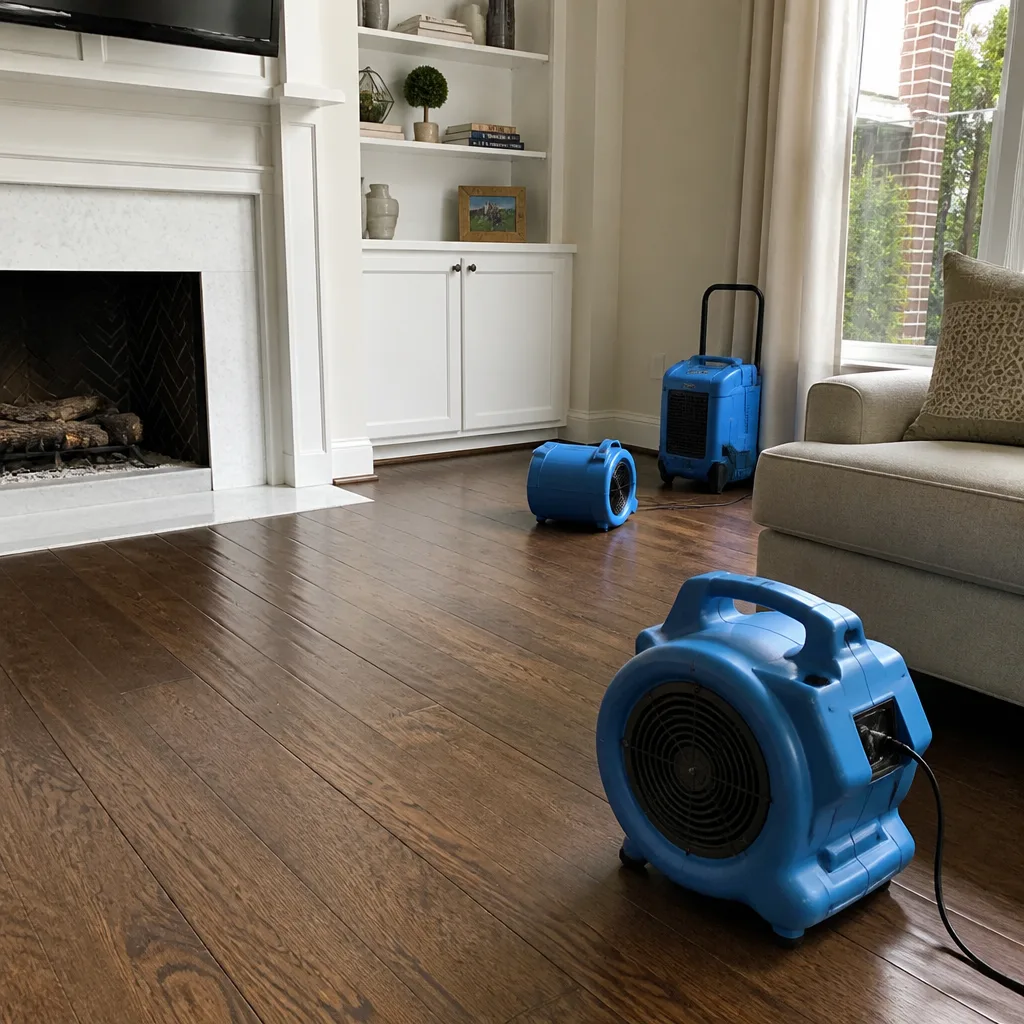
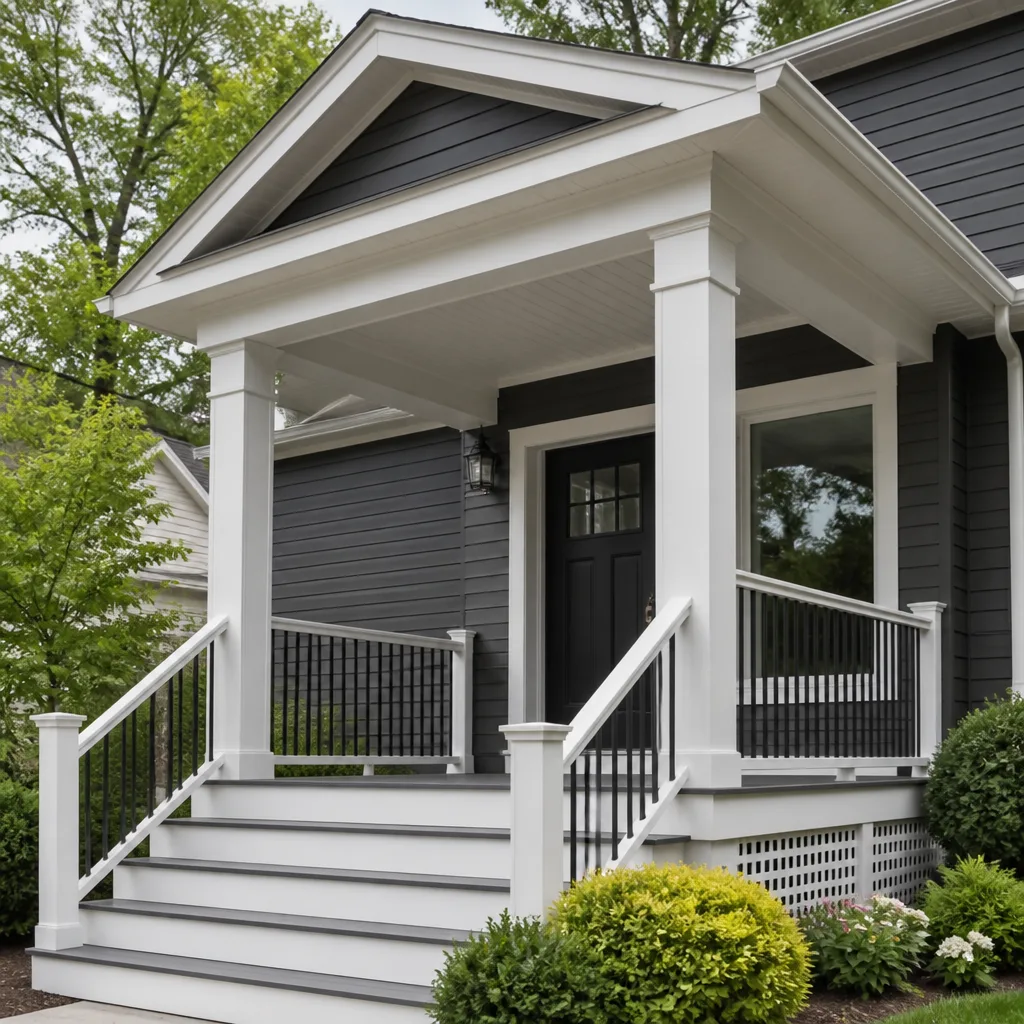
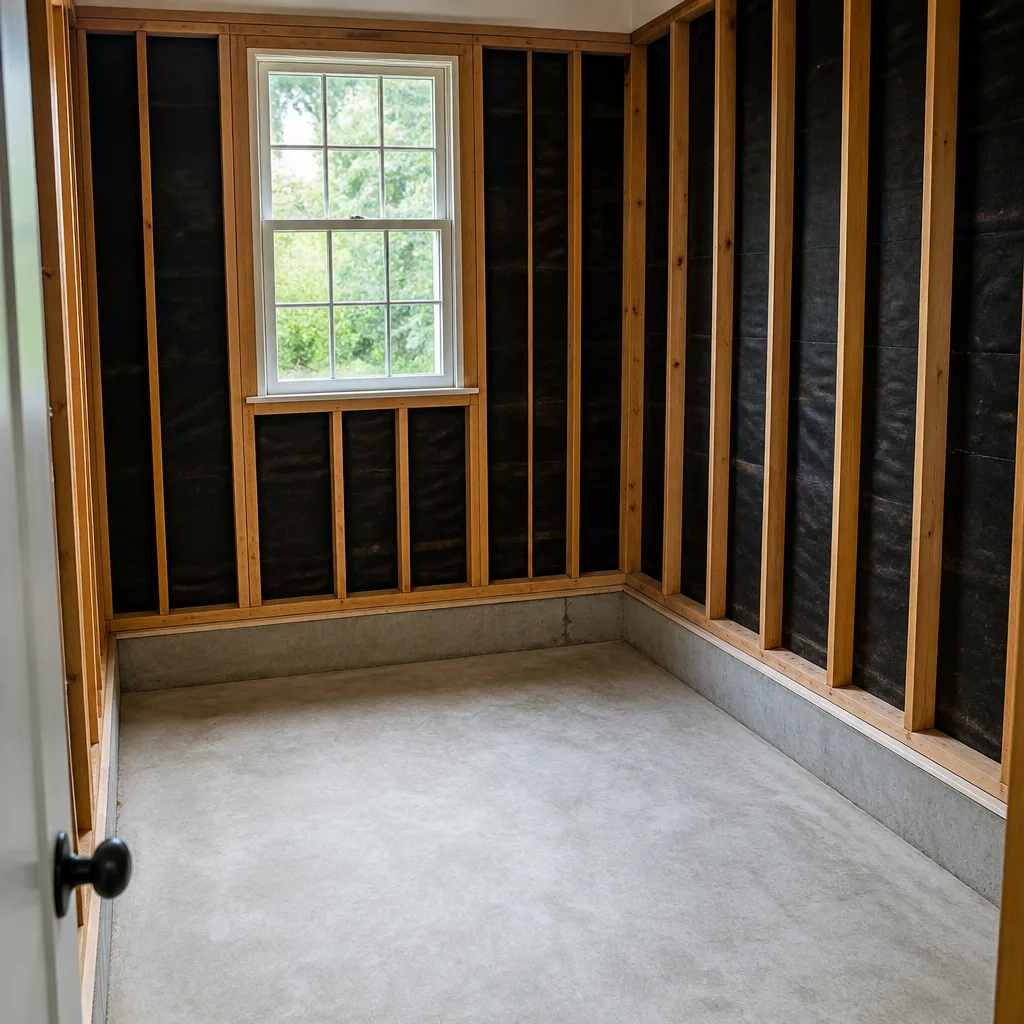
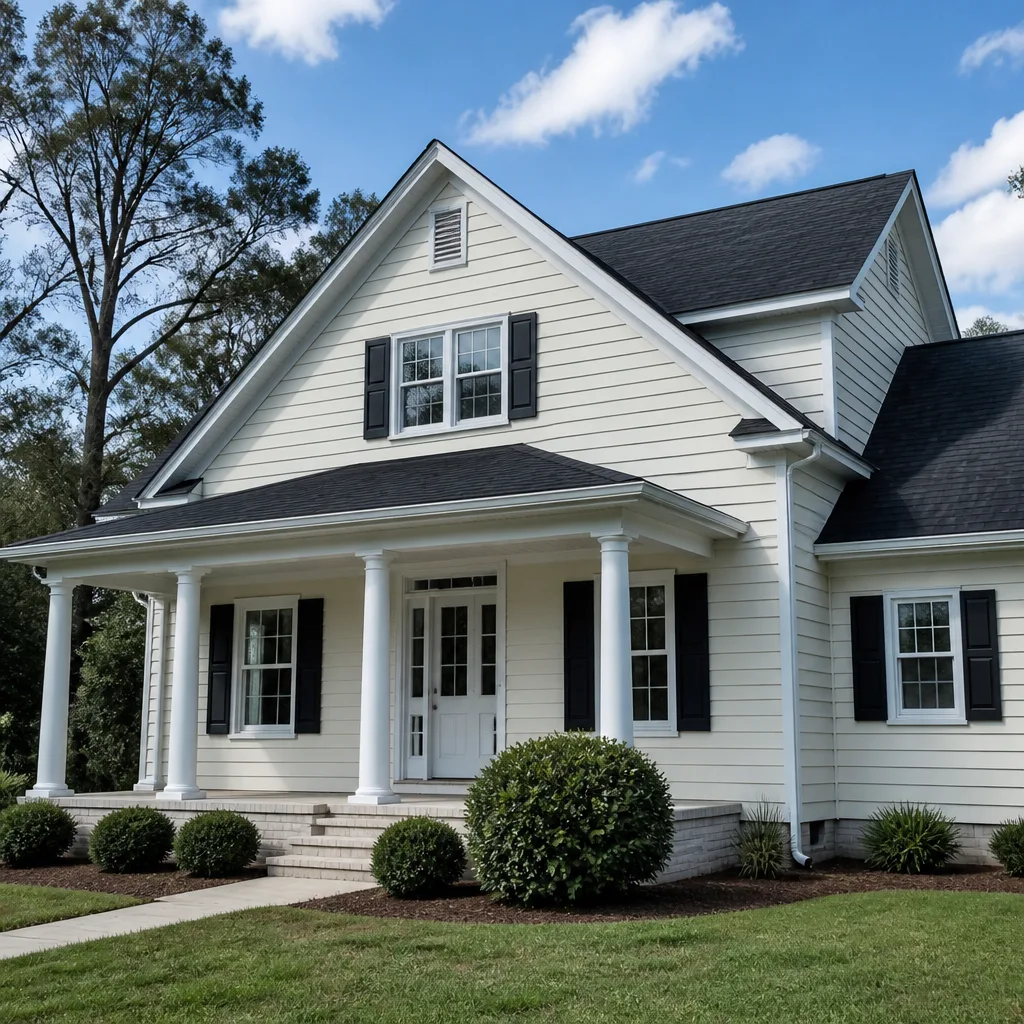
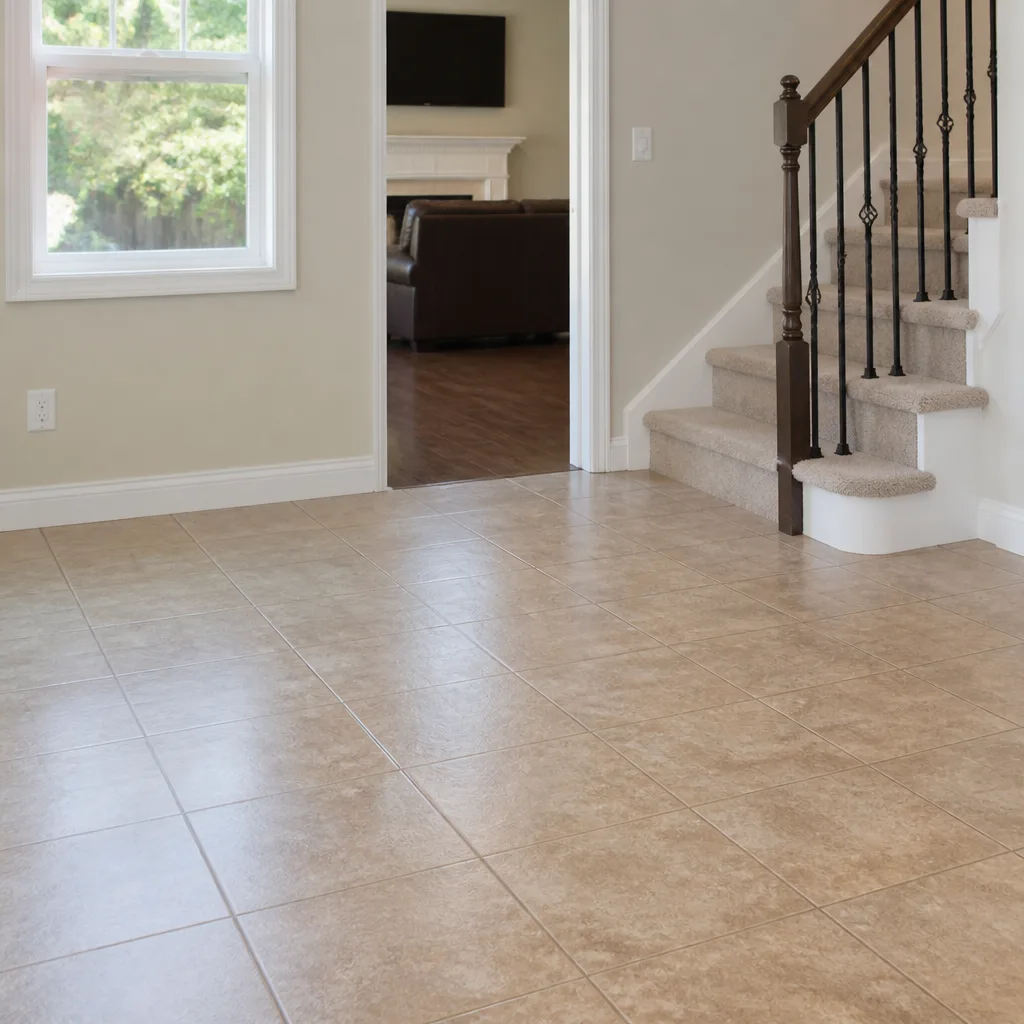
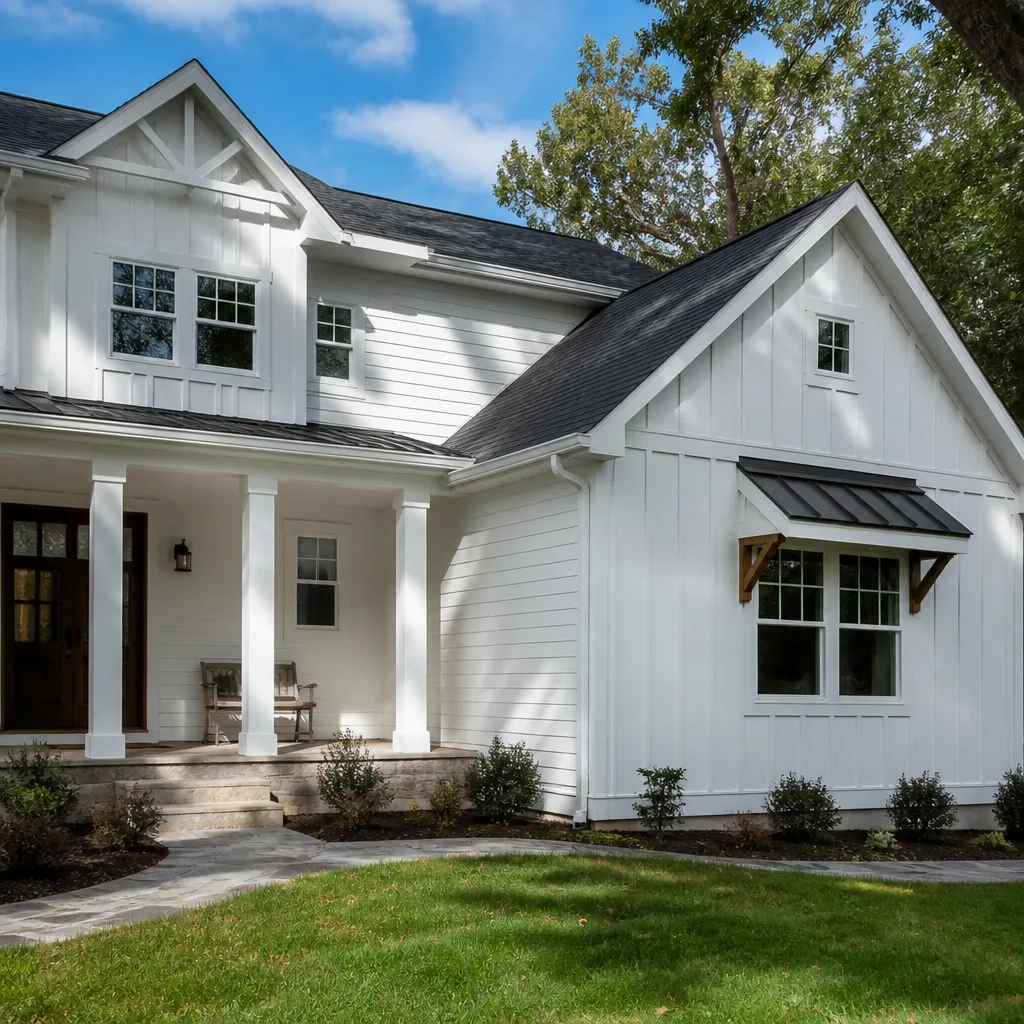
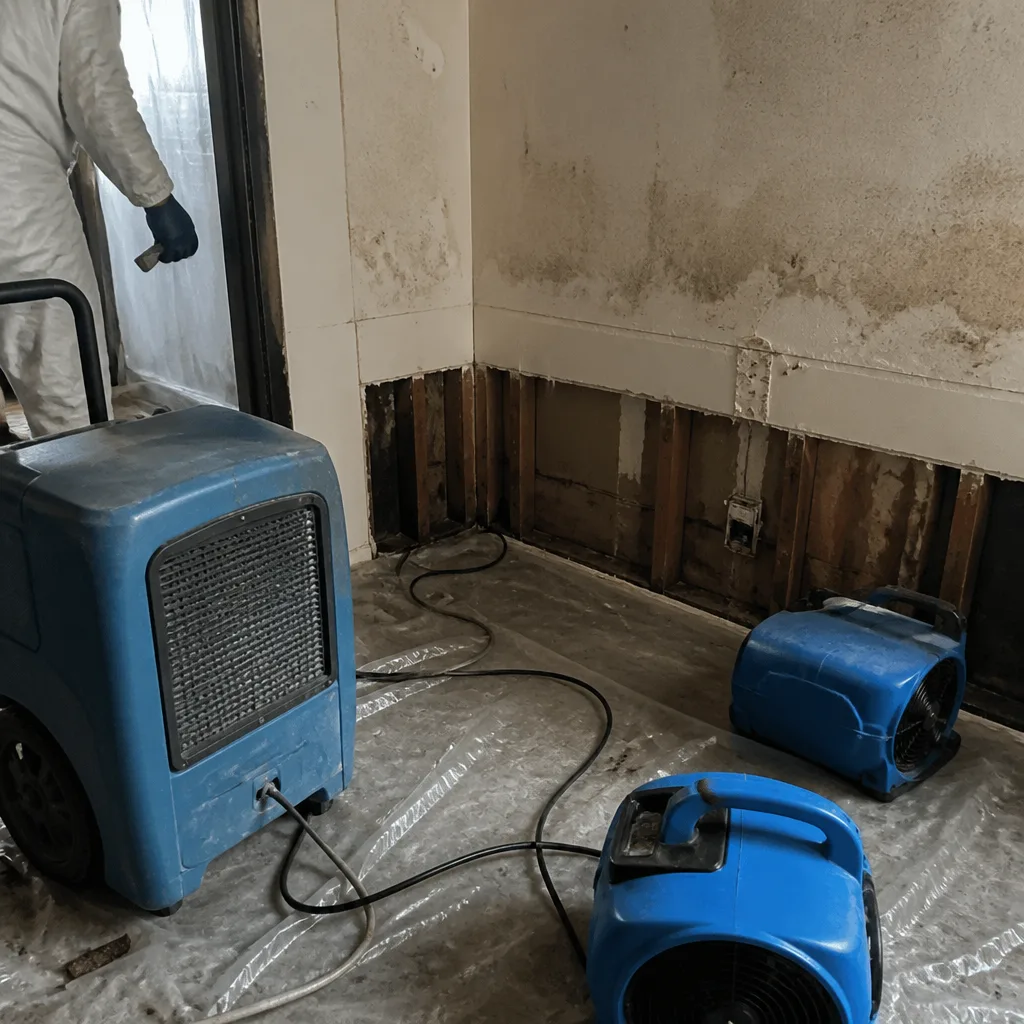 Before
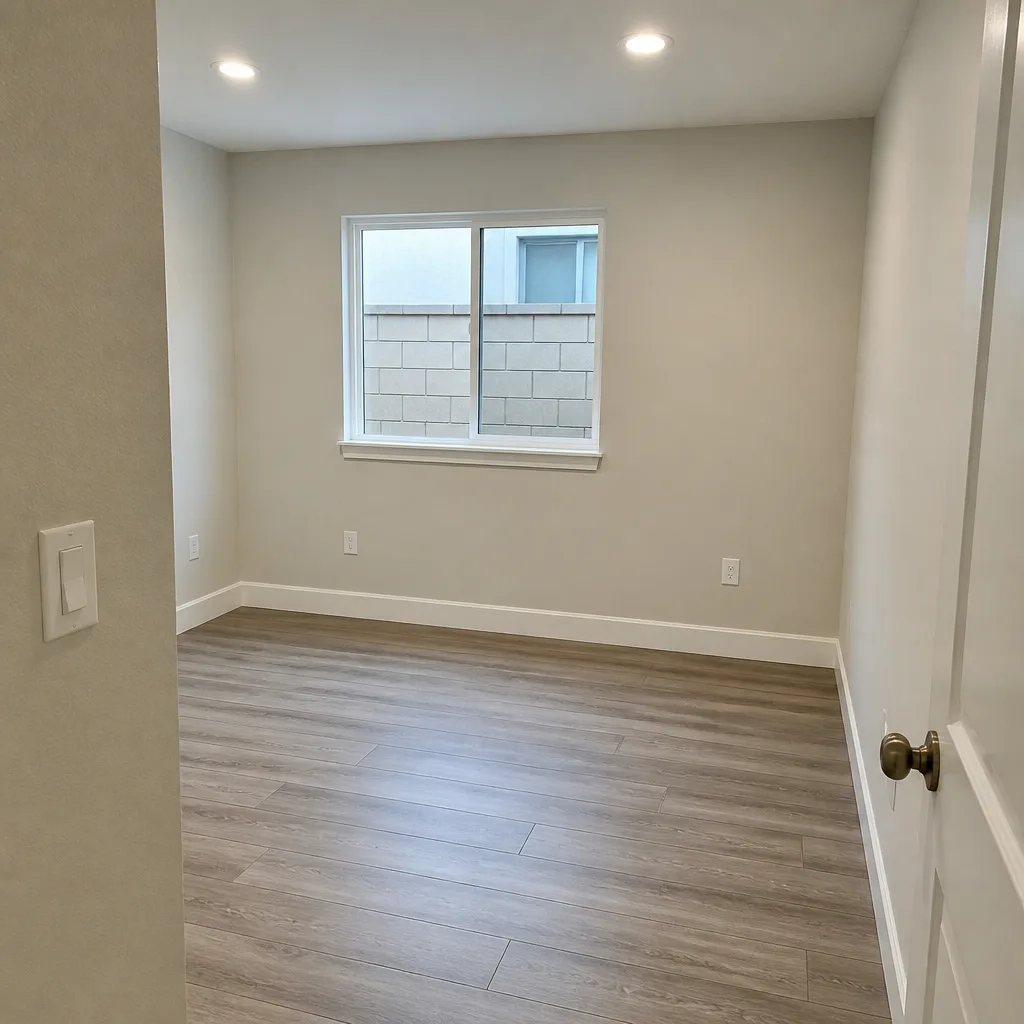 After
After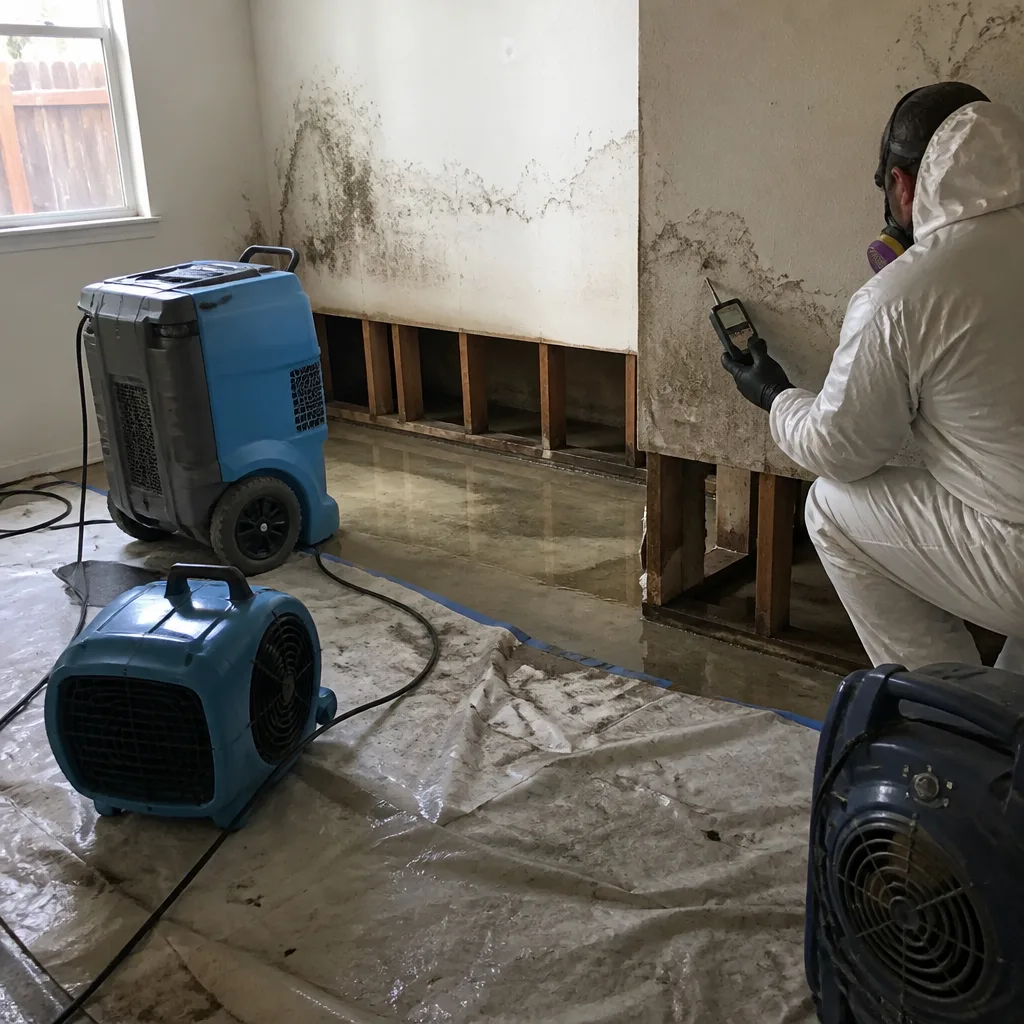 Before
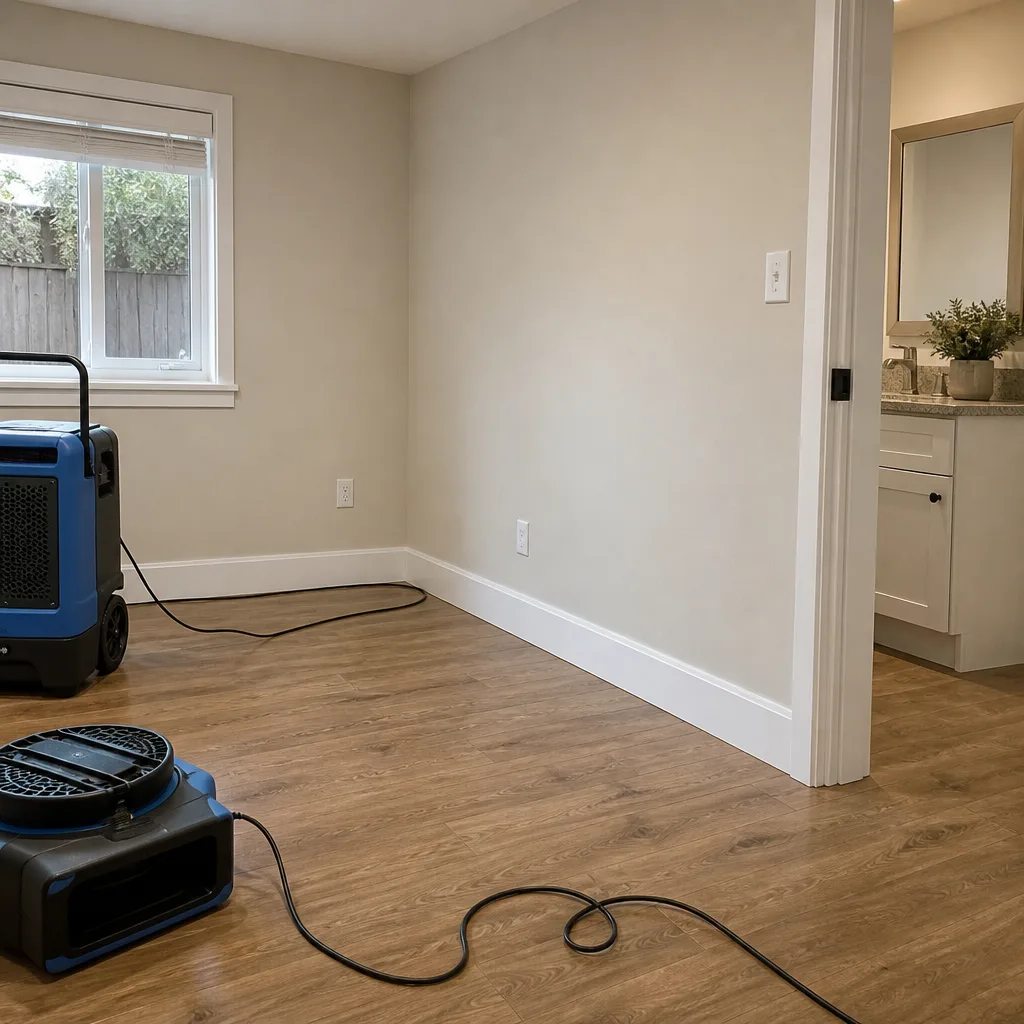 After
After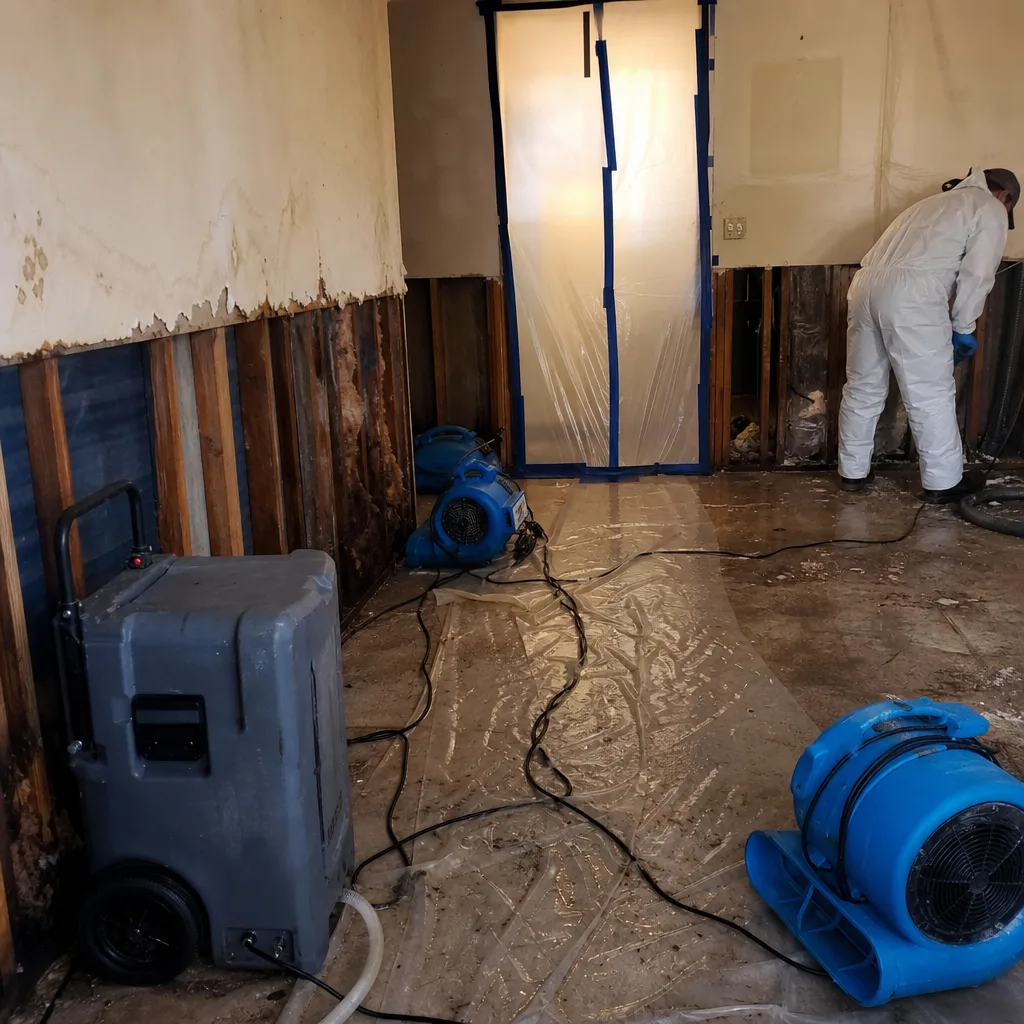 Before
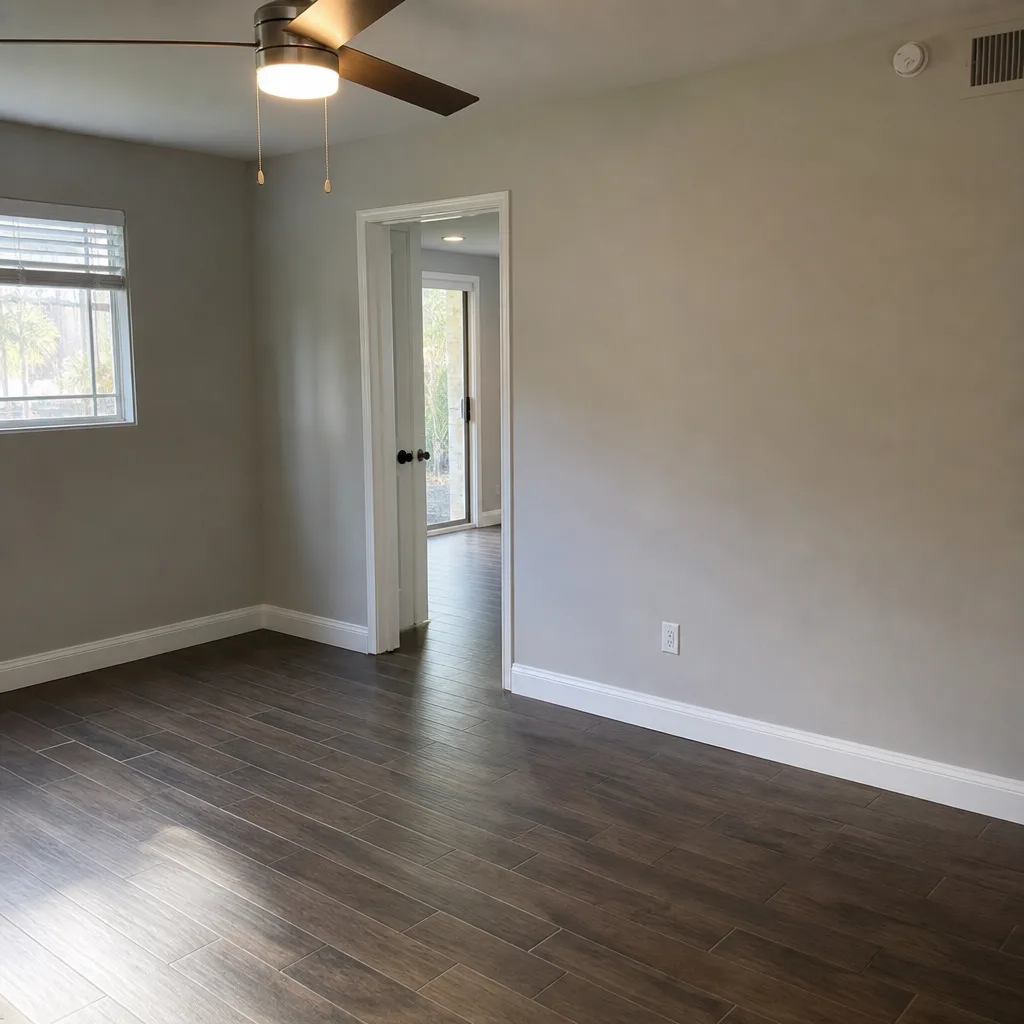 After
After24/7 Emergency Water Damage Restoration in Camp Pendleton North
Water damage restoration in Camp Pendleton North runs $2,800-$7,500 for most residential jobs, with emergency extraction starting around $950 and full structural drying adding $1,400-$3,200 depending on square footage and category. Our crews answer live at (760) 546-9565, 24 hours a day, with no voicemail trees or next-business-day callbacks while water is still moving through your walls. Because every residence in Camp Pendleton North sits inside privatized military family housing managed by Lendlease Communities, we coordinate dispatch directly with housing work orders rather than individual homeowner calls - but the physics of water don’t wait for paperwork, and the first hour determines whether you’re looking at drying logs or full gut-and-rebuild.
We dispatch from our San Diego coordination office with crews already credentialed for DoD base access. A free visual inspection begins the moment we’re on site, and we deliver a written price before any equipment runs - Haven Standard, Clause 1, no exceptions.
Understanding Water Damage Restoration Severity in Camp Pendleton North Properties
Water damage breaks into three categories that dictate what stays and what goes. Category 1 is clean water - a burst supply line, an overflowing sink - and most porous materials can be dried in place if we start within 24 hours. Category 2 carries significant contamination, typically from dishwasher discharge or a failed door threshold letting in wind-driven rain with soil and debris; here we remove carpet pad, section drywall to a defined cut line, and apply antimicrobial treatment. Category 3 is grossly contaminated - sewage backup, floodwater from the Santa Margarita River corridor, or any water that has sat long enough to breed bacteria - and porous structural materials must be removed, not dried.
Camp Pendleton North’s housing stock complicates every category. The post-2000 Military Housing Privatization Initiative units have standardized construction with known vapor barriers and predictable cavity depths, but the older mid-century structures have layered repairs from decades of PCS cycles, patched-over stains, and modified wall assemblies that trap moisture in unexpected places. Our moisture mapping with thermal imaging finds these anomalies before we commit to a drying plan that won’t work. Psychrometric data - temperature, relative humidity, and vapor pressure differential, which is the force that actually moves moisture out of materials into the air - drives every equipment placement decision.
Why Camp Pendleton North Property Owners Choose DryMark Restoration Oceanside
- 45-minute response commitment to on-base housing areas once the Lendlease work order clears - water doesn’t pause for credential verification.
- 24/7 live answer by a real person, never an automated system; our emergency line has no voicemail trees.
- IICRC-certified crews holding WRT (Water Damage Restoration Technician) and FSRT (Fire & Smoke Restoration Technician) credentials, with AMRT (Applied Microbial Remediation Technician) certification for mold-prone discoveries.
- Free visual inspection and moisture mapping before any commitment; you see the readings before you see a price.
- Direct insurance billing and adjuster coordination, with photo-documented drying logs that turn restoration invoices into payable claims.
- One team from extraction through reconstruction - no handoffs between mitigation and rebuild that lose scope continuity.
BeforeAfterOur Water Damage Restoration Process
1. Inspection & Assessment
We arrive with DoD base-access credentials already verified, conduct moisture mapping with FLIR thermal imaging and penetrating hygrometers, and classify the water category. In Camp Pendleton North, we also document pre-existing conditions per Lendlease requirements - the PCS cycle means we often find layered damage that changes the scope.
2. Extraction & Stabilization
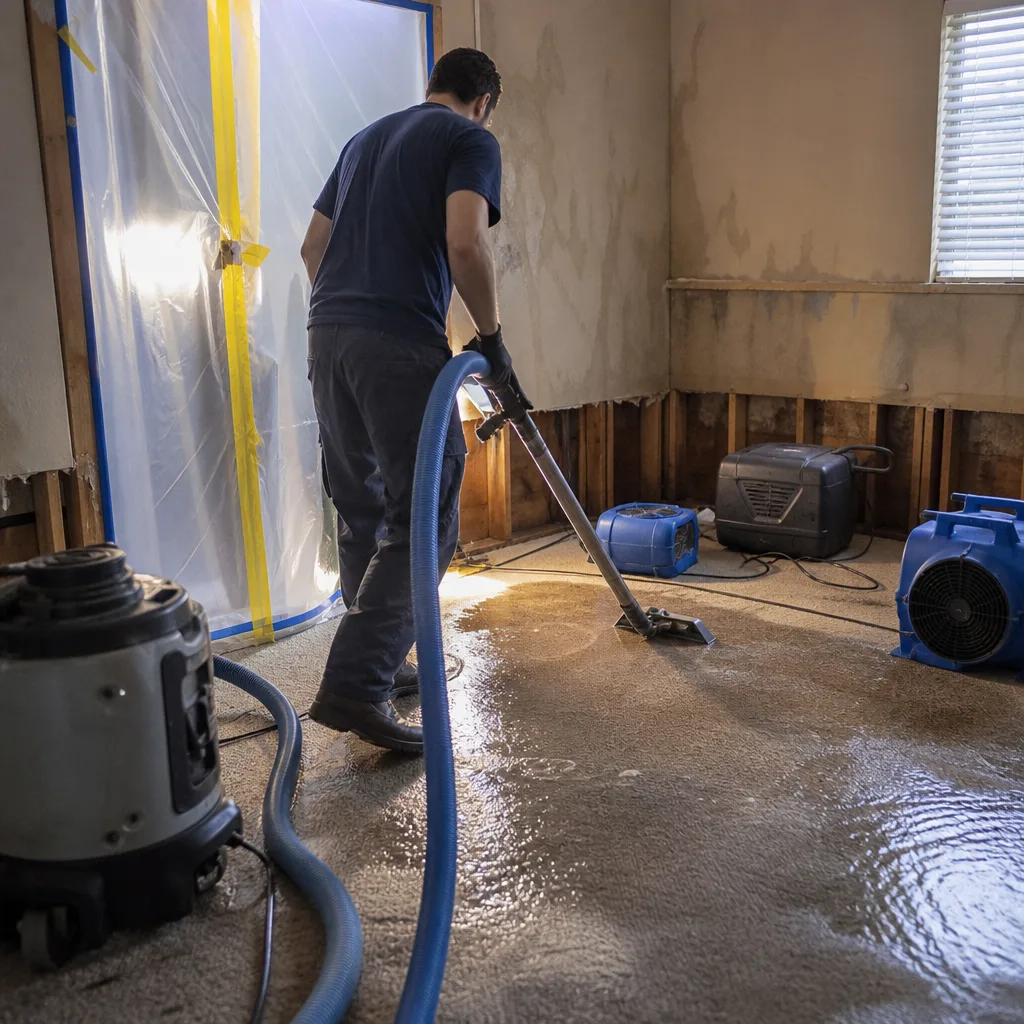
Standing water comes out first with truck-mounted extraction systems, followed by weighted extraction from carpet if salvageable. We establish containment with 6-mil poly and negative air pressure where category 2 or 3 contamination exists, protecting adjacent units in these connected housing structures.
3. Drying & Dehumidification
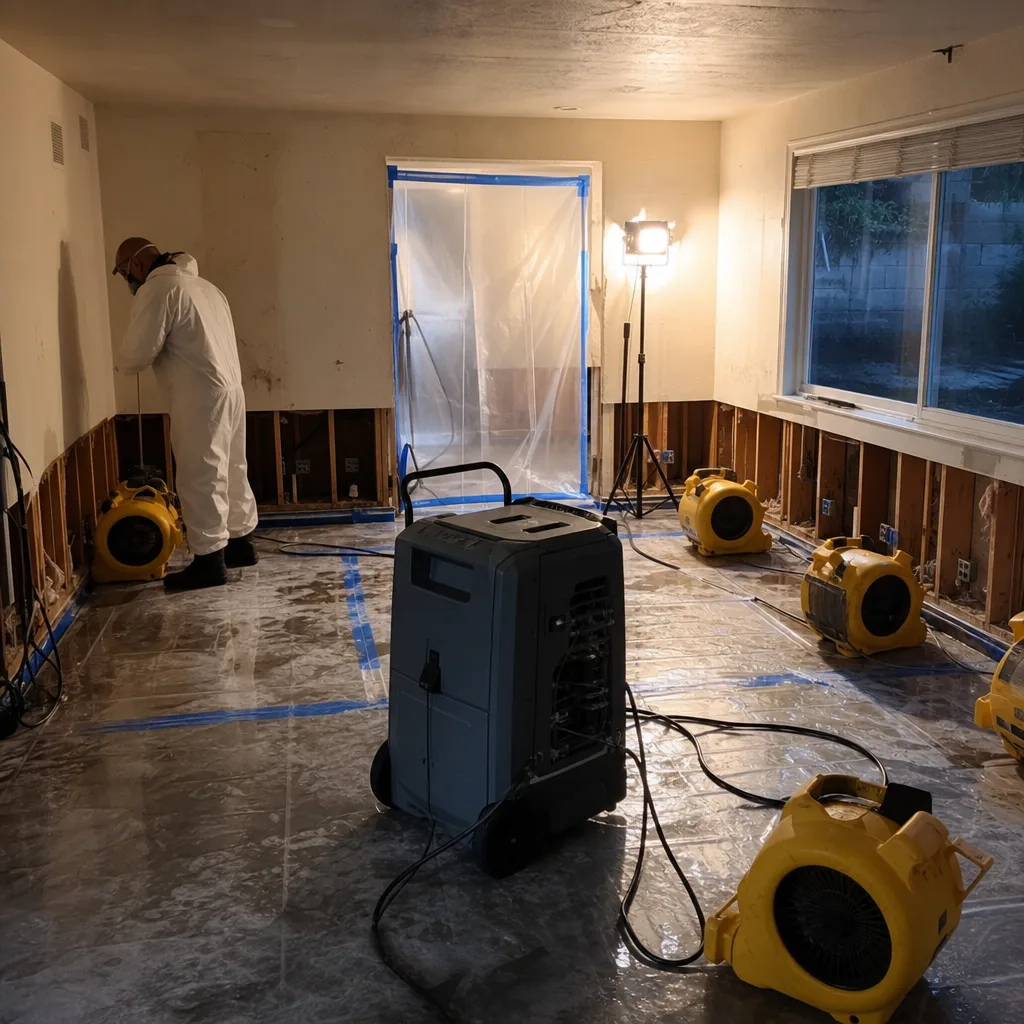
Structural drying runs on calculated air movement and dehumidification capacity, not guesswork. We deploy Dri-Eaz Revolution dehumidifiers and Phoenix 200 MAX units sized to the cubic footage and vapor load, with daily moisture readings logged to IICRC S500 standards. Tertiary drying - the final phase where bound moisture releases slowly from dense materials - often determines total job duration.
4. Cleaning & Sanitization
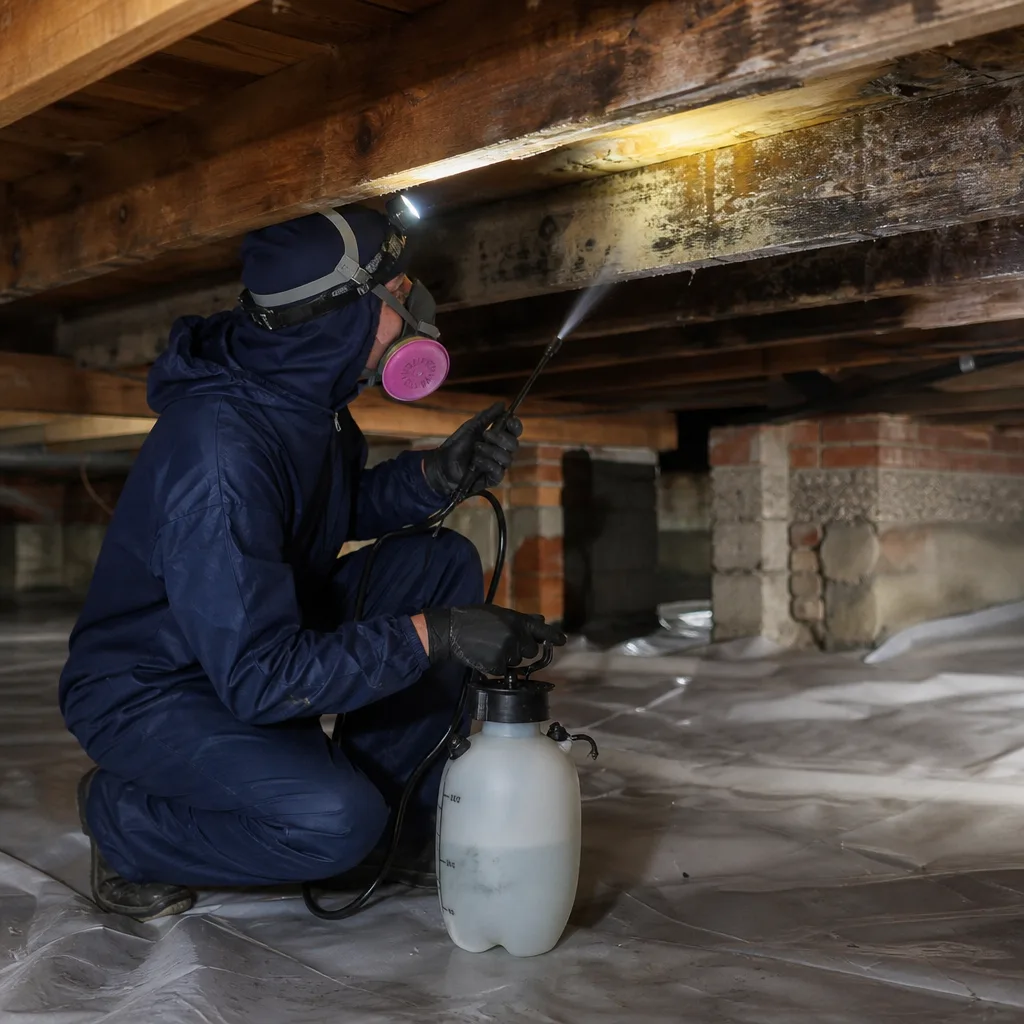
Antimicrobial application follows IICRC guidelines for the water category, with HEPA air scrubbers running during application to capture airborne particulate. In Camp Pendleton North’s government-spec housing, we use only approved products that meet Lendlease material standards.
5. Specialty Treatment for Hidden Damage
The PCS cycle discovery pattern - hidden mold behind baseboards, patched-over water stains, deferred storm damage from prior tenancies - requires expanded containment, air scrubbing, and often AMRT-directed remediation before reconstruction can begin. We document each finding with photos and written scope revisions.
6. Repairs & Restoration
Reconstruction uses government-spec materials per Lendlease contracts, with a written scope agreed before any rebuild starts. The 365-Day Done Right Promise, backed by The Haven Standard, covers all our work - if it’s not done right, we make it right.
Need Emergency Water Damage Restoration in Camp Pendleton North Now?
Crews minutes away, answering live 24 hours a day. The sooner we start, the less it costs.
Working With Your Insurance Company
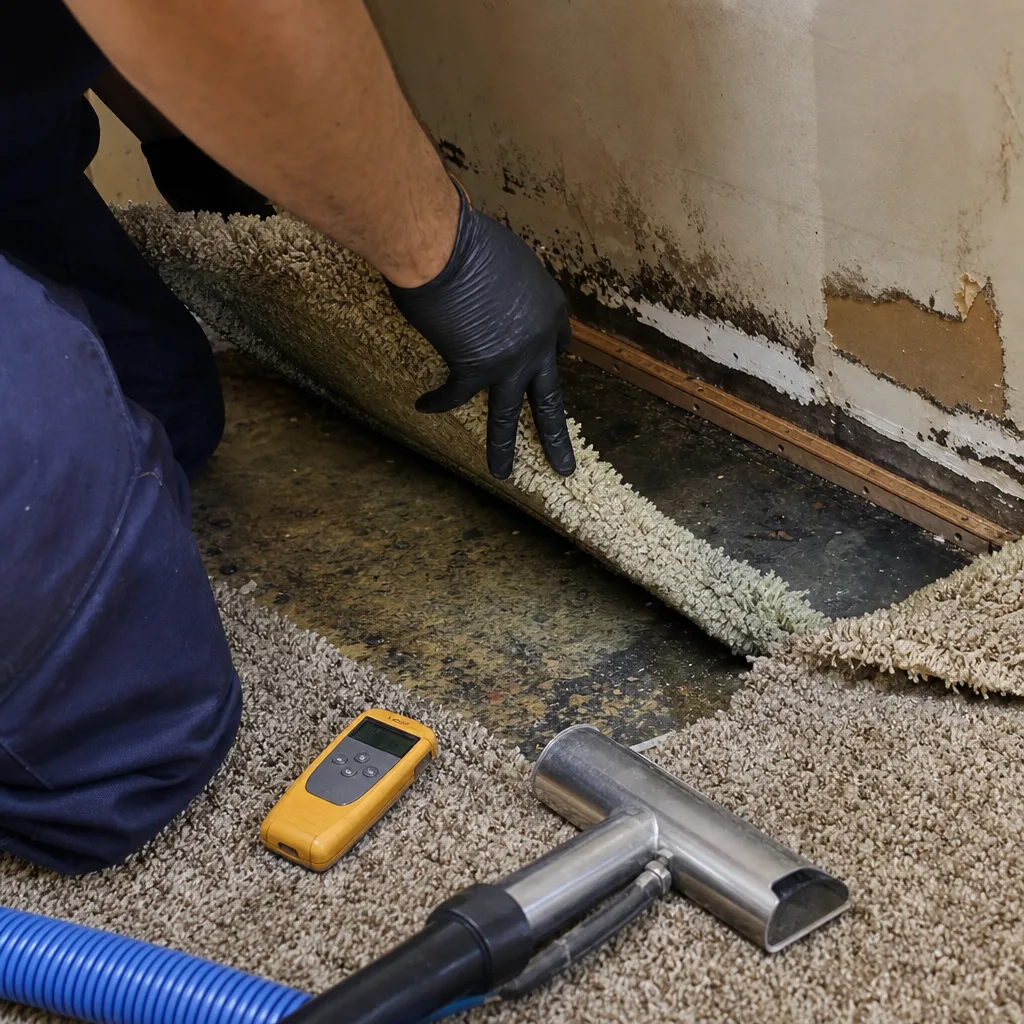
Insurance claims live or die on documentation. We know this because our founder, Alicia Brennan, built Back to Dry Restoration in 2011 after working as a claims adjuster and watching homeowners lose legitimate payouts to sloppy paperwork gaps. Every Camp Pendleton North job starts with photo documentation in the first hour and continues with daily drying logs, moisture readings, and written scope updates that match what carriers expect to see.
We write industry-standard estimates and communicate directly with adjusters, not through you as a relay. For military housing claims, we also coordinate with Lendlease procurement to ensure scope approvals align with insurance coverage - a dual-track process that off-base restoration companies rarely navigate correctly.
What We Provide Your Insurer
- Thorough documentation of the loss
- Photos of all damage, room by room
- Moisture readings and drying logs
- A detailed, line-item scope of work
- Direct coordination with your carrier
Built for Camp Pendleton North’s Loss Calendar
Camp Pendleton North sits in a coastal-to-inland transition zone where weather patterns collide. January through March brings the heaviest rainfall, with saturated soils along the Santa Margarita River corridor pushing water into lower-elevation housing areas through foundation seepage and overwhelmed drainage. The February storm that hit Stuart Mesa last year is typical - sustained rain plus wind-driven intrusion through failed thresholds.
April and May see less volume but more velocity: flash storms on dry ground run off hardscaped military housing pads faster than they absorb, overwhelming gutters and finding any gap in roof flashing. June through October is dry season, but the Santa Ana wind events that funnel through Camp Pendleton’s valleys drive ember and smoke damage from wildfires - and when suppression efforts follow, the water damage from fire hoses adds a second loss type to the same property.
November and December bring the secondary water damage season: not from rain, but from temperature swings that stress aging supply lines in mid-century structures and from move-out turnover where PCS inspections finally reveal damage that went unreported for one or two prior tenancies.
Water Damage Restoration Across Camp Pendleton North’s Neighborhoods
Stuart Mesa, in the northern housing area, sits closest to the coastal influence and sees the most wind-driven rain intrusion through doors and windows. The standardized post-2000 units here have better vapor barriers but repeated Santa Ana exposure tests every seal; we find category 2 losses behind impact-rated doors that passed visual inspection but leaked at the threshold. Our crews know to check the subfloor assembly, not just the visible track, because Lendlease work orders typically describe “water near the door” while the actual damage extends two feet into the wall cavity.
South Mesa and the 32 Area housing cluster, further inland, face different patterns. The older mid-century structures here have concrete slab foundations with original copper supply lines that fail at solder joints after decades of mineral buildup. When a line bursts in a slab, we don’t just extract standing water - we map the migration path through the slab edge and into wall baseplates, often finding prior repairs that created new pathways for moisture. The government-spec materials requirement means we can’t simply match like-for-like; we source approved replacements through Lendlease procurement channels.
The Santa Margarita River corridor housing, lowest in elevation, floods first and dries last. These units see category 3 losses from river water intrusion, with full gut requirements for porous materials and extended drying timelines for the concrete masonry units that form the foundation walls. We’ve documented jobs here where vapor pressure differential remained elevated for 14 days despite aggressive dehumidification - the masonry was still releasing bound moisture from the flood event.
Wire Mountain, with its mix of renovated and original structures, produces the most complex scopes. The renovation layers create irregular wall cavities where moisture moves unpredictably, and the PCS cycle means we routinely open walls to find three generations of repair: original plaster, a 2010 drywall overlay, and a 2019 patch job, each with different absorption rates and drying requirements. Our moisture mapping protocol accounts for these variables before we set the first air mover.
Specialized Water Damage Restoration Services We Offer in Camp Pendleton North
Emergency Water Extraction
Standing water removal starts within 45 minutes of work order clearance, using truck-mounted extraction rated at 20+ gallons per minute. In Camp Pendleton North’s connected housing, speed matters for adjacent units as much as for the primary loss - water moves through shared walls faster than most residents realize. Typical extraction runs $950-$1,800 for residential units.
Structural Drying & Dehumidification
Calculated drying based on psychrometric data, not equipment counts. We size Dri-Eaz and Phoenix dehumidifiers to the actual vapor load, measured in grains per pound, and reposition air movers daily based on moisture readings. Structural drying in Camp Pendleton North typically adds $1,400-$3,200 to the extraction base, with older mid-century structures running higher due to dense materials and irregular cavities.
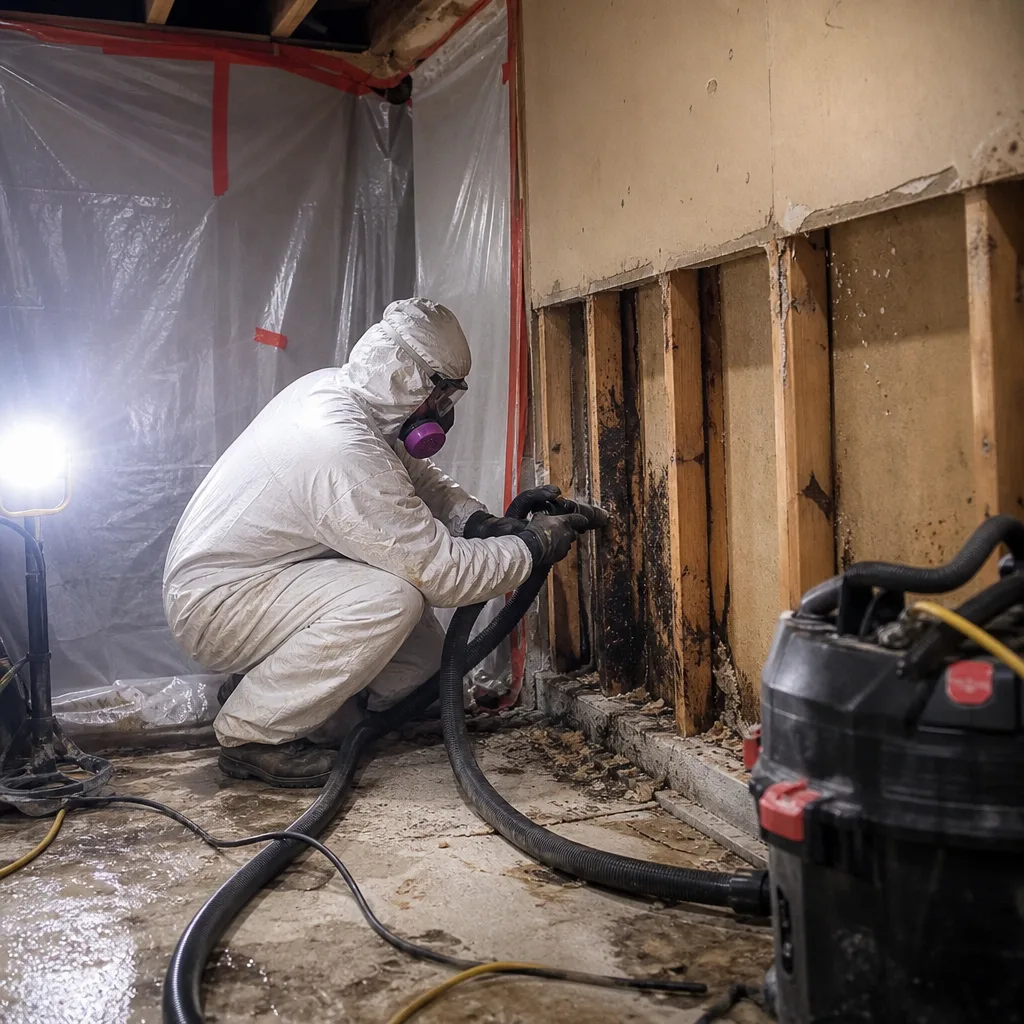
Flood Cleanup
Category 3 flood events from the Santa Margarita River corridor require full PPE, negative air containment, and removal of all porous materials per IICRC S500. We coordinate with Lendlease for government-spec replacement materials and document every removed item for insurance and housing inventory purposes. Flood cleanup in Camp Pendleton North starts around $4,500 and ranges to $12,000+ for whole-unit gutting.
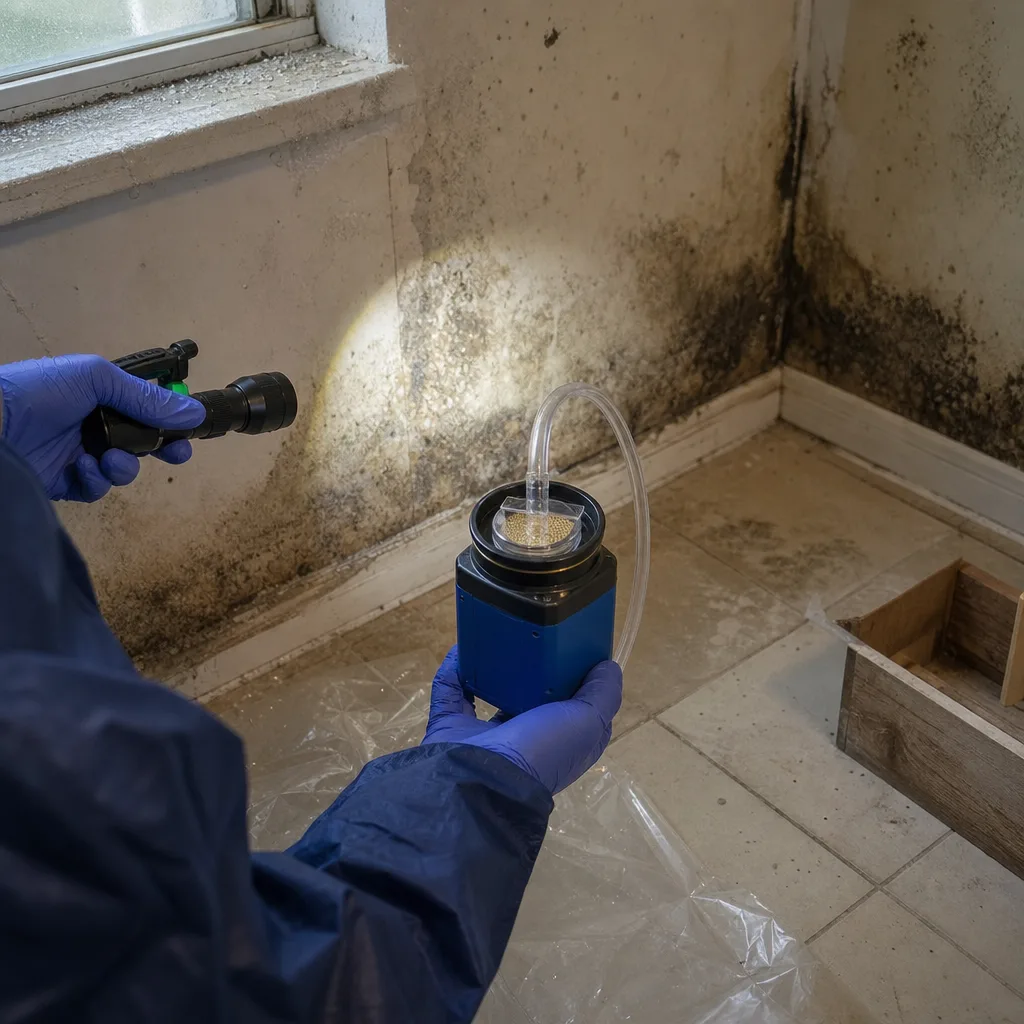
Burst Pipe Restoration
Slab leaks and failed copper joints in older housing require moisture mapping that extends well beyond the visible wet area. We use thermal imaging to trace the migration path, then section drywall and remove baseboards to expose the full affected area. The written scope includes both mitigation and the reconstruction phase, with materials sourced through Lendlease-approved channels.
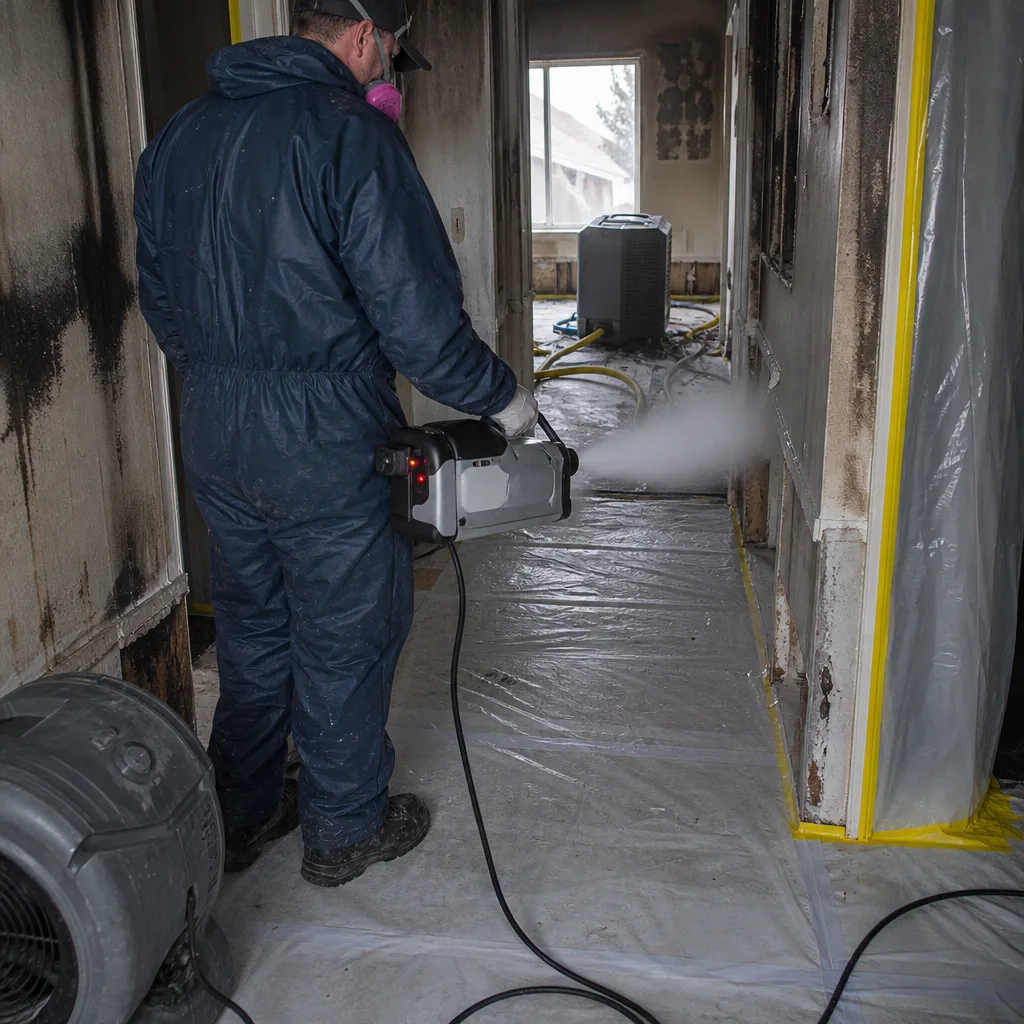
Ceiling & Roof Leak Water Damage
Camp Pendleton North’s flat and low-slope roofs on standardized housing units pond water during sustained rain, and the Santa Ana wind events drive it through compromised flashing. Ceiling damage here often masks wall cavity saturation that extends to the floor line - our inspection protocol includes vertical moisture mapping, not just the obvious stain. We document the roof condition for Lendlease maintenance coordination and handle the interior restoration.
What happens when you call
- 1
A real person answersNo phone trees - you reach a local pro.
- 2
You get an upfront price rangeHonest numbers before anyone is dispatched.
- 3
A background-checked tech heads outLicensed & insured, dispatched right away.
- 4
You approve before work beginsNothing starts until you say go.
Water Damage Restoration Costs in Camp Pendleton North, CA
| Service Component | Typical Range in Camp Pendleton North |
|---|---|
| Emergency water extraction (residential unit) | $950 - $1,800 |
| Structural drying & dehumidification | $1,400 - $3,200 |
| Category 1 clean water, full mitigation | $2,800 - $4,500 |
| Category 2 gray water, with material removal | $3,800 - $6,200 |
| Category 3 flood, gut and dry | $4,500 - $12,000+ |
| Hidden damage expansion (PCS-cycle discoveries) | +30% - +60% of initial scope |
What moves the price: water category (clean vs. contaminated), square footage affected, whether water reached wall cavities or stayed on the surface, and the discovery of layered prior damage once mitigation begins. Insurance typically covers sudden and accidental water damage; gradual leaks and deferred maintenance fall to the housing management or, in some PCS situations, to the departing tenant. We sort this out in the written scope before work starts - Haven Standard, Clause 1 - so there are no surprises in the final invoice.
Every estimate starts with a free visual inspection and moisture mapping. Call (760) 546-9565 to schedule.
We Also Serve Cities Near Camp Pendleton North
Our Water Damage Restoration in Camp Pendleton North crews also respond to losses in Oceanside, Camp Pendleton South, Vista, and Carlsbad. Each market has distinct housing stock and loss patterns, but our documentation-first approach and DoD credentialing for base-access work remain consistent.
Serving Camp Pendleton North, CA - Our Local Coverage Area
We’re based in the Camp Pendleton North area and know this community well. Use the map below to see our service coverage - if you’re nearby, we can almost certainly help.
Camp Pendleton North Water Damage Restoration Questions, Answered
Can any Oceanside restoration company do water damage work inside Camp Pendleton North?
No. Contractors must hold active DoD base-access credentials, and all work orders flow through Lendlease Communities rather than direct homeowner engagement. A crew without credentials will be turned away at the gate, and by that point water has typically sat long enough for mold to begin on wet drywall within 24 to 48 hours. We maintain current credentials specifically for this access requirement. Call (760) 546-9565 - we’re already cleared.
What does a failed door actually do to a Camp Pendleton North home in a storm?
A failed threshold or wind-rated door seal lets Santa Ana-driven rain into the wall cavity behind the track, creating a category 2 loss that appears minor at the entry point but extends two feet or more into the assembly. What looks like a small puddle on the floor often means saturated baseplates, wet insulation, and wicking into the subfloor. We map the full extent with thermal imaging before writing the scope. Call (760) 546-9565 for inspection.
How fast does water damage become a mold problem in on-base housing?
Mold colonization begins on wet drywall in 24 to 48 hours at typical indoor temperatures. In Camp Pendleton North’s standardized housing, the paper facing on drywall is particularly susceptible, and the PCS cycle means prior moisture events may have already compromised the assembly. Our protocol includes antimicrobial application at 48 hours if drying hasn’t reached target moisture content, and we document the decision in daily drying logs. Call (760) 546-9565 - speed matters.
Why do restoration scopes in Camp Pendleton North often grow after work starts?
Military families rotate on 2-3 year PCS cycles with mandatory move-out inspections, so damage from prior tenancies frequently goes unreported or is patched over rather than properly mitigated. When we remove baseboards or section drywall for current water damage, we find hidden mold, patched stains, and deferred storm damage that the initial walkthrough couldn’t reveal. We document each finding with photos, revise the written scope with Lendlease approval, and continue - never adding work without a signed amendment. Call (760) 546-9565 to discuss your work order.
Does the category of water change what can be saved in a Camp Pendleton North unit?
Yes. Category 1 clean water allows salvage of most porous materials if drying starts within 24 hours. Category 2 requires removal of carpet pad, sectioned drywall to a defined cut line, and antimicrobial treatment - carpet may be saved with hot-water extraction but pad always goes. Category 3 flood or sewage contamination means all porous structural materials must be removed and replaced per IICRC S500, with HEPA containment during removal. Lendlease housing standards add material approval requirements for all replacements. Call (760) 546-9565 for category classification on your loss.
How does insurance coverage work for water damage in military housing?
Coverage depends on the loss source and the housing type. Sudden and accidental damage - burst pipes, storm intrusion - typically falls under the service member’s renter’s insurance or the housing management’s policy. Gradual leaks and maintenance issues often don’t. We document the loss cause in our initial report, coordinate directly with the adjuster, and provide the photo record and drying logs that support the claim. For Camp Pendleton North work orders, we also align scope with Lendlease procurement requirements. Call (760) 546-9565 and we’ll review your specific situation.
How long does structural drying take in Camp Pendleton North’s housing?
Standard post-2000 units with predictable cavities dry in 3-5 days. Older mid-century structures with dense materials and irregular assemblies run 5-10 days, and flood events in the Santa Margarita River corridor can extend to 14 days for concrete masonry foundations. We don’t guess at completion - daily moisture readings against IICRC dry standards determine when equipment comes out, and we log every reading for your insurance file. Call (760) 546-9565 to schedule moisture mapping.
What should I do in the first 30 minutes after discovering water damage?
Stop the water source if you can do so safely - shut off the supply valve for plumbing leaks, or call housing maintenance for roof or exterior breaches. Remove standing water with towels or a wet/dry vacuum if available, but don’t enter areas with electrical hazards or category 3 contamination. Then call (760) 546-9565. Our live answer takes your information, confirms your Lendlease work order status if applicable, and dispatches a credentialed crew. The first hour determines whether you’re drying in place or removing materials.
Every job we take in Camp Pendleton North runs under The Haven Standard: written price before work begins, photo documentation on every visit, and the 365-Day Done Right Promise. We’ve restored 12,000+ homes since 2011, each with the same documentation discipline that turns restoration invoices into payable claims. Our Water Damage Restoration team holds WRT, FSRT, and AMRT certifications, deploys professional-grade Dri-Eaz, Phoenix, and XPOWER equipment, and coordinates directly with your insurance adjuster from the first hour.
Call (760) 546-9565 for a free visual inspection and written estimate. Estimates are free. Documentation is standard. Surprises are not.
Written by Alicia Brennan, Owner at Back to Dry Restoration, serving Camp Pendleton North since 2011.
Water Damage Restoration in Nearby Areas