

Free visual inspection and a written scope of work before any mitigation begins - photos, moisture readings, and drying logs go in your claim file
The scope we write is the scope we bill. Anything new gets shown to you, in writing, before we touch it.
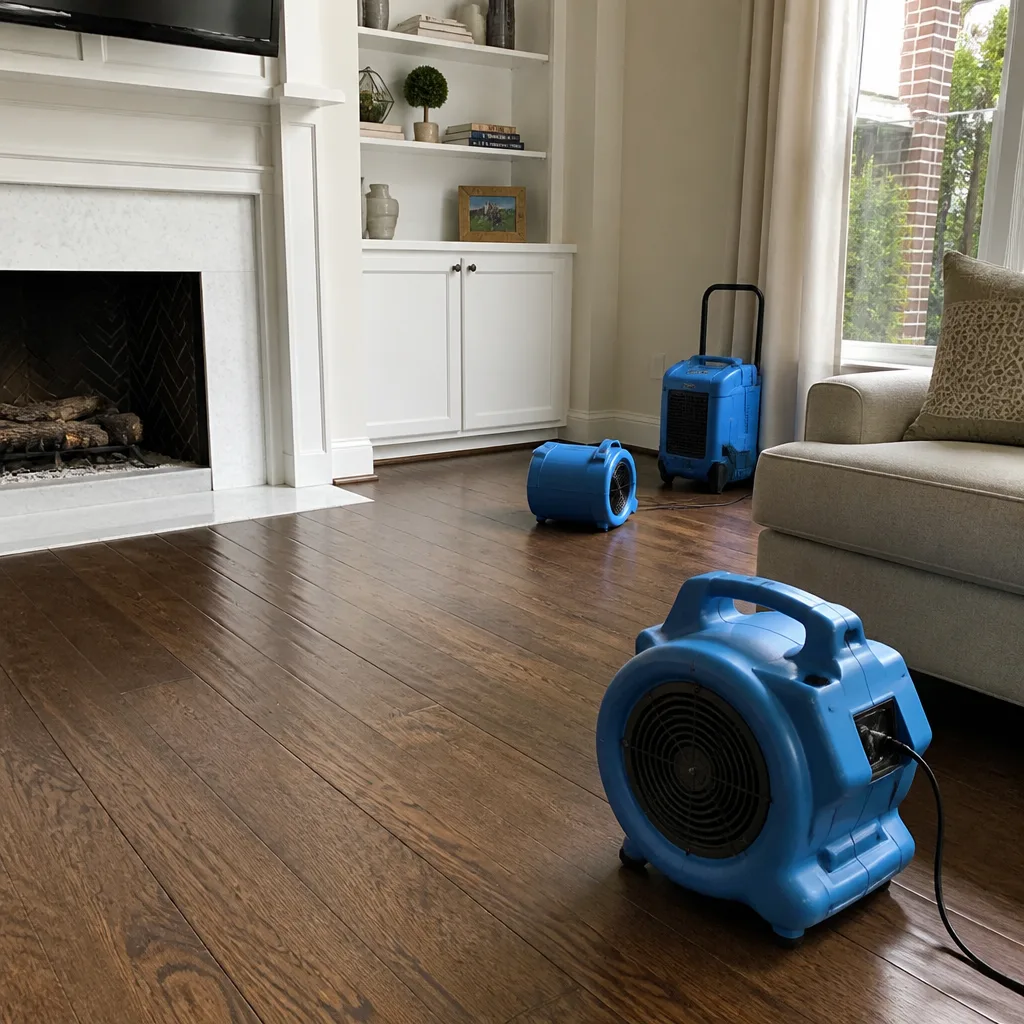
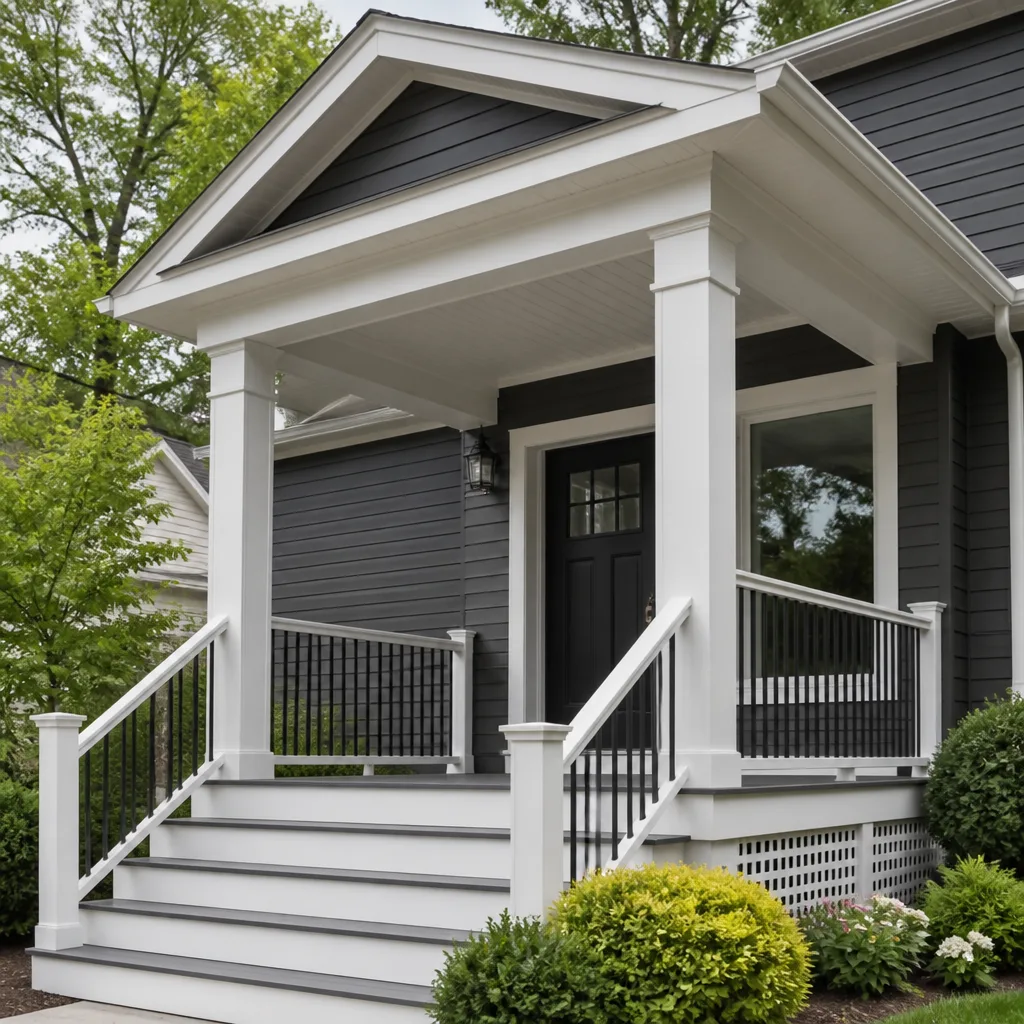
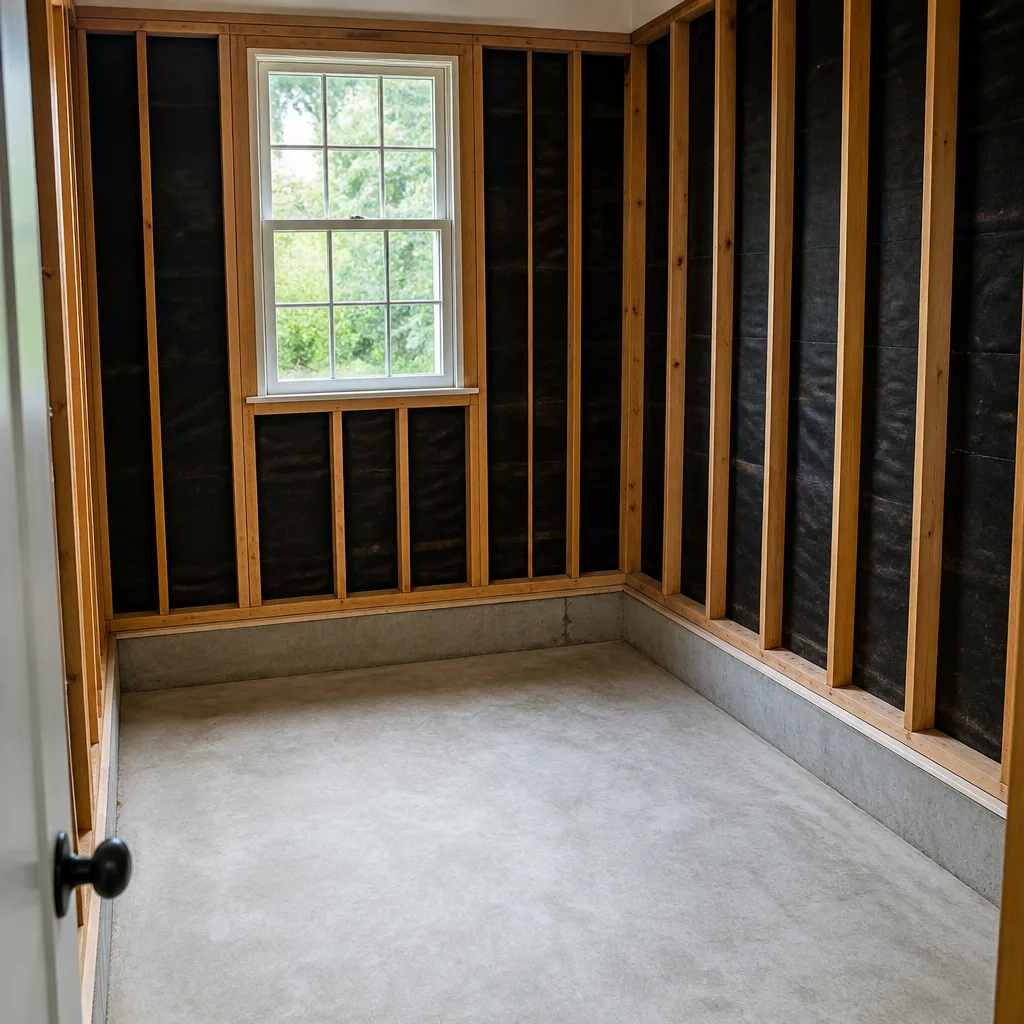
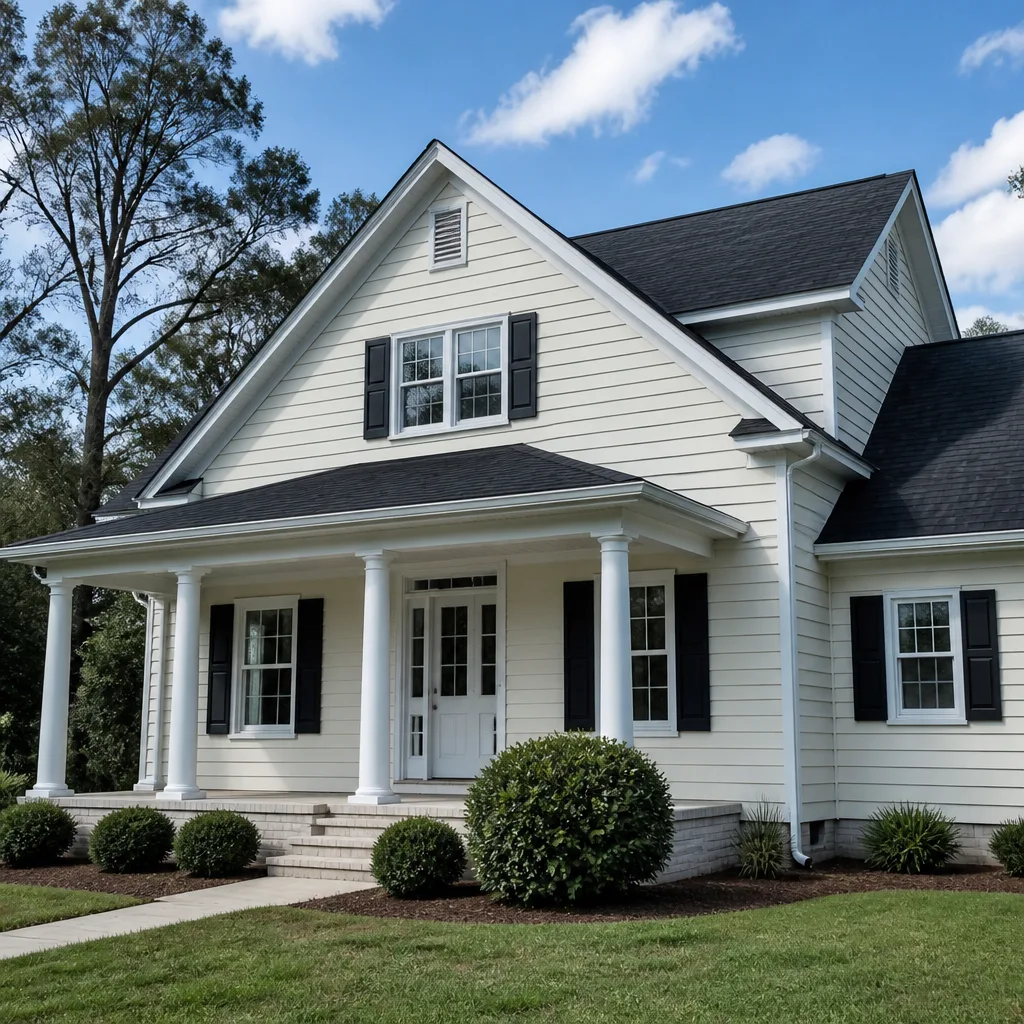
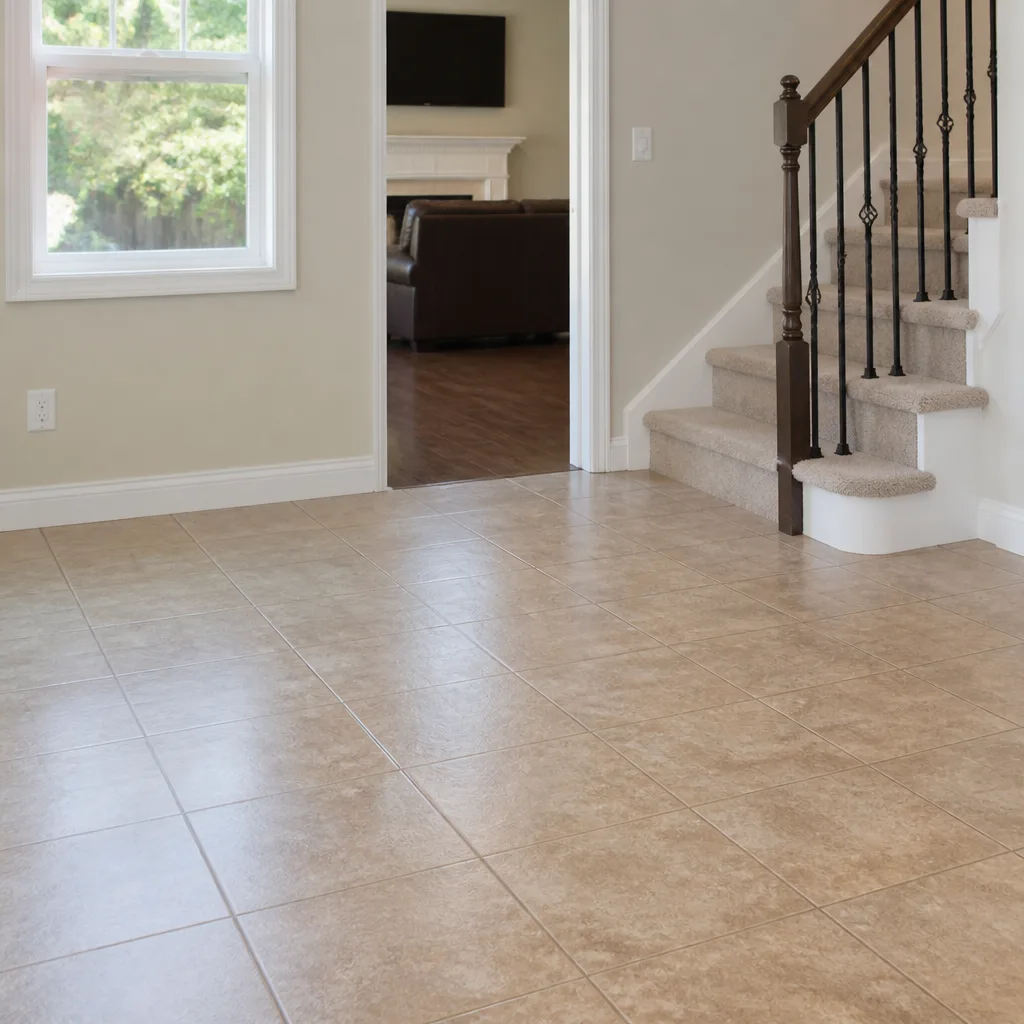
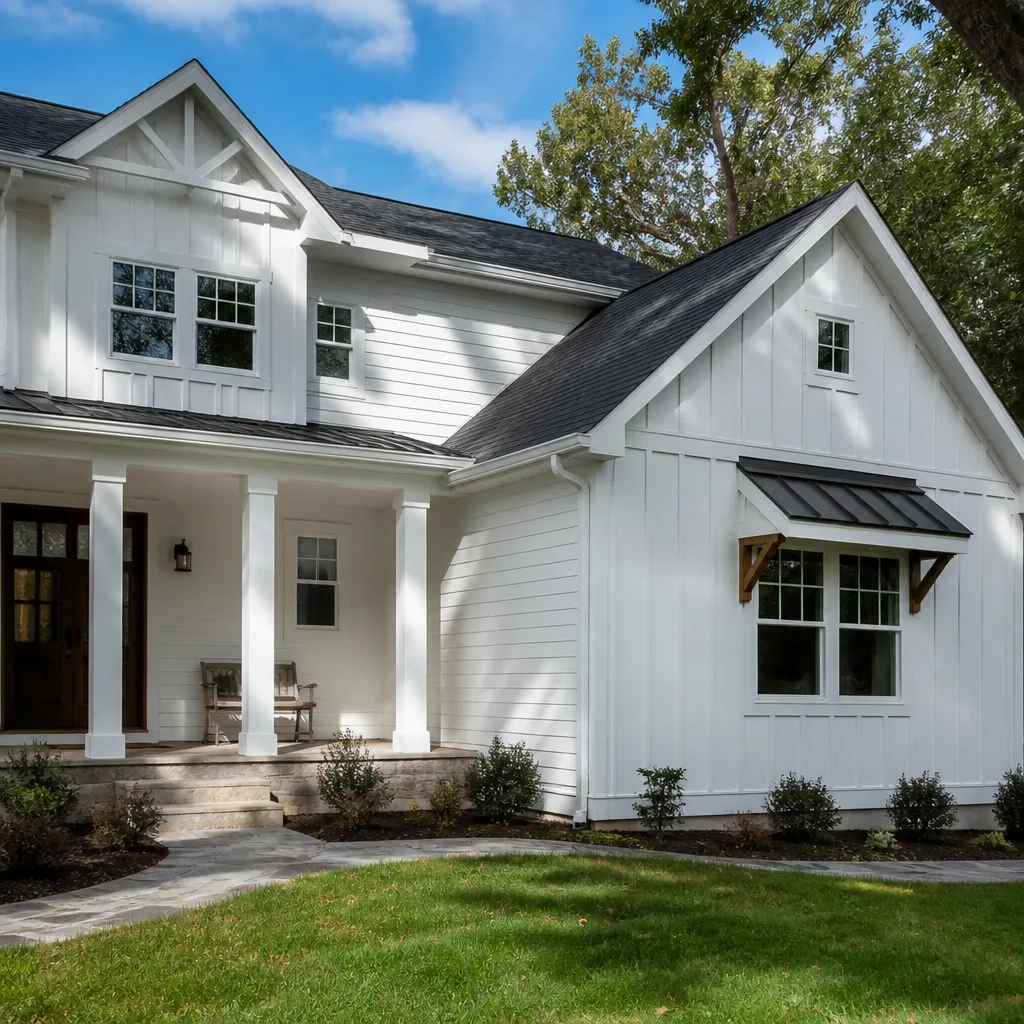
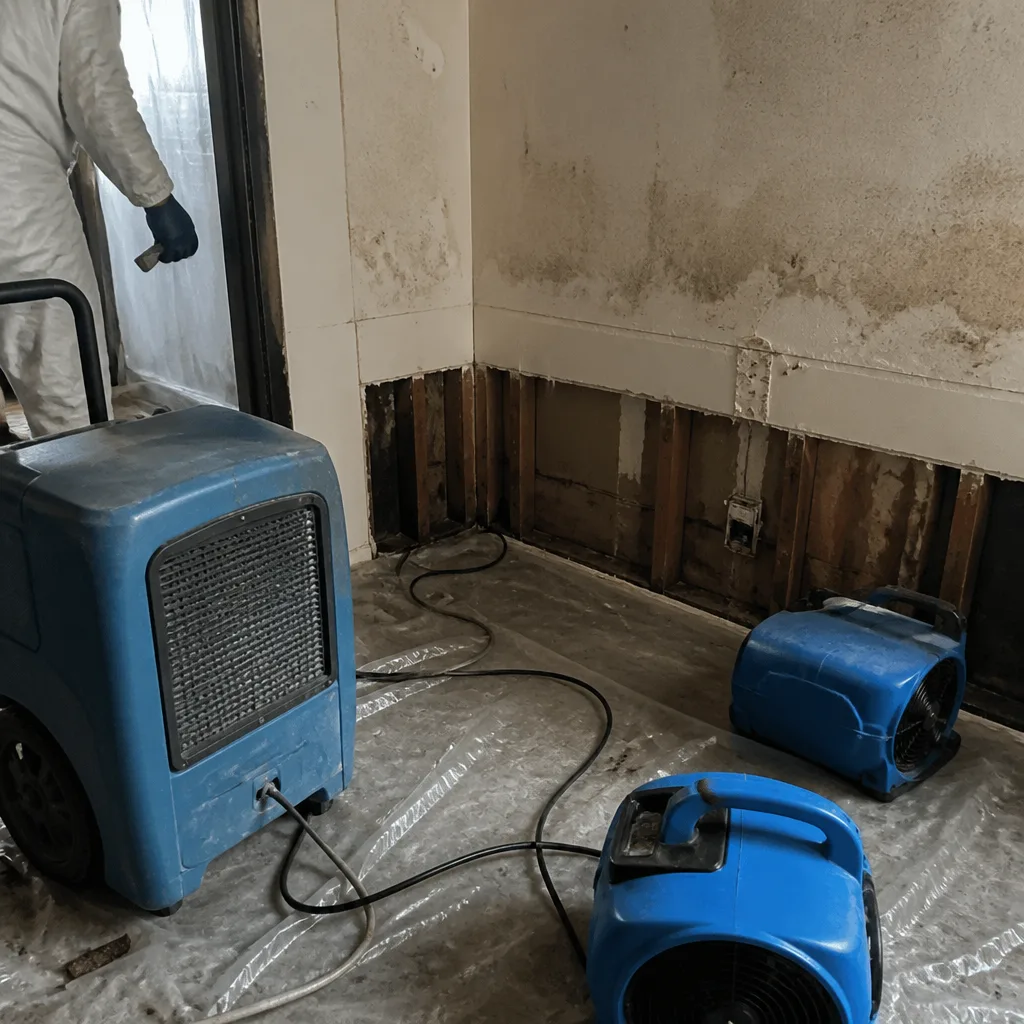 Before
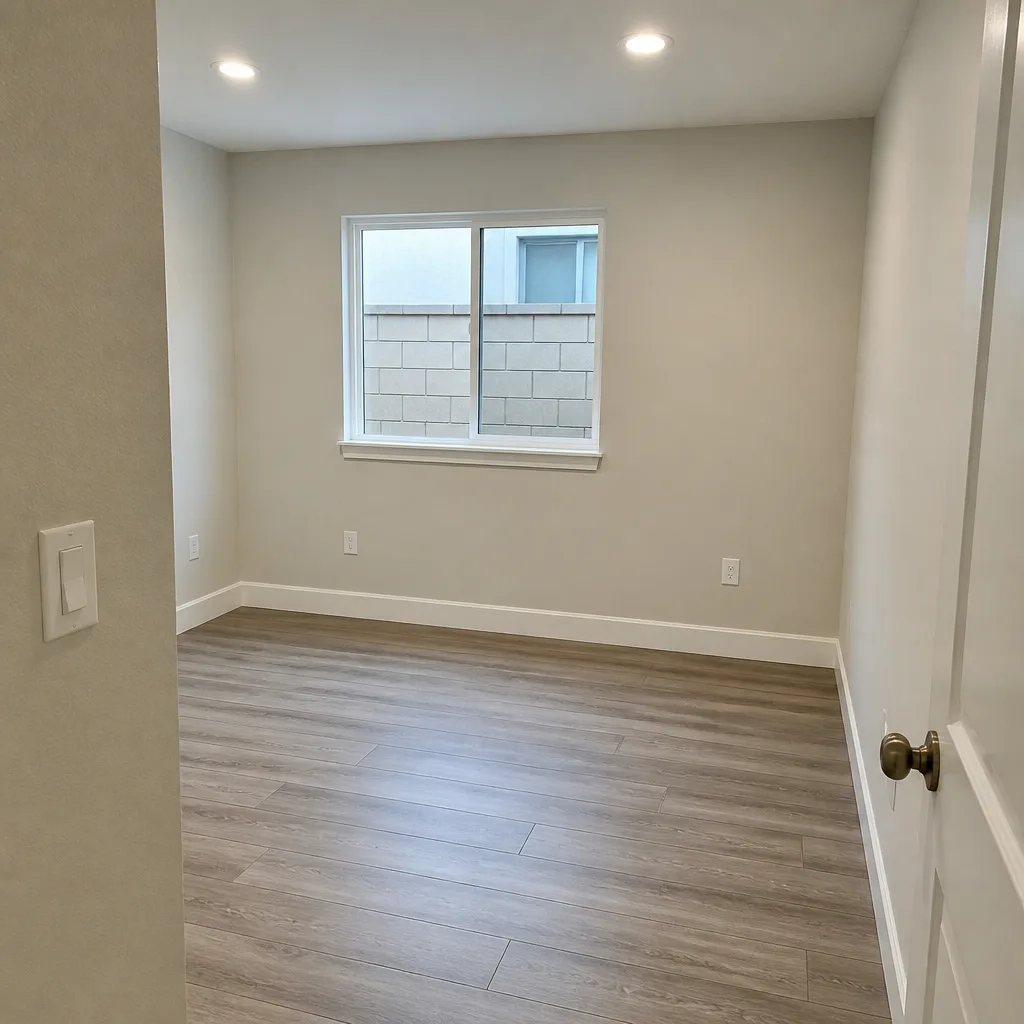 After
After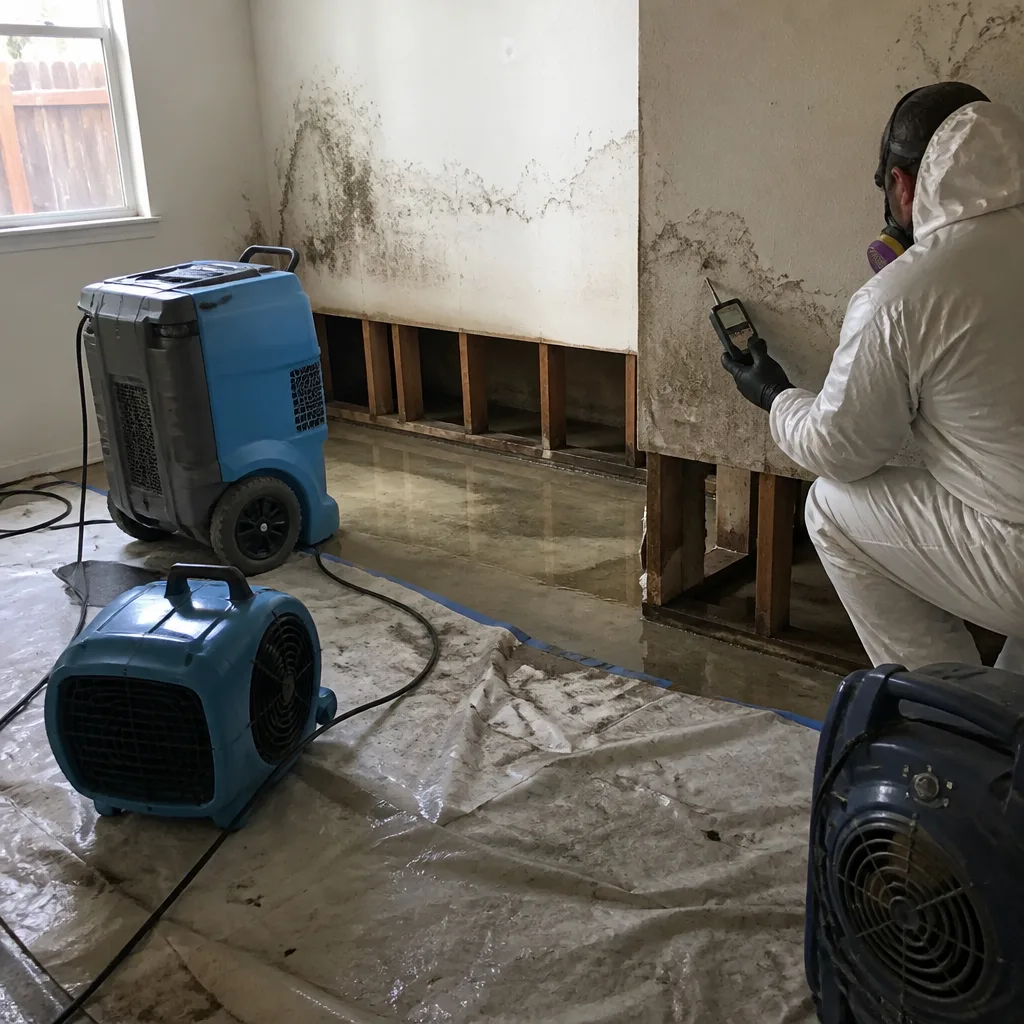 Before
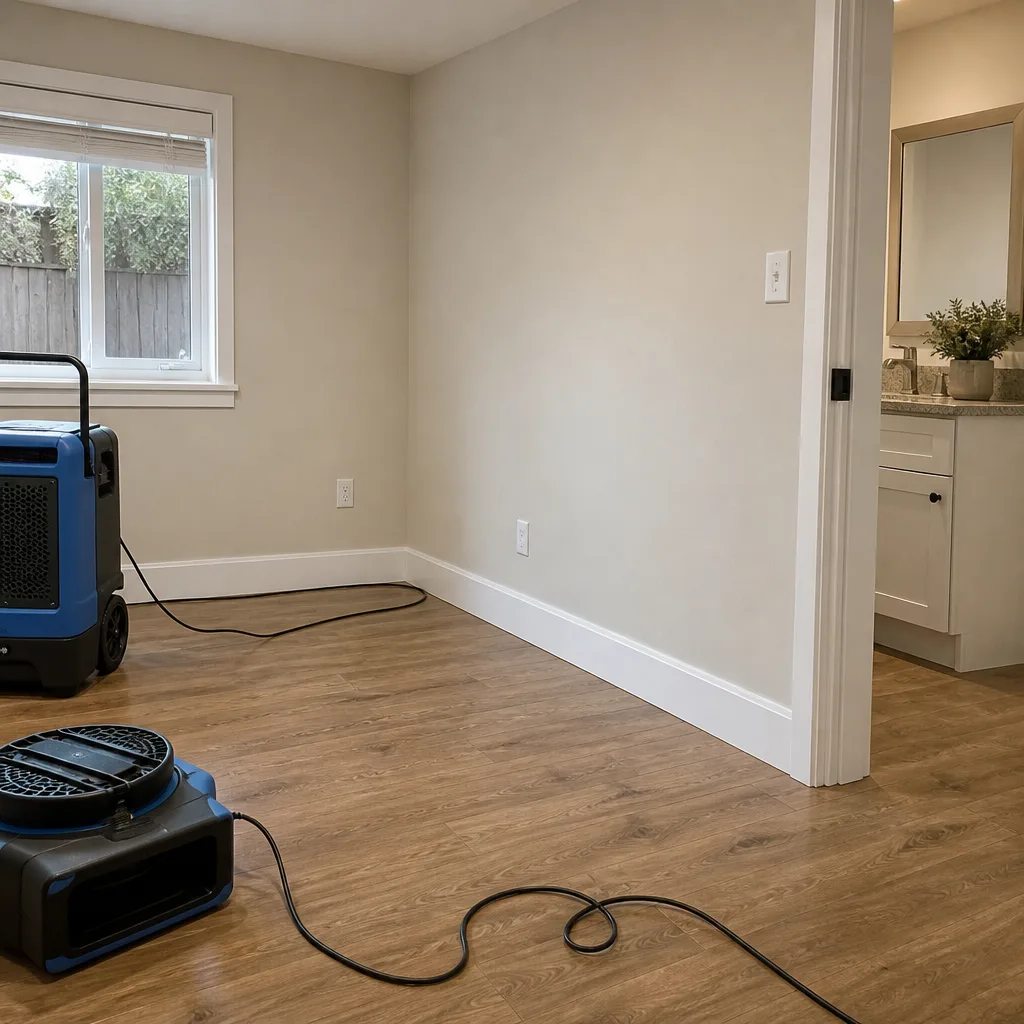 After
After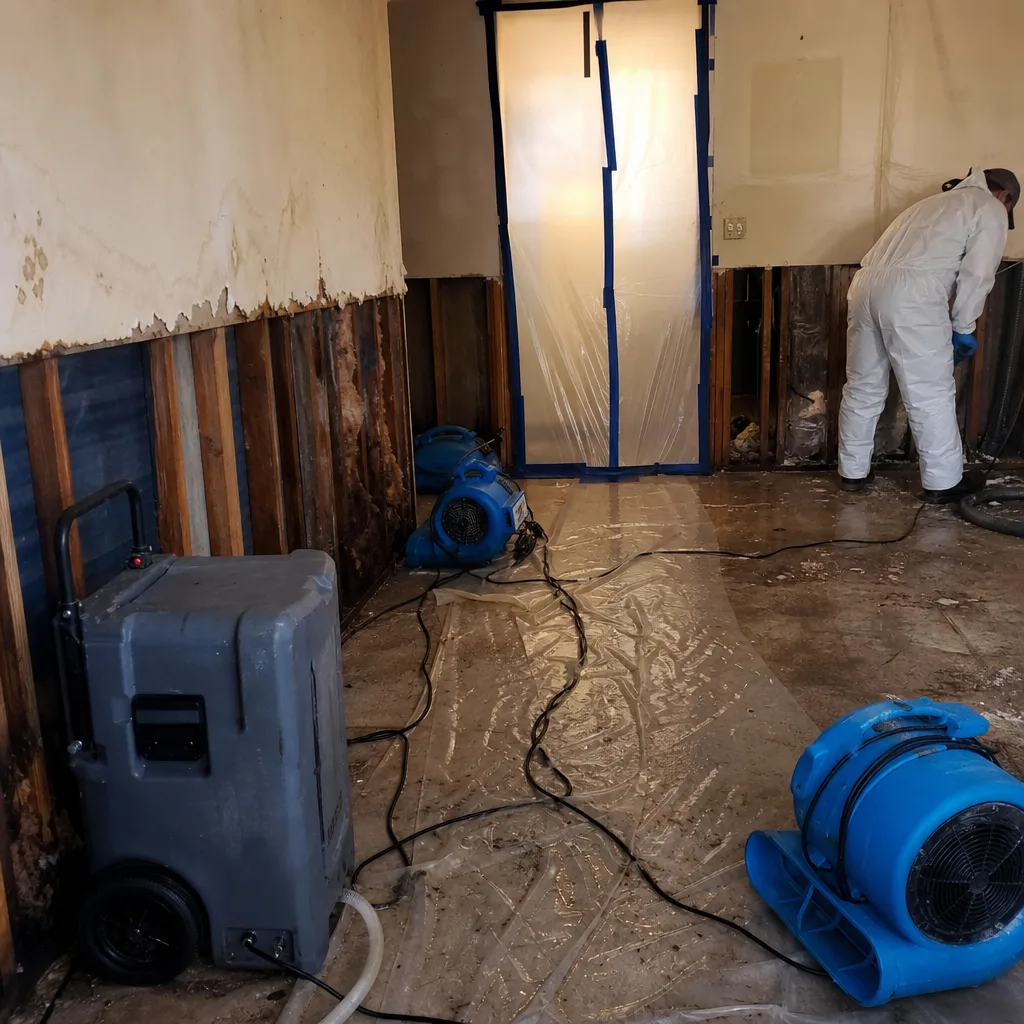 Before
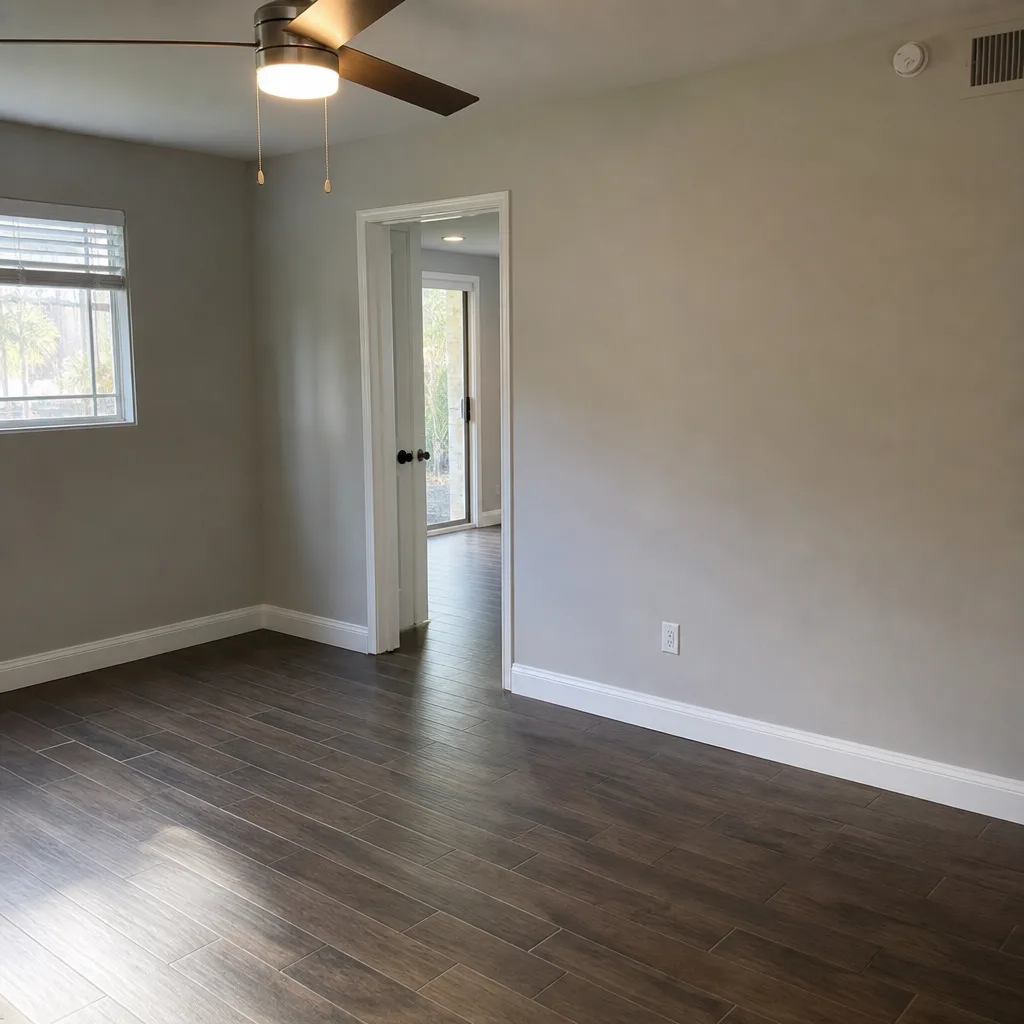 After
After24/7 Emergency Mold Remediation in Fallbrook
Mold remediation in Fallbrook typically costs $1,800-$6,500 depending on affected square footage, with containment-level work starting around $3,200 for an average crawl space or attic. Most jobs require 3-5 days from containment setup to clearance testing. Call (760) 546-9565 now and a live person will answer, 24 hours a day, no voicemail. Crews dispatch throughout Fallbrook’s canyon corridors and hillside neighborhoods within 45 minutes of your call.
The first hour determines whether mold stays contained to one room or colonizes the HVAC. In Fallbrook’s chaparral foothills, moisture often enters through fire-compromised roof decks and ember-ash clogged ventilation pathways rather than obvious plumbing failures. That means the visible water stain on your ceiling may be the secondary problem, while the primary moisture source sits in a heat-warped attic sheathing layer that a standard inspection misses. We run thermal imaging and moisture mapping on every Fallbrook call to find the actual source, not just the symptom.
Our Mold Remediation team provides a free visual inspection, documents every reading in writing, and delivers a firm scope with price before any containment goes up. Haven Standard, Clause 1: written price before work begins. Every time.
Understanding Mold Remediation Severity in Fallbrook Properties
Mold damage in Fallbrook follows a severity scale that maps directly to how moisture entered and how long it went undetected. Category 1 mold growth, limited to less than 10 square feet of visible colonization on a non-porous surface, typically responds to surface remediation with HEPA vacuuming and antimicrobial application. Category 2 involves porous materials like drywall or carpet pad with 10-100 square feet of growth, requiring physical removal of affected materials, negative air containment, and air scrubbing with HEPA filtration. Category 3 exceeds 100 square feet or involves HVAC contamination, demanding full containment with vapor barrier walls, decontamination chambers, and third-party clearance testing before reoccupancy.
Fallbrook’s housing stock drives these categories in specific ways. The 1950s-1980s ranch homes on large agricultural parcels often have original wood-shake or aging composition roofing that fails gradually, sending intermittent moisture through attic spaces for months before anyone notices. By the time a homeowner smells mustiness, the colony has spread across roof-deck sheathing and into insulation cavities. Custom hillside builds on irregular lots present the opposite problem: complex roof geometries create dead-air spaces where condensation accumulates, especially when Santa Ana winds drive warm, dry air against cooled interior surfaces. We document every affected material classification by trade name in our written scope: oriented strand board sheathing, R-30 fiberglass batt, Type X gypsum, redwood tongue-and-groove.
Psychrometric data, the measurement of temperature, relative humidity, and vapor pressure differential, tells us whether conditions remain conducive to growth after visible mold is removed. Vapor pressure differential, the force that drives moisture from wet areas to dry ones, is especially relevant in Fallbrook’s canyon homes where temperature swings between day and night can exceed 30 degrees. Without correcting that differential through dehumidification and air sealing, mold returns regardless of how clean the surface looks.
Why Fallbrook Property Owners Choose DryMark Restoration Oceanside
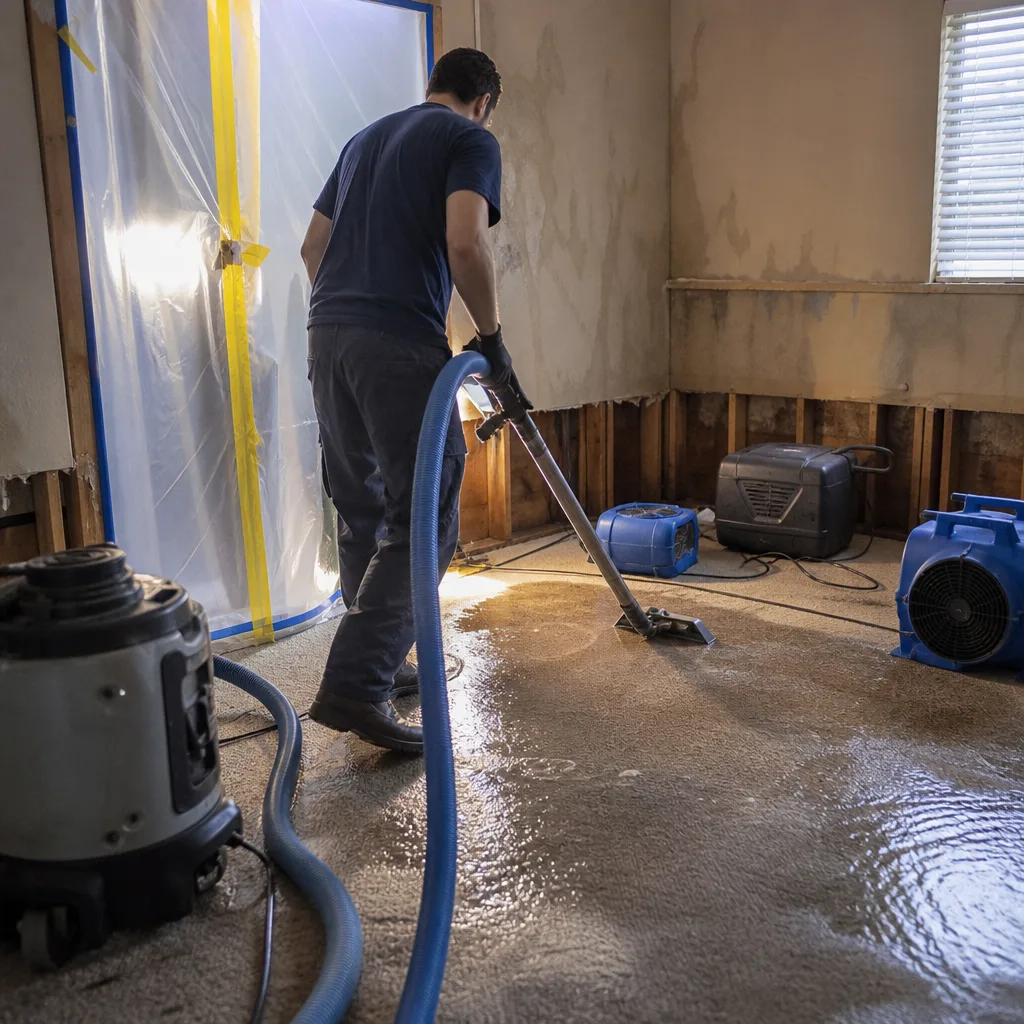
- 45-minute response commitment to Fallbrook addresses from our San Diego-coordinated dispatch, with crews already staged for the canyon roads off South Mission and Reche.
- 24/7 live answer by a real person, never an automated system or voicemail tree, because mold doesn’t wait for business hours and neither do Santa Ana wind leaks.
- IICRC-certified crews holding AMRT (Applied Microbial Remediation Technician) and WRT (Water Damage Restoration Technician) certifications, with license numbers documented on every job file.
- Free visual inspection including thermal imaging and moisture meter readings, with findings written on site before we leave.
- Direct insurance billing with photo-documented estimates formatted to carrier standards, plus direct adjuster coordination so your claim moves without documentation gaps.
- One team from mold containment through reconstruction, meaning the same crew that sets up your negative air enclosure returns to install the replacement drywall and finish paint.
BeforeAfterOur Mold Remediation Process
1. Inspection & Assessment
We map moisture across all affected and adjacent areas using FLIR thermal imaging, pinless and penetrating moisture meters, and borescope cameras for wall cavities. In Fallbrook, we specifically inspect roof-deck sheathing for heat-warping from past fire exposure and check HVAC return plenums for ember-ash residue that traps moisture. Every reading is logged with location, material, and percentage moisture content.
2. Containment & Air Filtration
We erect polyethylene vapor barrier walls sealed with zipper doors and negative air machines maintaining 0.02 inches of water column pressure differential, preventing spore migration to clean areas. HEPA air scrubbers from Phoenix and Dri-Eaz run continuously, filtering to 99.97% at 0.3 microns. In hillside homes with open floor plans, we sometimes build multiple containment zones to protect finished spaces.
3. Mold Removal & Material Disposal
Affected porous materials, drywall, insulation, carpet pad, and degraded wood are removed in sealed bags following IICRC S520 standards. Non-porous surfaces receive HEPA vacuuming and antimicrobial treatment with EPA-registered products. We photograph every square foot of removed material for your insurance file and our drying log.
4. Drying & Dehumidification
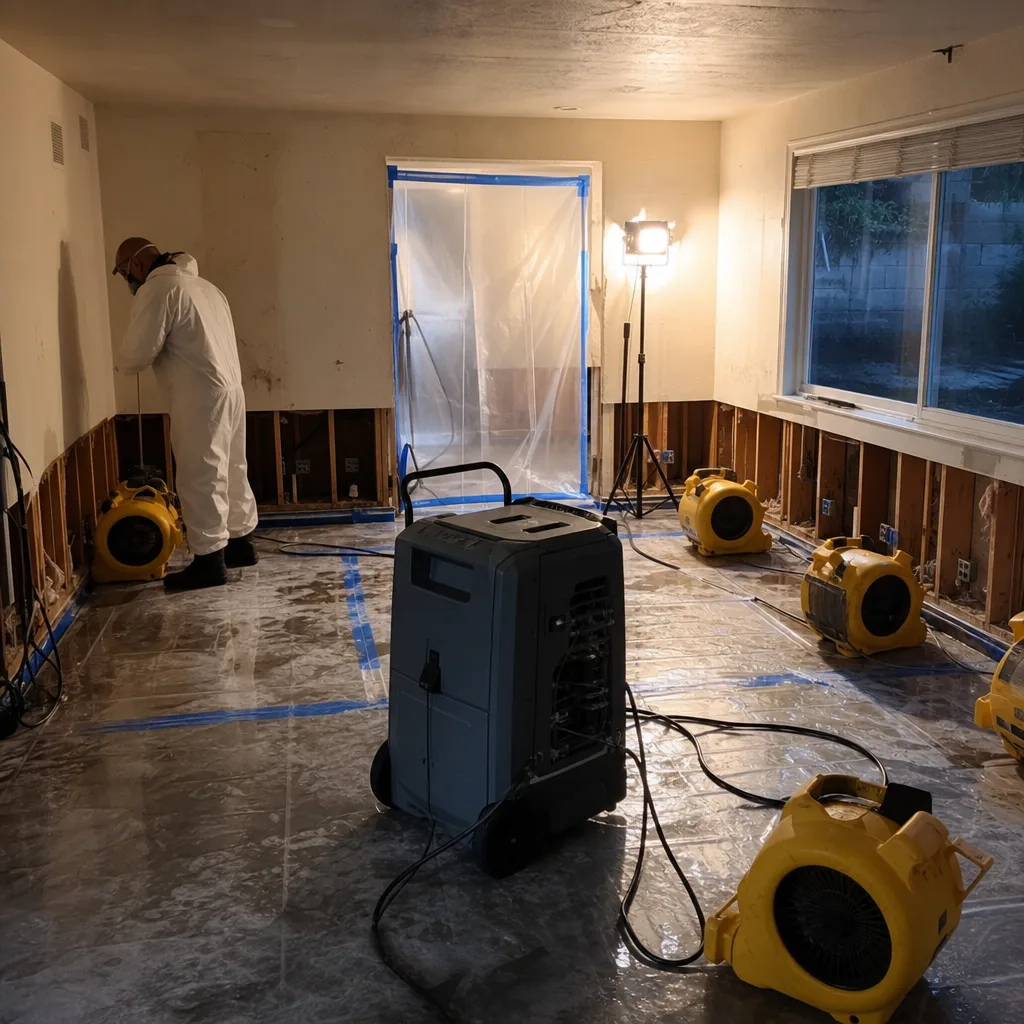
We deploy LGR dehumidifiers from Dri-Eaz and Phoenix, plus axial and centrifugal air movers from XPOWER, to achieve and maintain 30-50% relative humidity. For dense structural materials, we use Injectidry systems with panel drying mats or wall-cavity injection tubes to force dry air through enclosed spaces. Daily moisture logs track progress to tertiary drying, when materials reach their pre-loss equilibrium moisture content.
5. HVAC & Air Quality Restoration
Fallbrook’s fire-driven moisture pathways mean we frequently find ember-ash contamination in ductwork. We clean supply and return trunks with contact vacuuming and mechanical agitation, then fog antimicrobial treatment through the entire system. Post-remediation air sampling tests for total spore counts and specific genera like Stachybotrys, Aspergillus, and Penicillium before clearance.
6. Repairs & Reconstruction
Our crew replaces removed materials with matching specifications: Type X fire-rated drywall where code requires, moisture-resistant green board in wet zones, proper insulation R-value per climate zone. We finish to paint-ready or full paint per your scope. The 365-Day Done Right Promise, backed by The Haven Standard, covers all workmanship.
Need Emergency Mold Remediation in Fallbrook Now?
Crews minutes away, answering live 24 hours a day. The sooner we start, the less it costs.
Working With Your Insurance Company
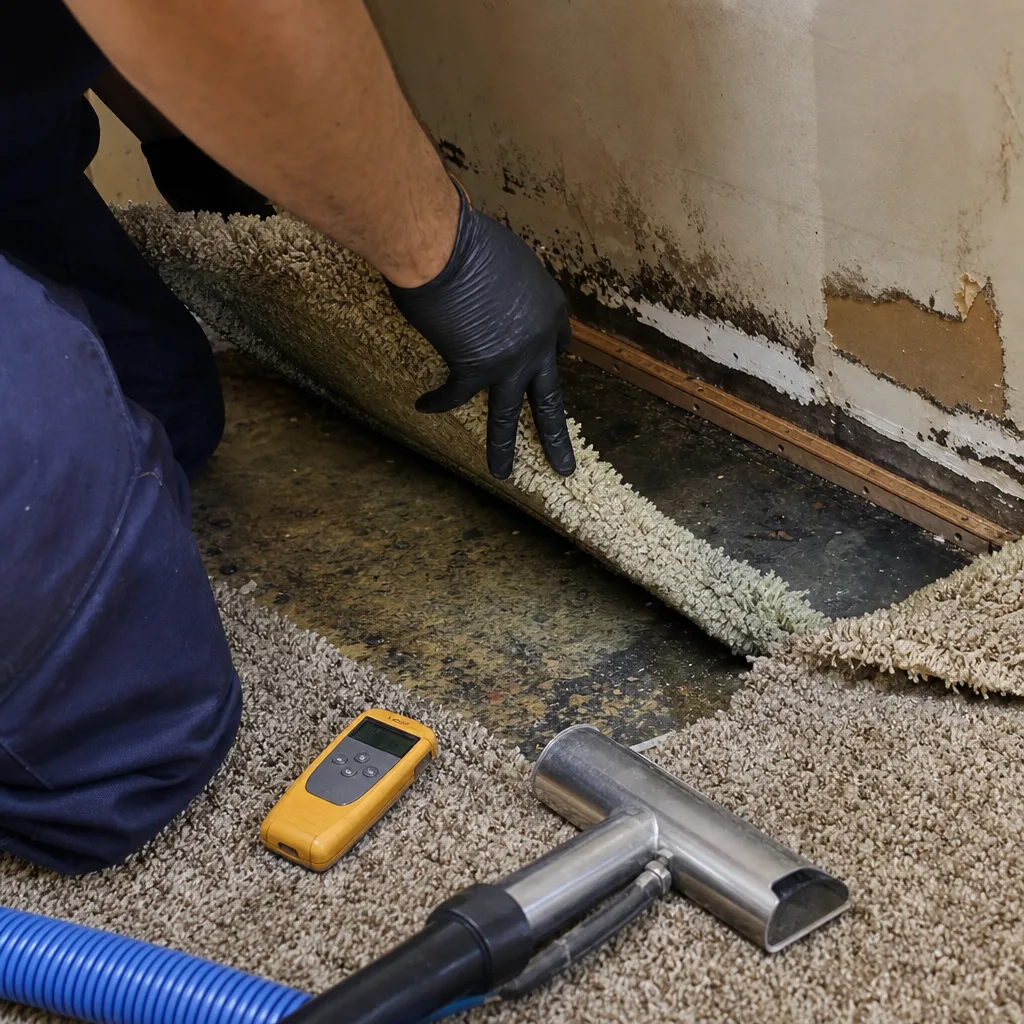
Mold claims fail most often at the documentation stage. Adjusters deny coverage when the origin of moisture is unclear, when pre-existing conditions aren’t distinguished from sudden damage, or when the scope lacks line-item detail tying each task to a specific room and material. We eliminate these gaps from the first hour.
Our technician photographs every water stain, every warped substrate, every moisture reading with location tags. We produce industry-standard estimates in Xactimate format that carriers recognize immediately. Your adjuster receives our drying logs, our material classifications, and our written narrative of the moisture pathway, whether that was a failed roof jack during Santa Ana winds or ember-ash clogged ventilation from a chaparral fire miles away. Direct coordination means questions get answered in hours, not weeks.
What We Provide Your Insurer
- Thorough documentation of the loss with dated, geotagged photos
- Photos of all damage, room by room, with moisture readings embedded
- Daily moisture logs and psychrometric data to prove drying progress
- A detailed, line-item scope of work referencing IICRC S520 standards
- Direct coordination with your carrier and adjuster, including site meetings
Built for Fallbrook’s Loss Calendar
Fallbrook’s mold season runs opposite to what most homeowners expect. The prolonged dry season, May through October, desiccates structures and creates gaps in roofing, flashing, and sealants that go unnoticed. When the first atmospheric river arrives in December or January, water finds every entry point at once. January through March sees our highest volume of mold calls from homes that took water during winter storms but didn’t show visible growth until warm spring temperatures activated dormant spores.
Santa Ana wind events, peaking October through January, compound this pattern. Even without active fire nearby, these dry, hot winds accelerate degradation of aging wood-shake and composition roofing on Fallbrook’s 1970s ranch homes. A roof that held through summer fails under the first winter storm. Meanwhile, hillside custom homes experience pressure differentials that draw attic air, and any spores it carries, through ceiling penetrations.
Spring brings the secondary wave: homeowners open up vacation properties or outbuildings after winter absence and find colonies established in pump houses, tack rooms, and irrigation control panels. The agricultural multi-structure complexity that defines Fallbrook’s property stock means mold remediation here routinely extends beyond the main residence, a scope pattern essentially absent in tract-home suburbs.
Mold Remediation Across Fallbrook’s Neighborhoods
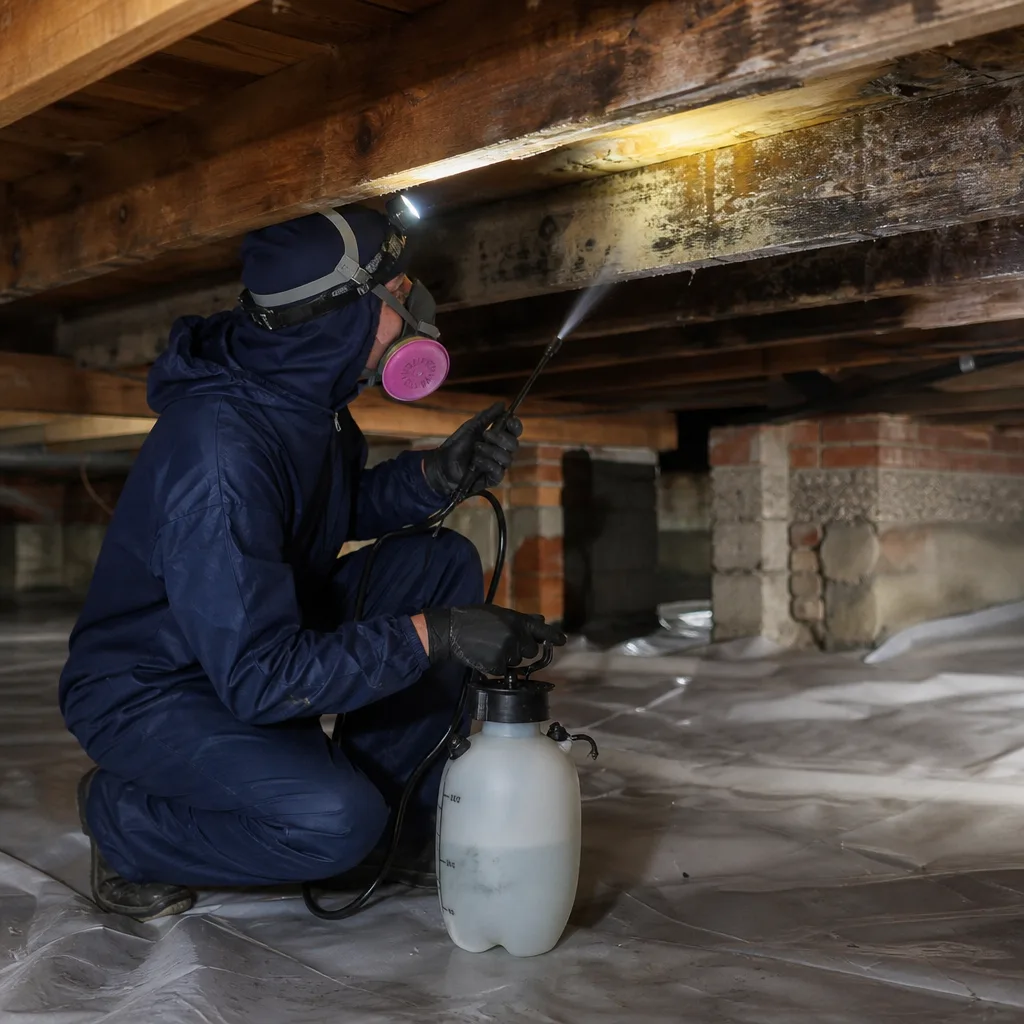
Fallbrook’s geography creates distinct mold risk profiles by area, and our response routes account for each.
Live Oak Canyon and the corridor along Reche Road serve large-lot ranch properties from the 1960s and 1970s with original septic systems and wood-shake roofing. We see recurring mold in attic spaces where degraded roof jacks and failed flashing send intermittent moisture through R-19 fiberglass that compresses over decades. The rural lot size means we often discover secondary mold in detached garages and workshop buildings that share the same groundwater table.
The hillside custom homes above South Mission Road, many with avocado grove frontage, present complex roof geometries and multi-level crawl spaces. One job last year: a custom hillside home off South Mission Road near the Fallbrook avocado groves had a failed swamp-cooler pan send category 2 water under a wood-plank floor; we ran moisture mapping and Injectidry mats, sealed the wall cavities in containment, and fogged an antimicrobial treatment through the HVAC after finding ember-ash residue from a recent Santa Ana event still coating the return plenum. Because the grove’s pump house and irrigation control panel shared the same slab, we extended the scope of work to dry those outbuildings before mold could colonize the horse-tack room we’d just cleared.
Fallbrook’s historic downtown core along Main Avenue includes mixed commercial-residential structures with flat or low-slope roofing, inadequate ventilation, and aging plaster-and-lath construction. Mold here often follows roof membrane failure rather than plumbing leaks, with colonies spreading across horsehair plaster that demands careful remediation to preserve original finishes.
The De Luz area, with its higher elevation and denser chaparral, faces amplified wildfire exposure and subsequent smoke-ash moisture pathways. Homes that survived nearby burns frequently develop mold in attic spaces where fire-retardant foam or charred sheathing altered normal vapor movement. We inspect these properties with specific attention to whether mold remediation follows smoke damage restoration in the same claim.
Specialized Mold Remediation Services We Offer in Fallbrook
Mold Inspection & Testing
Our inspections in Fallbrook include air sampling, surface tape lifts, and ERMI dust analysis where health concerns or prior water damage history warrant deeper investigation. We specifically test for fire-related moisture pathways: ember-ash residue in HVAC returns, heat-compromised roof-deck sheathing, and altered vapor profiles in structures that survived nearby burns. Results come with a written interpretation, not just lab numbers.
Mold Removal
Physical removal follows IICRC S520 standards for containment, negative air, and proper disposal. In Fallbrook’s agricultural properties, removal often extends to outbuildings: pump houses with failed seals, tack rooms with groundwater wicking, irrigation control panels with condensation corrosion. Each structure gets its own containment assessment and scope line item.
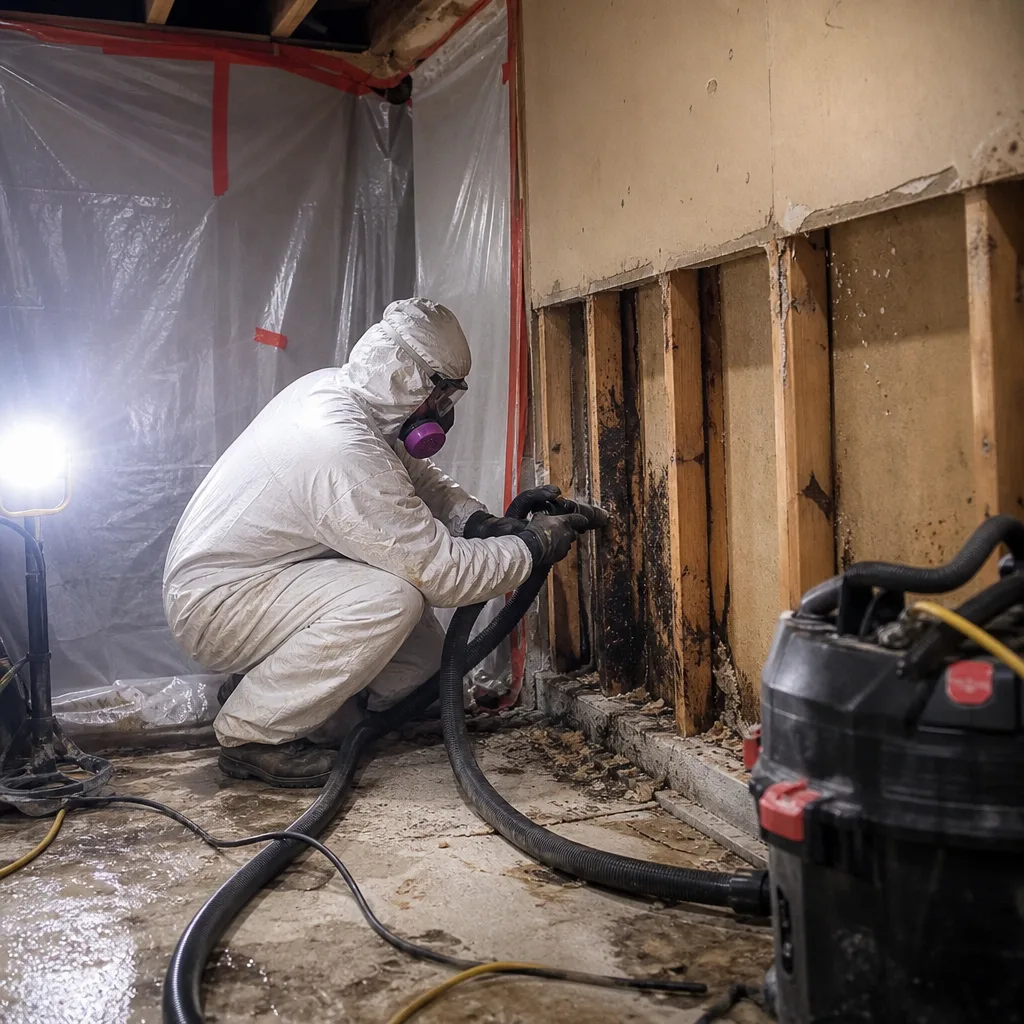
Black Mold Remediation
Stachybotrys chartarum and other toxigenic species require enhanced containment with decontamination chambers, full PPE for technicians, and specialized disposal. Fallbrook’s humid crawl spaces and fire-damaged attics create the sustained cellulose wetness these species prefer. We coordinate with industrial hygienists for pre- and post-remediation air clearance.
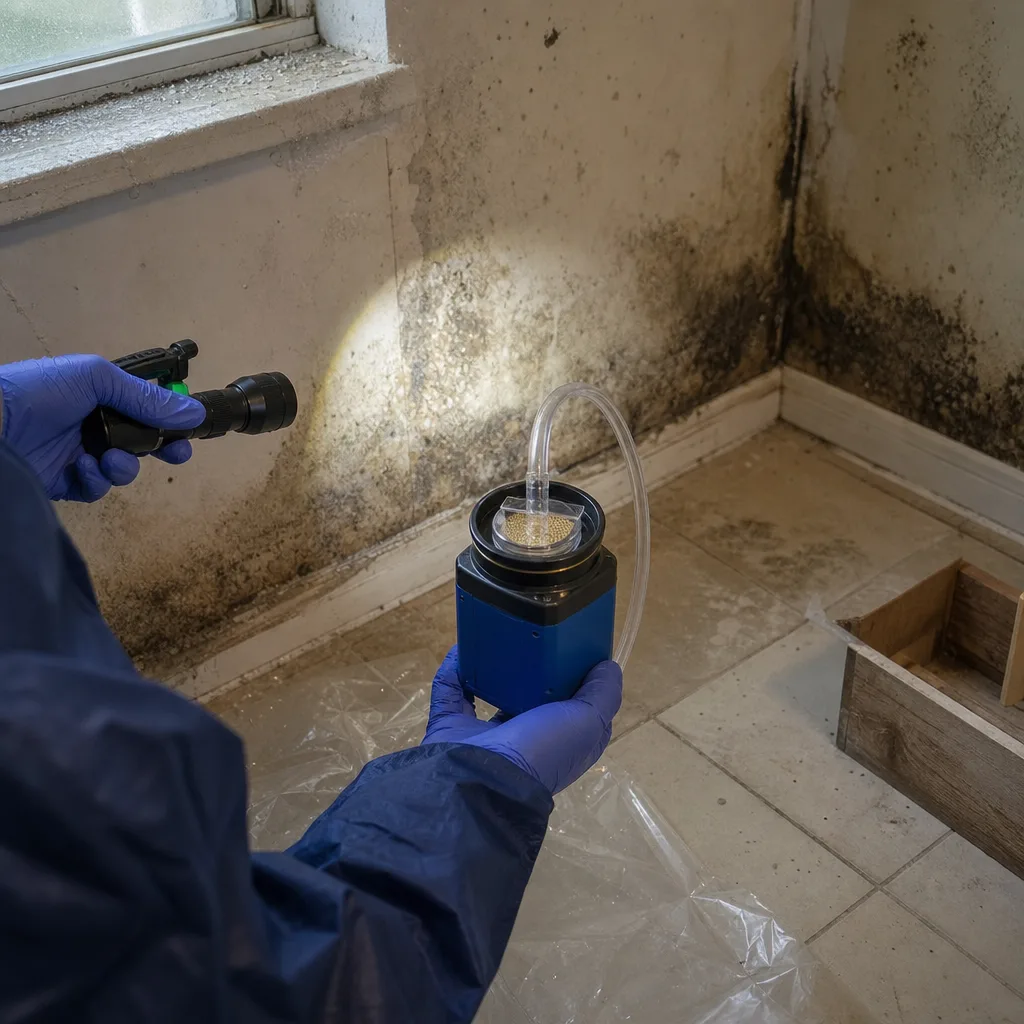
Air Quality Restoration
HVAC systems in Fallbrook homes frequently harbor ember-ash and mold together, a combination unique to high fire hazard zones. We clean ductwork with contact vacuuming and mechanical agitation, then treat with antimicrobial fogging. Post-remediation air sampling verifies total spore counts below outdoor baseline and specific absence of toxigenic species before we release containment.
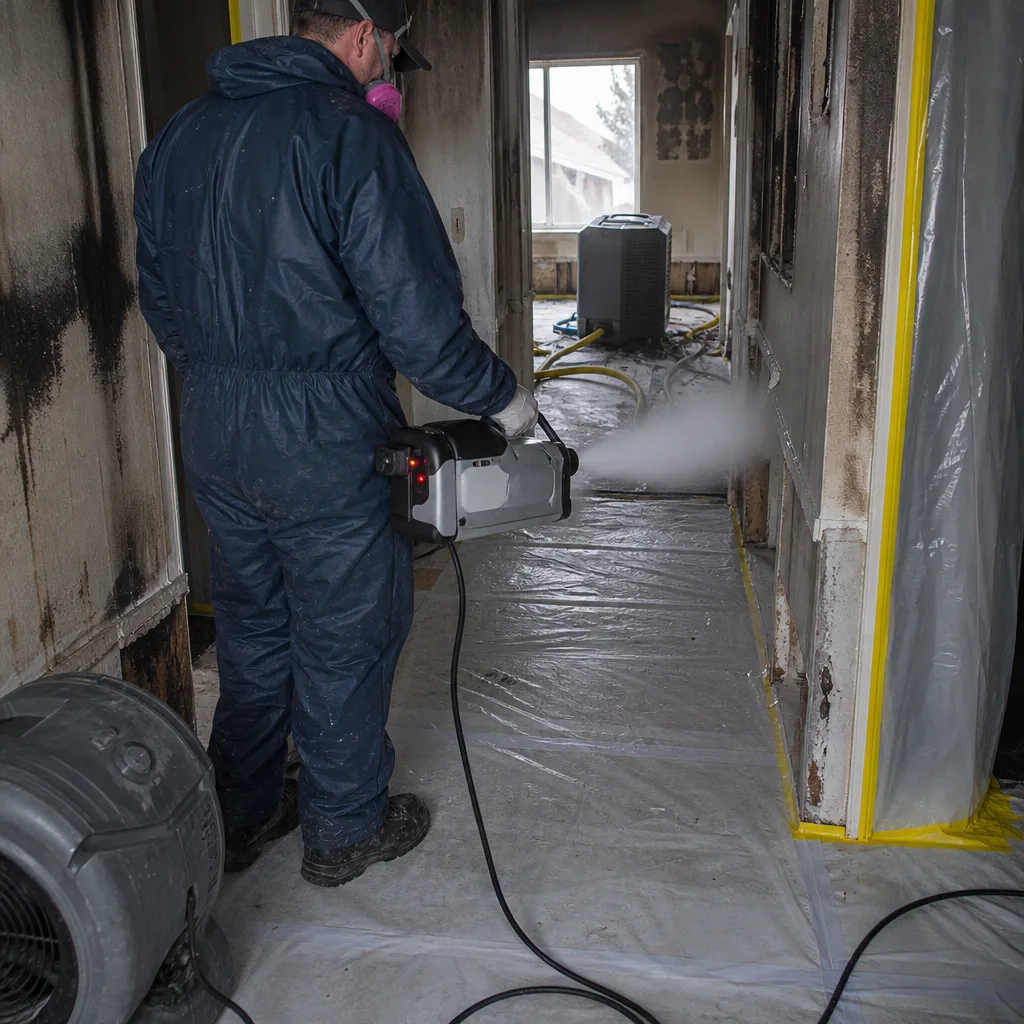
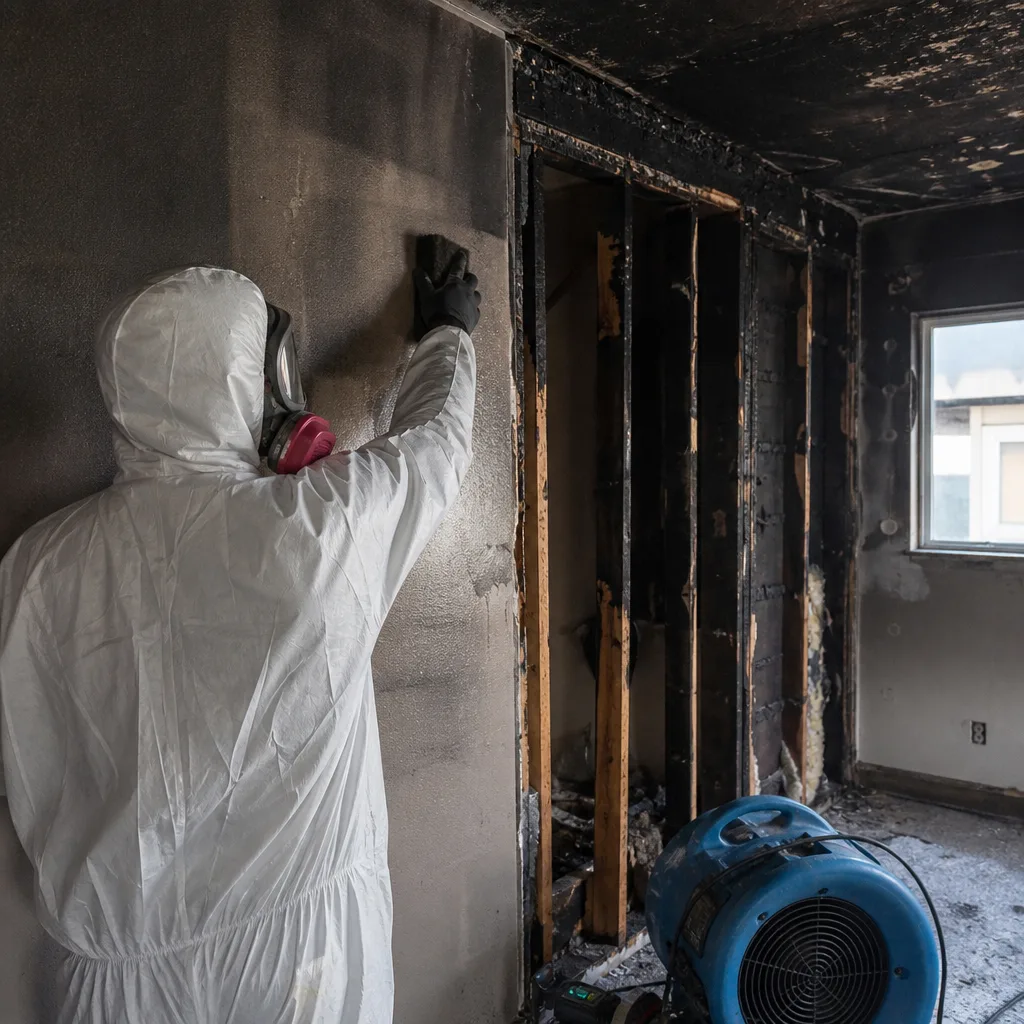
Crawl Space Treatment
Fallbrook’s hillside homes often have vented crawl spaces with dirt floors and limited access. We install vapor barriers, seal foundation vents where appropriate, and deploy dedicated dehumidification. For properties with original wood-shake roofing, we inspect the underside of roof decks from below, catching heat-warped sheathing that attic inspections miss.
What happens when you call
- 1
A real person answersNo phone trees - you reach a local pro.
- 2
You get an upfront price rangeHonest numbers before anyone is dispatched.
- 3
A background-checked tech heads outLicensed & insured, dispatched right away.
- 4
You approve before work beginsNothing starts until you say go.
Mold Remediation Costs in Fallbrook, CA
A typical mold inspection with air sampling in Fallbrook runs $350-$650. Containment-level remediation for a standard crawl space or attic, 100-300 square feet of affected area, typically costs $3,200-$5,800. Whole-home HVAC contamination or extensive structural removal can reach $8,500-$14,000. These ranges reflect Fallbrook’s market specifically; hillside access, limited parking for equipment, and multi-structure agricultural properties add labor and containment complexity that tract-home pricing doesn’t capture.
| Service | Typical Range in Fallbrook |
|---|---|
| Visual inspection with moisture mapping | Free |
| Air/surface mold testing | $350-$650 |
| Category 1 remediation, <10 sq ft | $1,800-$2,800 |
| Category 2 remediation, 10-100 sq ft | $3,200-$5,800 |
| Category 3 remediation, 100+ sq ft or HVAC | $6,500-$14,000+ |
| Crawl space encapsulation & dehumidification | $4,500-$8,200 |
| Post-remediation clearance testing | $450-$750 |
What moves the price: square footage of containment, material removal versus surface treatment, HVAC involvement, and whether third-party clearance testing is required. Insurance typically covers sudden and accidental water damage with resulting mold, but not long-term maintenance neglect. We document the moisture origin to support your coverage position. Call (760) 546-9565 for an exact quote on your specific situation. Estimates are free, written, and delivered before any work begins. Haven Standard, Clause 1.
We Also Serve Cities Near Fallbrook
Our crews respond throughout northern San Diego County from the same San Diego-coordinated dispatch. We handle Mold Remediation in Fallbrook plus Vista, Oceanside, Valley Center, and Carlsbad. Each city’s page details local conditions specific to that market. Vista’s coastal influence creates different mold patterns than Fallbrook’s chaparral fire zone. Oceanside’s denser housing stock means faster containment challenges. Valley Center shares Fallbrook’s rural lot complexity. Carlsbad’s newer construction presents different failure modes. We scope accordingly.
Serving Fallbrook, CA - Our Local Coverage Area
We’re based in the Fallbrook area and know this community well. Use the map below to see our service coverage - if you’re nearby, we can almost certainly help.
Fallbrook Mold Remediation Questions, Answered
Our Fallbrook home survived the last big fire but smells musty - how does that become a mold job?
Smoke and ash infiltration from nearby fires alters how your home manages moisture, even without visible burn damage. Ember-ash residue in HVAC returns and on roof-deck sheathing traps humidity that would normally vent, creating microclimates where mold colonizes after the first winter rain. We inspect for this specific fire-first moisture pathway using thermal imaging of attic sheathing and borescope cameras in ductwork. If we find active colonization, we document the fire-related origin for your insurance claim and scope remediation that addresses both the mold and the underlying ash contamination. Call (760) 546-9565 to schedule.
We’re on a rural avocado property with a pump house and tack room - does mold remediation cover those outbuildings?
Yes, and in Fallbrook’s agricultural zones, it must. Pump houses, tack rooms, irrigation control panels, and equipment sheds frequently share slabs, groundwater tables, or HVAC systems with the main residence. Moisture in one structure migrates to others through vapor pressure differential. We scope each outbuilding separately with its own moisture mapping and containment plan, then document pre-loss condition with photos so equipment value is protected in your claim. A competitor’s scope that treats only the main house misses the source and guarantees recurrence. Call (760) 546-9565 for a full-property assessment.
Original wood-shake roofing on our 1970s ranch home keeps leaking after Santa Ana winds - do you inspect for hidden mold?
We inspect specifically for the hidden mold that wood-shake degradation causes. Aging shakes and compromised felt underlayment send intermittent, small-volume moisture through roof-deck gaps. By the time you see a ceiling stain, the colony has spread across sheathing and into insulation. We use penetrating moisture meters on roof-deck underside, accessible from attic or crawl space, and thermal imaging to find the active moisture front. The scope includes sheathing removal where compromised, not just surface treatment, because mold returns on damp wood regardless of how clean it looks. Call (760) 546-9565 for inspection.
A septic failure flooded part of our Fallbrook property - is that a different kind of mold remediation?
Septic backup introduces Category 3 water with bacterial and viral contaminants, requiring remediation that addresses both pathogen load and mold risk. The drying protocol is more aggressive, materials are more extensively removed, and antimicrobial treatment uses EPA-registered disinfectants before mold-specific agents. Fallbrook’s rural lots with private septic systems see this failure mode regularly, especially where aging leach fields fail during winter saturation. We test for coliform and E. coli as well as mold genera, and we document septic system condition for your insurer. Call (760) 546-9565 for immediate response.
How is mold remediation on a Fallbrook hillside custom home different from a tract home in Escondido?
Hillside custom homes in Fallbrook have complex roof geometries that create dead-air spaces and condensation points, multi-level crawl spaces with limited access, and frequently integrate agricultural outbuildings into the same structural system. Tract homes in Escondido have predictable rectangular footprints, vented attics with standard access, and no secondary moisture sources from pump houses or irrigation equipment. Our Fallbrook scopes account for extended containment runs, specialized access equipment, and multi-structure documentation that Escondido jobs rarely need. The price reflects this complexity, and we write it clearly before work starts. Call (760) 546-9565 for a hillside-specific estimate.
How fast can your crew actually get to Fallbrook?
We maintain a 45-minute response commitment to Fallbrook addresses from our San Diego-coordinated dispatch, with crews pre-staged for canyon road access. Live answer 24/7 means your call routes immediately to dispatch, not voicemail. For active water intrusion, we prioritize same-day containment setup to prevent spore spread. For established mold without active water, we schedule within 24-48 hours for full inspection and scope. Call (760) 546-9565 now and we’ll confirm current arrival time.
Will my insurance cover mold remediation in Fallbrook?
Insurance covers mold that results from sudden and accidental water damage, such as a failed roof during a storm or a burst supply line. It does not cover mold from long-term maintenance neglect, like a slow leak you knew about for months. Our documentation package, including moisture mapping that establishes the water origin and timeline, supports your coverage position with the adjuster. We provide direct billing to most carriers and attend site meetings with your adjuster when requested. Call (760) 546-9565 and we’ll review your policy specifics during the free inspection.
What certifications do your Fallbrook mold technicians hold?
Our lead technicians hold IICRC AMRT (Applied Microbial Remediation Technician), WRT (Water Damage Restoration Technician), and FSRT (Fire & Smoke Restoration Technician) certifications, documented to IICRC, RIA, and IFA standards. AMRT covers containment, air filtration, and antimicrobial application. WRT addresses moisture science and structural drying. FSRT is critical in Fallbrook specifically, because so many mold jobs follow fire and smoke damage where ember-ash contamination alters normal remediation protocols. License numbers appear on every job file. Call (760) 546-9565 to verify current credentials.
Fallbrook’s dedicated High Fire Hazard Severity Zone status and 2007 Rice Fire loss history mean many homes here have heat-warped or ember-penetrated roof decks and HVAC envelopes from nearby burns, so mold remediation often follows smoke/ash intrusion rather than a plumbing leak - a fire-first moisture pathway that is rare in coastal Oceanside or the tract suburbs of Temecula. This page is the only Fallbrook mold remediation guide built around fire-driven and agricultural moisture pathways - ember-ash clogged roof decks, septic failures on private-septic lots, and multi-structure scopes that include pump houses and grove outbuildings - instead of generic bathroom-vent mold advice.
Written by Alicia Brennan, Owner at Back to Dry Restoration, serving Fallbrook and northern San Diego County since 2011.
Mold Remediation in Nearby Areas