

Free visual inspection and a written scope of work before any mitigation begins - photos, moisture readings, and drying logs go in your claim file
The scope we write is the scope we bill. Anything new gets shown to you, in writing, before we touch it.
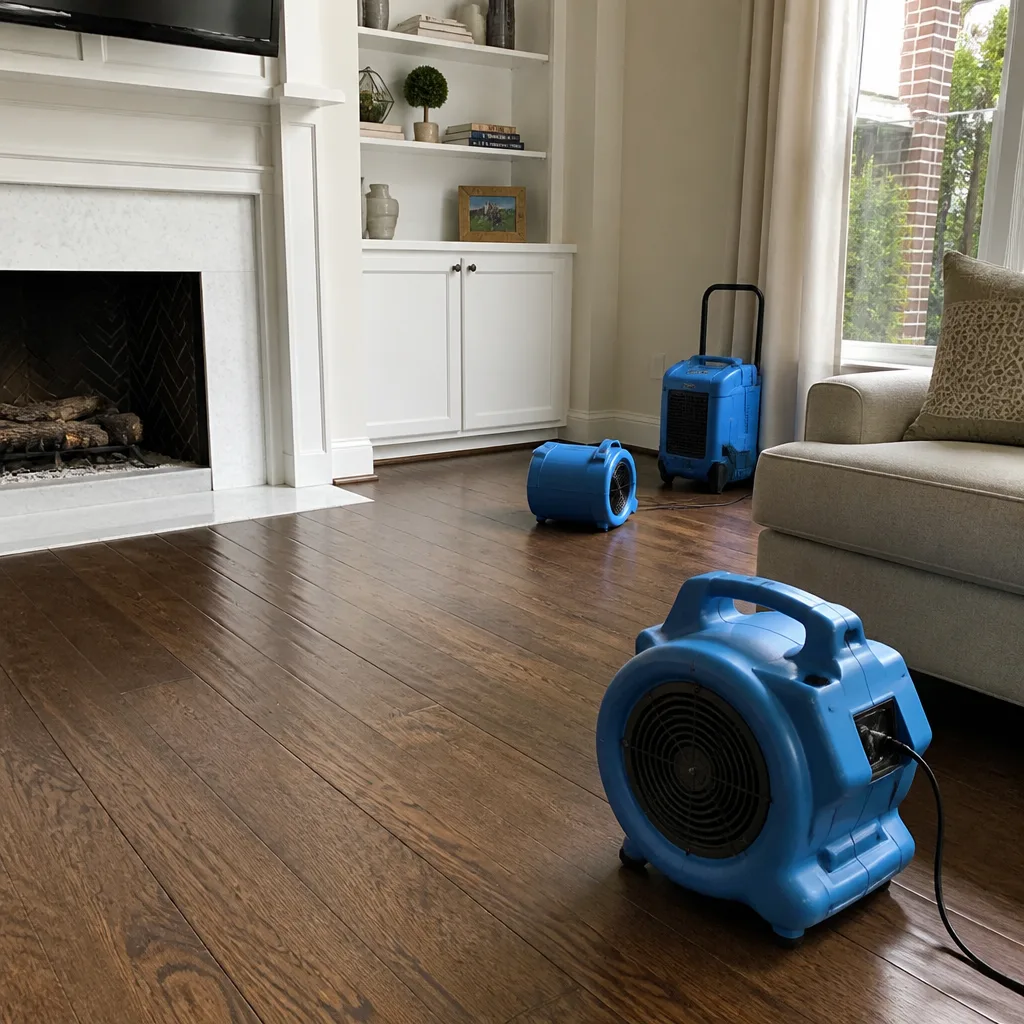
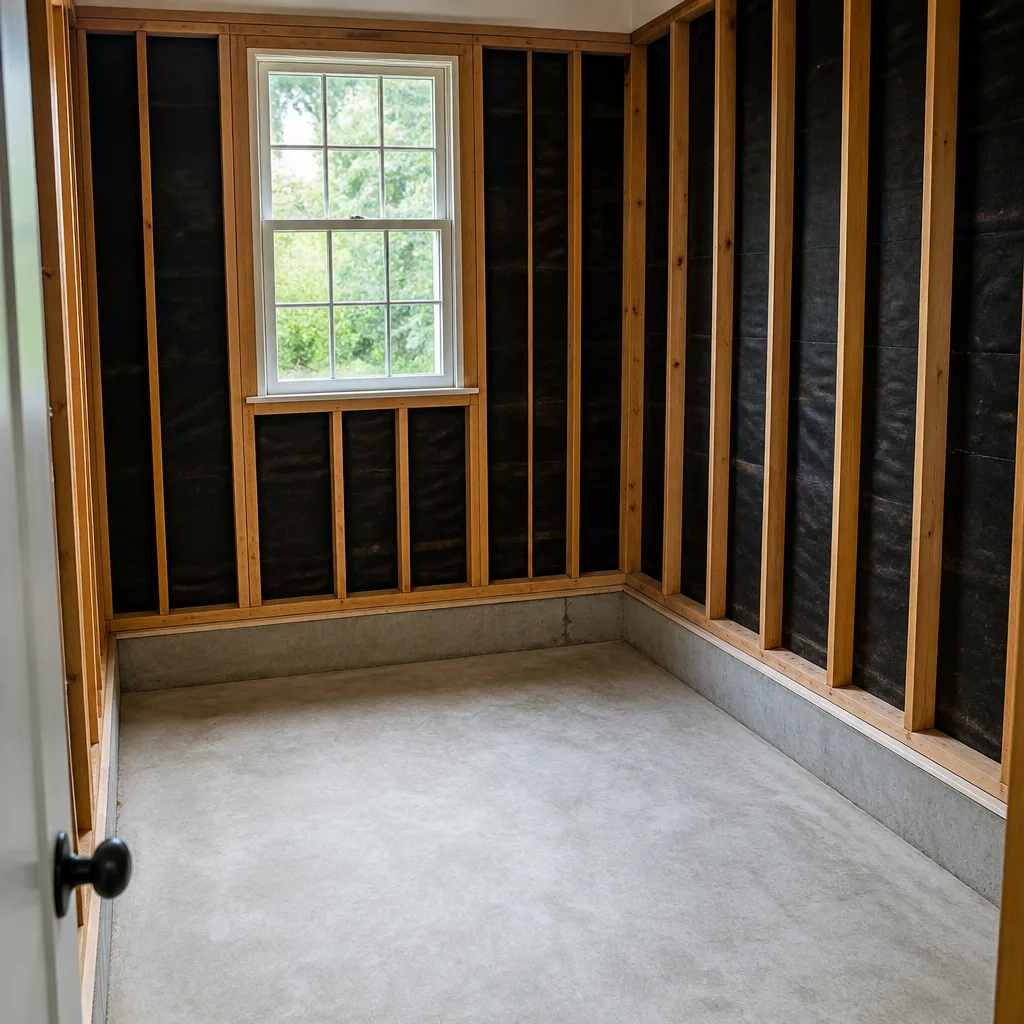
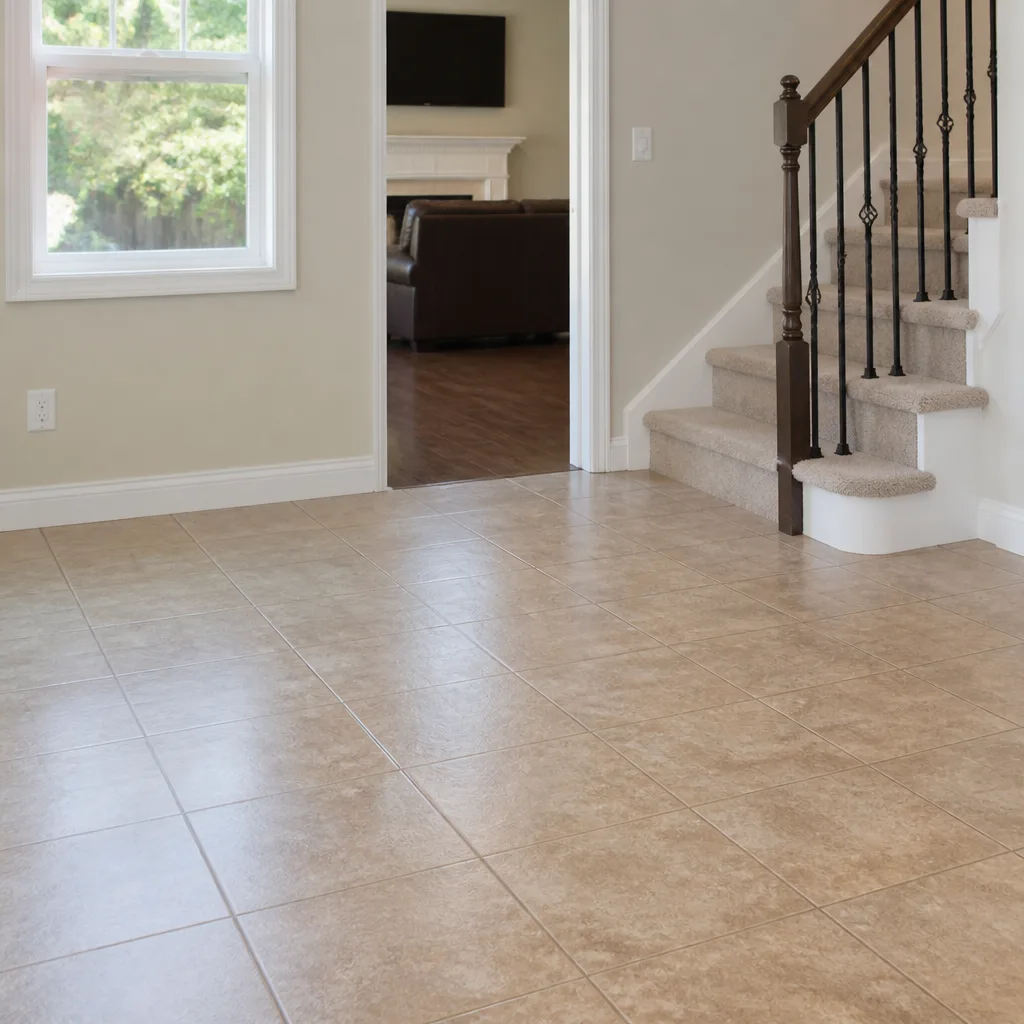
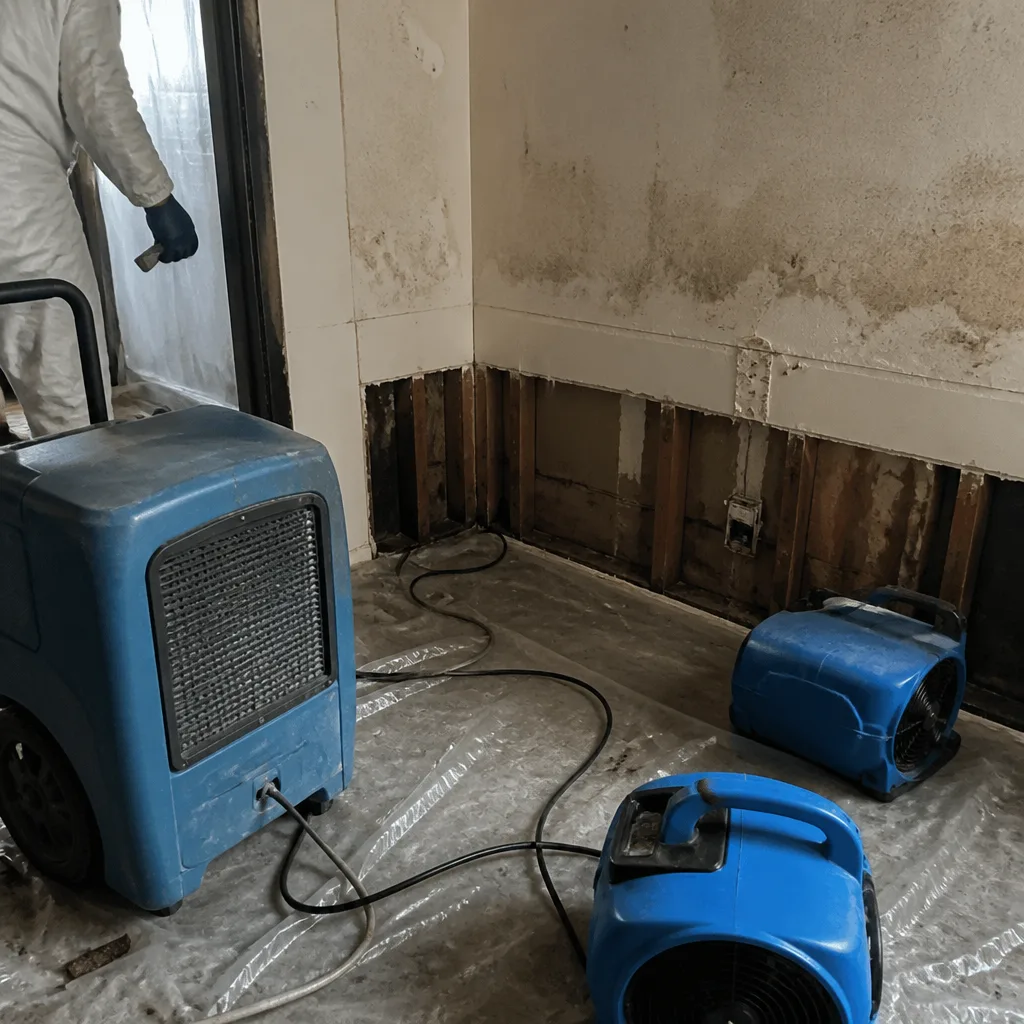 Before
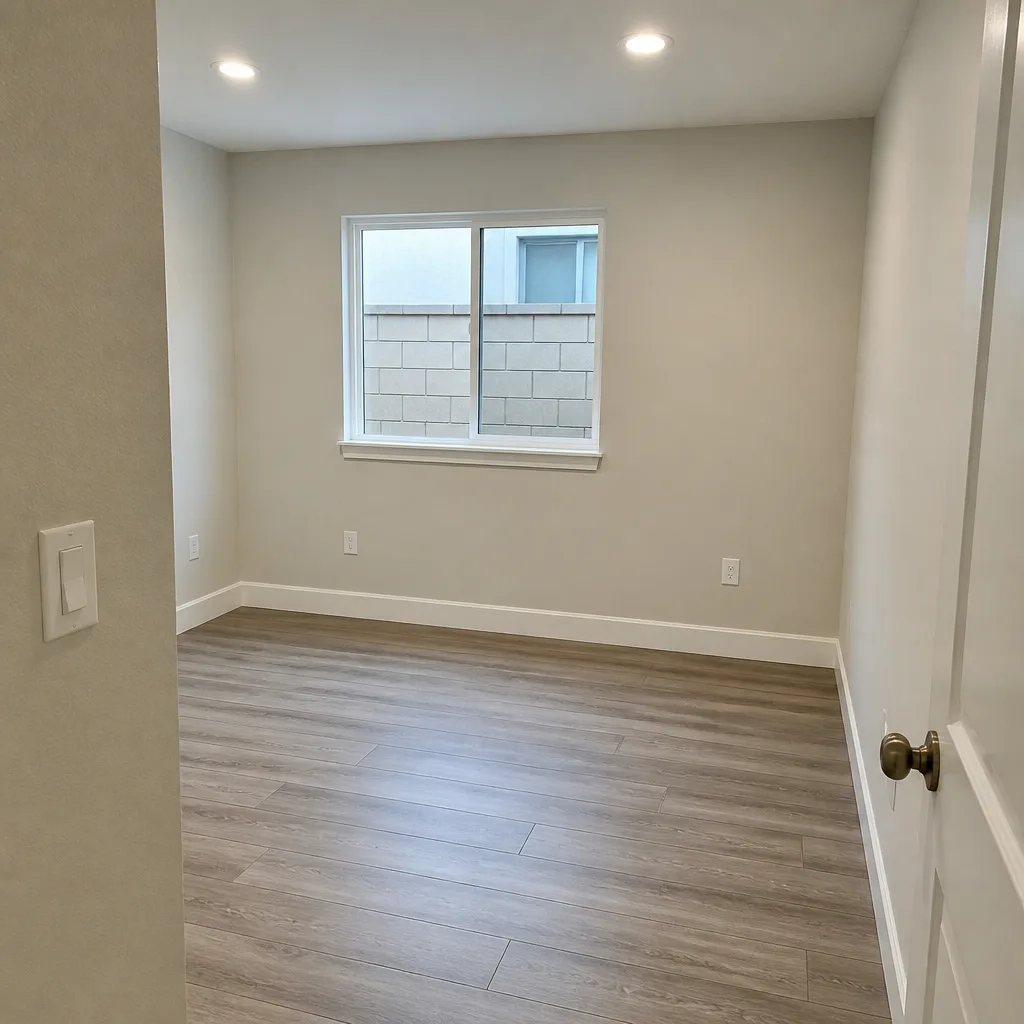 After
After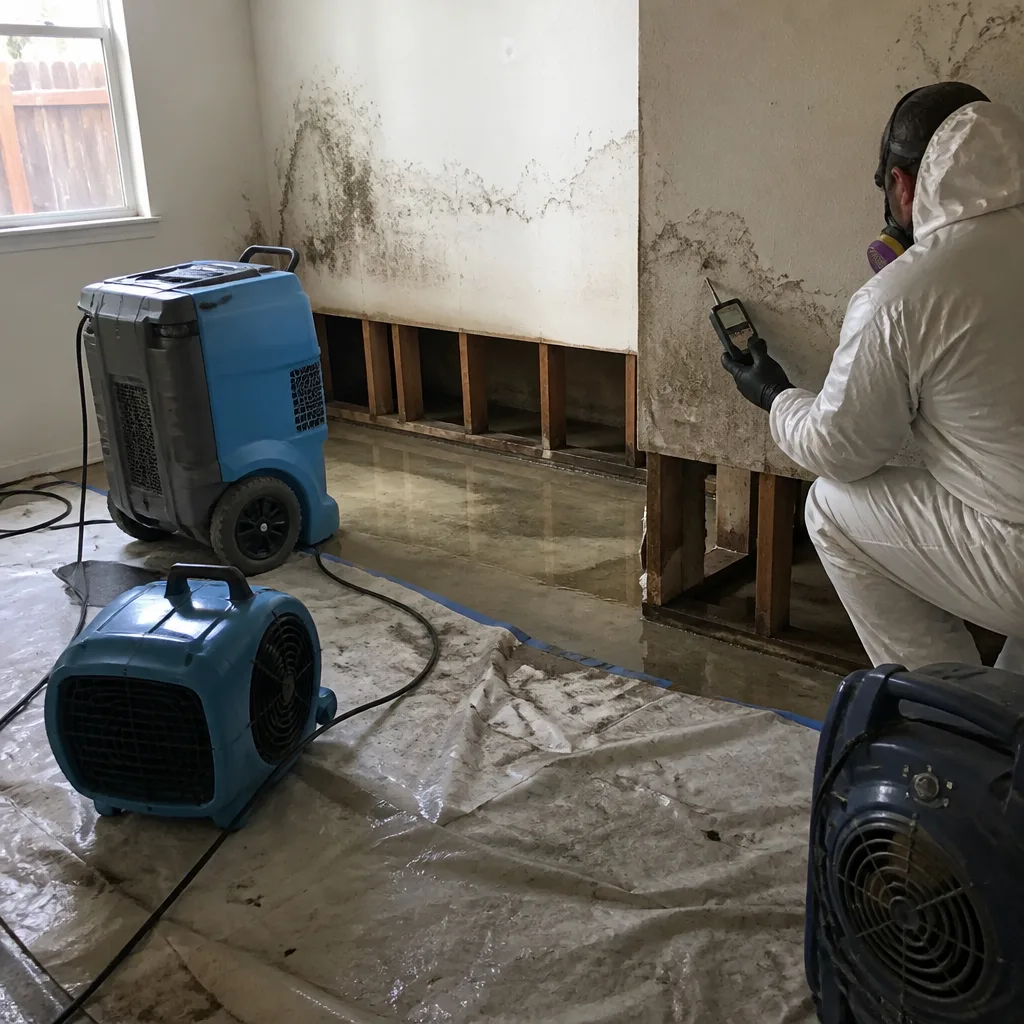 Before
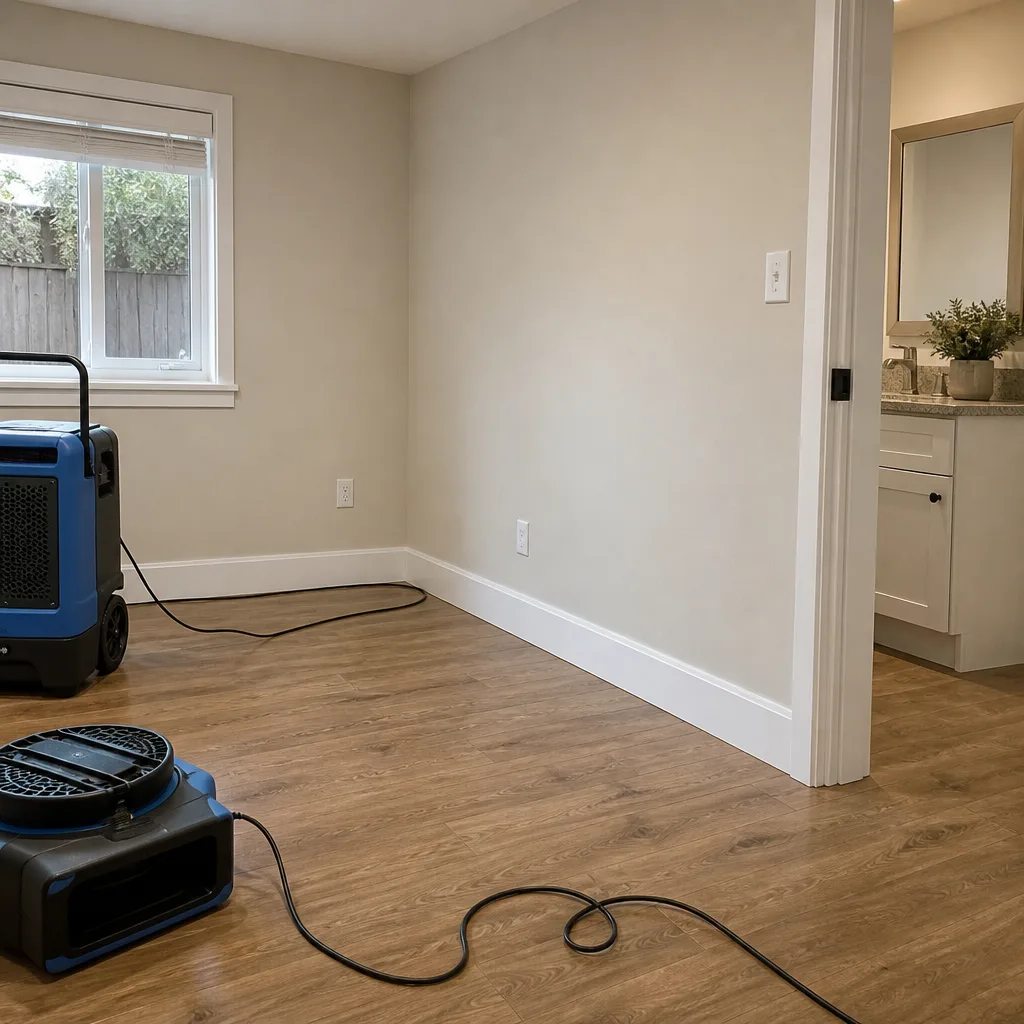 After
After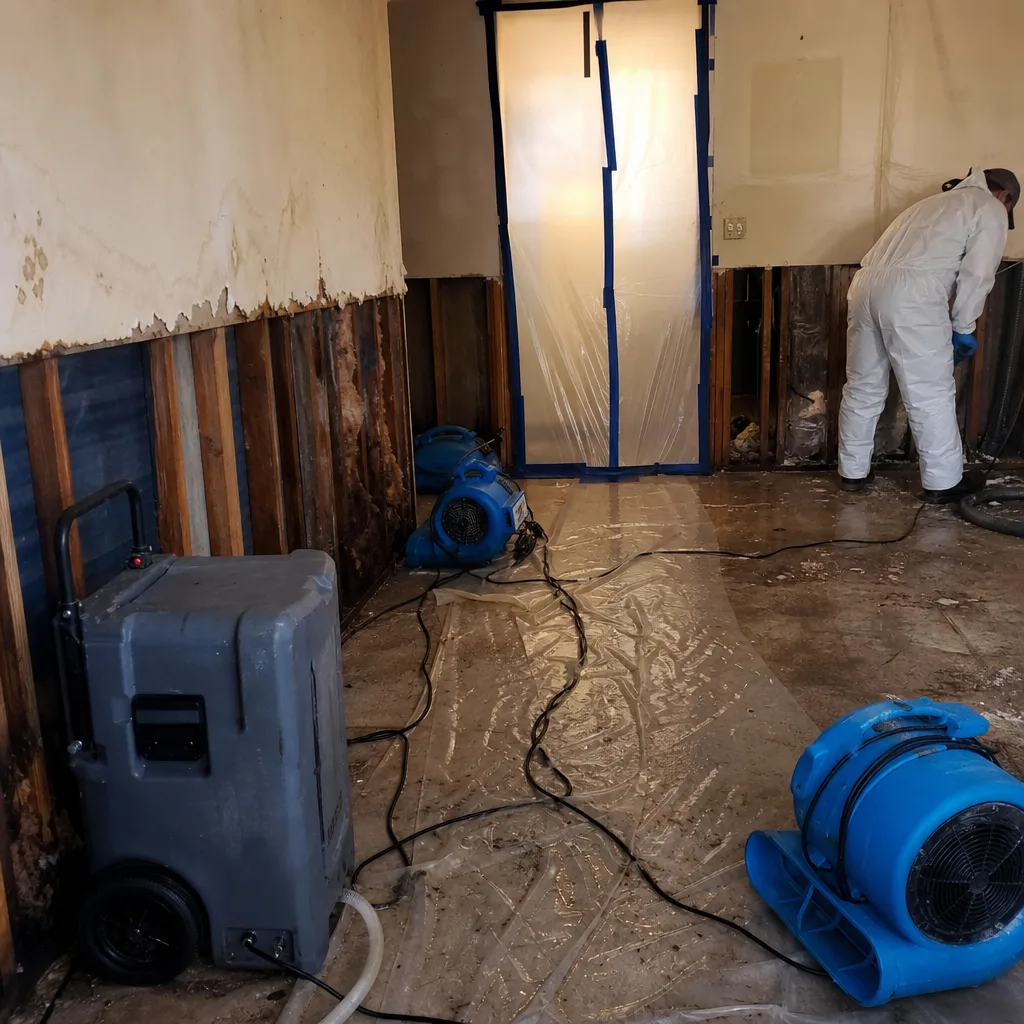 Before
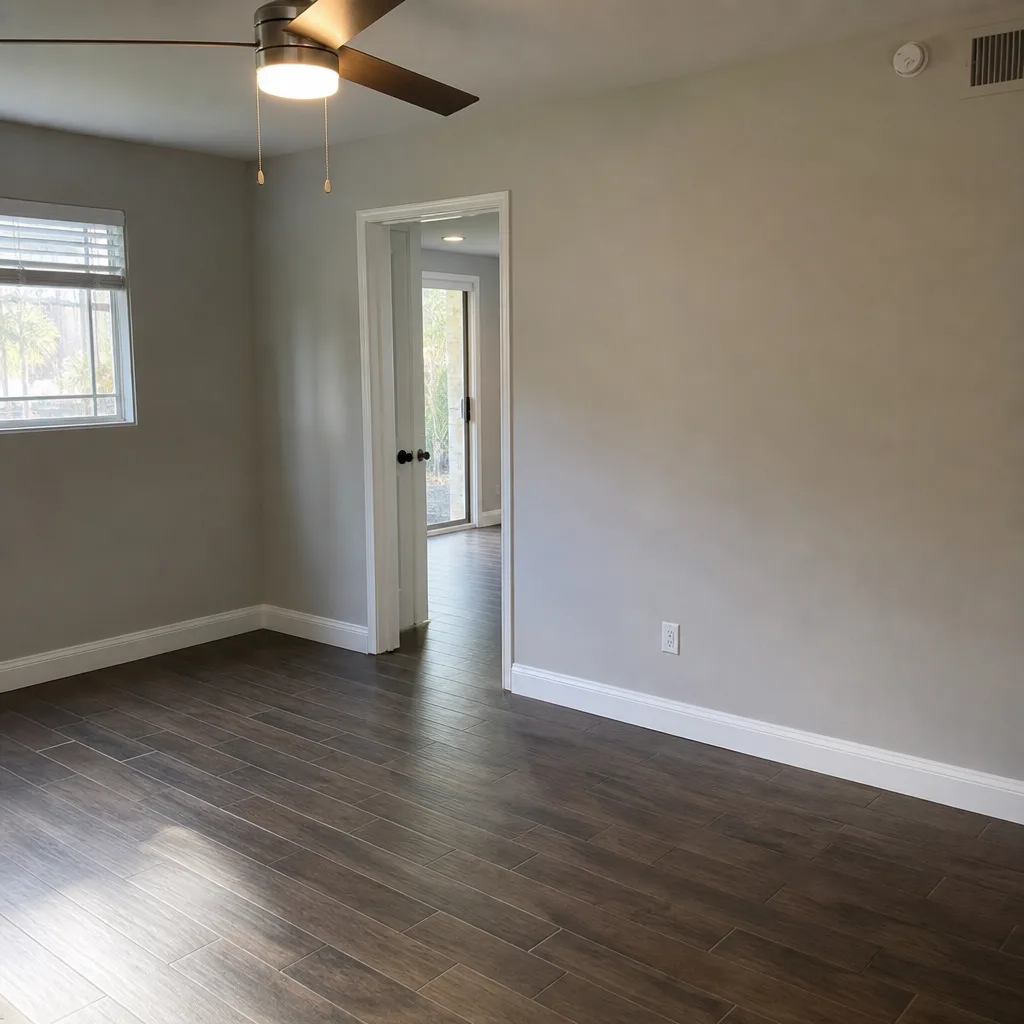 After
After24/7 Emergency Mold Remediation in Lake San Marcos
Mold remediation in Lake San Marcos typically costs between $1,800 and $6,500 depending on whether the affected area is contained to a single unit or has spread through shared block-wall cavities, and most Lake San Marcos jobs require same-day containment to prevent cross-contamination. Call (760) 546-9565 now - we answer live, 24 hours a day, with no voicemail trees, and crews are dispatched into the Lake San Marcos area immediately. The first hour matters because mold colonies in Lake San Marcos’s chronically humid lakefront condos establish within 24-48 hours of a water event, and every hour of delay expands the containment perimeter, the demolition scope, and the number of adjacent units that must be included in remediation.
We offer a free visual inspection on every call. A trained technician arrives with moisture meters, thermal imaging, and a written assessment protocol. You get a documented photo record and a line-item scope before any work begins - Haven Standard, Clause 1.
Understanding Mold Remediation Severity in Lake San Marcos Properties
Mold severity in Lake San Marcos is graded by affected square footage, material classification, and whether the growth is contained or systemic. Category 1 contamination - surface mold on non-porous materials like tile or sealed concrete - responds to HEPA vacuuming and antimicrobial wipe-down. Category 2 involves porous materials: drywall, carpet pad, and insulation that have absorbed moisture and harbor colonization below the visible surface. Category 3, common in Lake San Marcos’s lakefront rows, means mold has penetrated structural assemblies - the shared concrete-block wall cavities, subflooring, or framing - requiring controlled demolition, negative-air containment, and air-scrubber deployment.
The 1960s-1970s construction here complicates every classification. Original plumbing is cast iron or galvanized steel with decades of internal corrosion. Flat and low-slope rooflines pool water rather than shed it. Stucco-over-block walls, standard in the original resort buildings, wick lake-driven humidity continuously. A Category 2 kitchen leak in a ground-floor unit on Lake Shore Drive or La Bonita Drive routinely becomes Category 3 in the shared wall cavity before the homeowner notices musty odor. Our crews classify by moisture mapping, not visual inspection alone - WME (wood moisture equivalent) readings above 16% in framing or 20% in block trigger full cavity investigation under IICRC S520 guidelines.
Why Lake San Marcos Property Owners Choose DryMark Restoration Oceanside
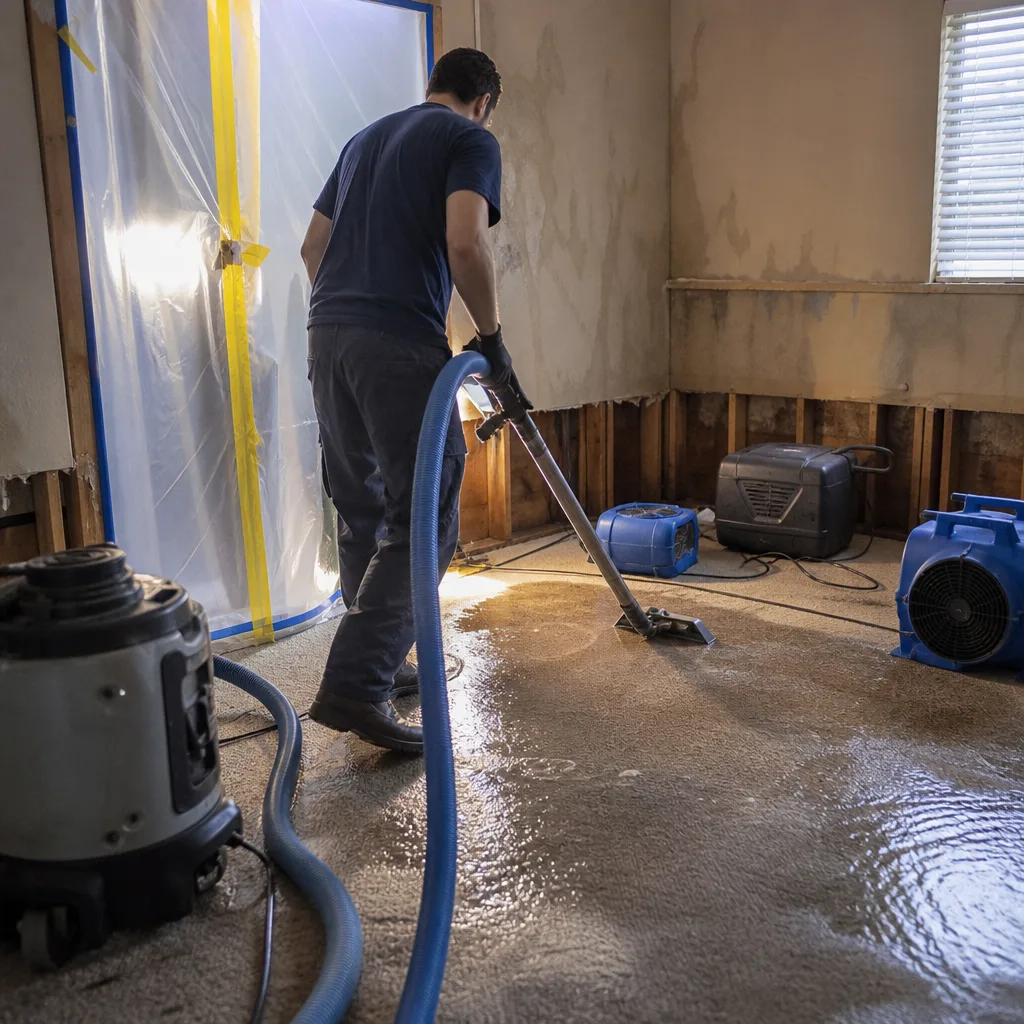
- 45-minute response commitment to Lake San Marcos addresses - our dispatch is coordinated from our Los Angeles office, with crews already positioned in inland North County.
- 24/7 live answer by a real person, never an automated system or next-business-day callback while mold is actively sporulating.
- IICRC-certified crews holding WRT (Water Damage Restoration Technician), AMRT (Applied Microbial Remediation Technician), and FSRT (Fire & Smoke Restoration Technician) credentials.
- Free visual inspection with moisture readings and thermal imaging included - no charge to determine whether you have a problem.
- Direct insurance billing with photo-documented estimates formatted to carrier specifications, reducing claim cycle time.
- One team from containment through reconstruction - no handoffs between remediation and rebuild contractors, so ARB compliance is maintained start to finish.
BeforeAfterOur Mold Remediation Process
1. Inspection & Assessment
We map moisture across the affected unit and the adjacent shared walls using thermal imaging, pinless moisture meters, and invasive probing where WME readings justify it. In Lake San Marcos’s lakefront rows, we budget for two-unit mapping as baseline - a step that would be overkill in Escondido or Vista. You receive a written scope, line-item pricing, and a photo record before any containment is erected.
2. Containment & Air Filtration
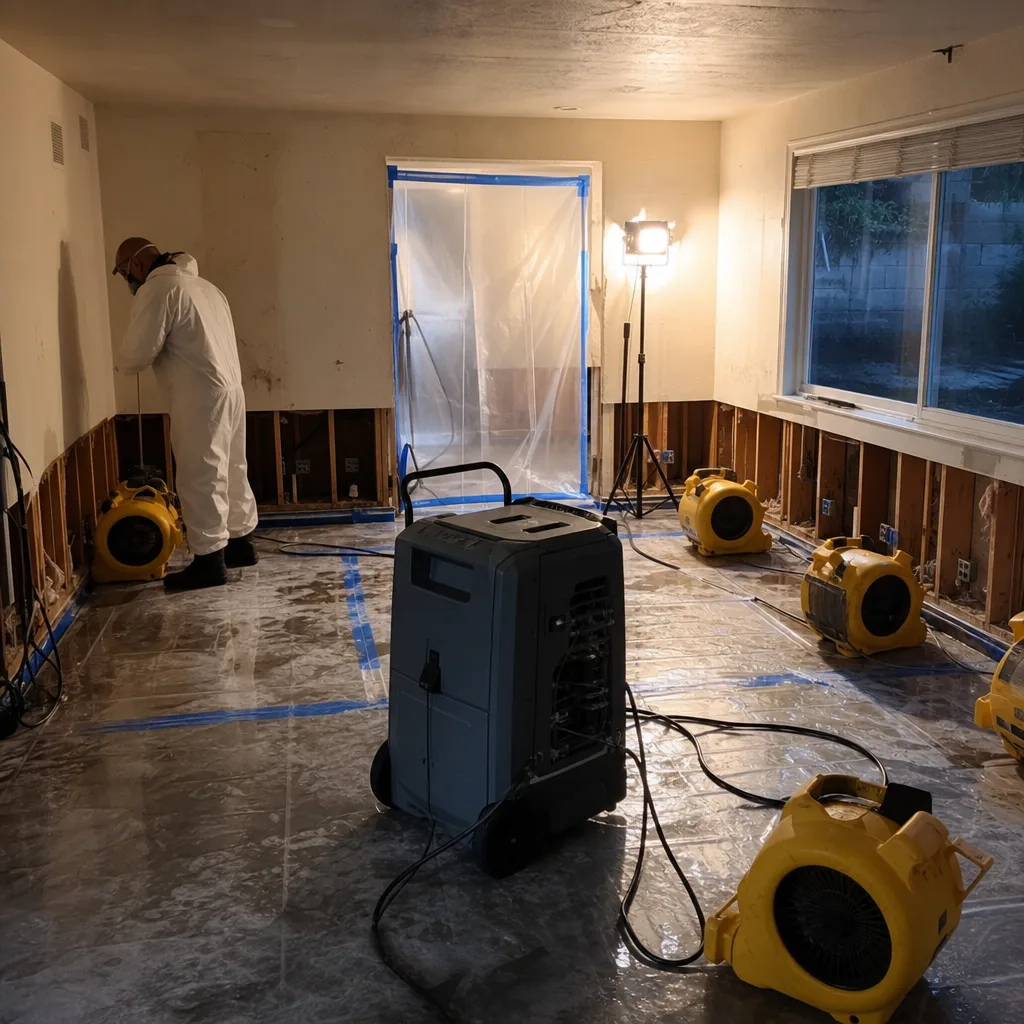
We establish negative-air containment with 6-mil polyethylene barriers and HEPA-scrubbed airlocks, sized to the contamination class. In shared-wall townhomes, containment extends to common hallways and adjacent units as moisture mapping dictates. Air scrubbers run continuously, with pressure differentials logged every four hours.
3. Demolition & Material Removal
Controlled demolition removes compromised drywall, insulation, carpet, pad, and subflooring to expose all mold-affected framing and block. In Lake San Marcos’s stucco-over-block buildings, we document the pre-loss stucco texture, base-course profile, and paint color before cutting, so ARB approval of the repair patch is straightforward.
4. Cleaning & Antimicrobial Treatment
HEPA vacuuming removes loose spores from all surfaces, followed by EPA-registered antimicrobial application to block, framing, and remaining structural materials. We treat the full cavity depth, not just the visible face, because Lake San Marcos’s humidity profile supports regrowth from residual spores in shadowed voids.
5. Drying & Dehumidification
We deploy LGR dehumidifiers and targeted air movers, with psychrometric data logged daily - temperature, relative humidity, and vapor pressure differential, which is the force that drives moisture from wet materials into dry air. Equipment is scheduled around HOA quiet hours, with containment and ducting routed to minimize common-area disruption.
6. Clearance Testing & Restoration
Third-party clearance sampling confirms airborne spore counts at or below outdoor baseline before containment is removed. Reconstruction follows ARB-approved materials and colors, with our crew matching existing stucco texture and trim profiles. The 365-Day Done Right Promise applies to all work.
Need Emergency Mold Remediation in Lake San Marcos Now?
Crews minutes away, answering live 24 hours a day. The sooner we start, the less it costs.
Working With Your Insurance Company
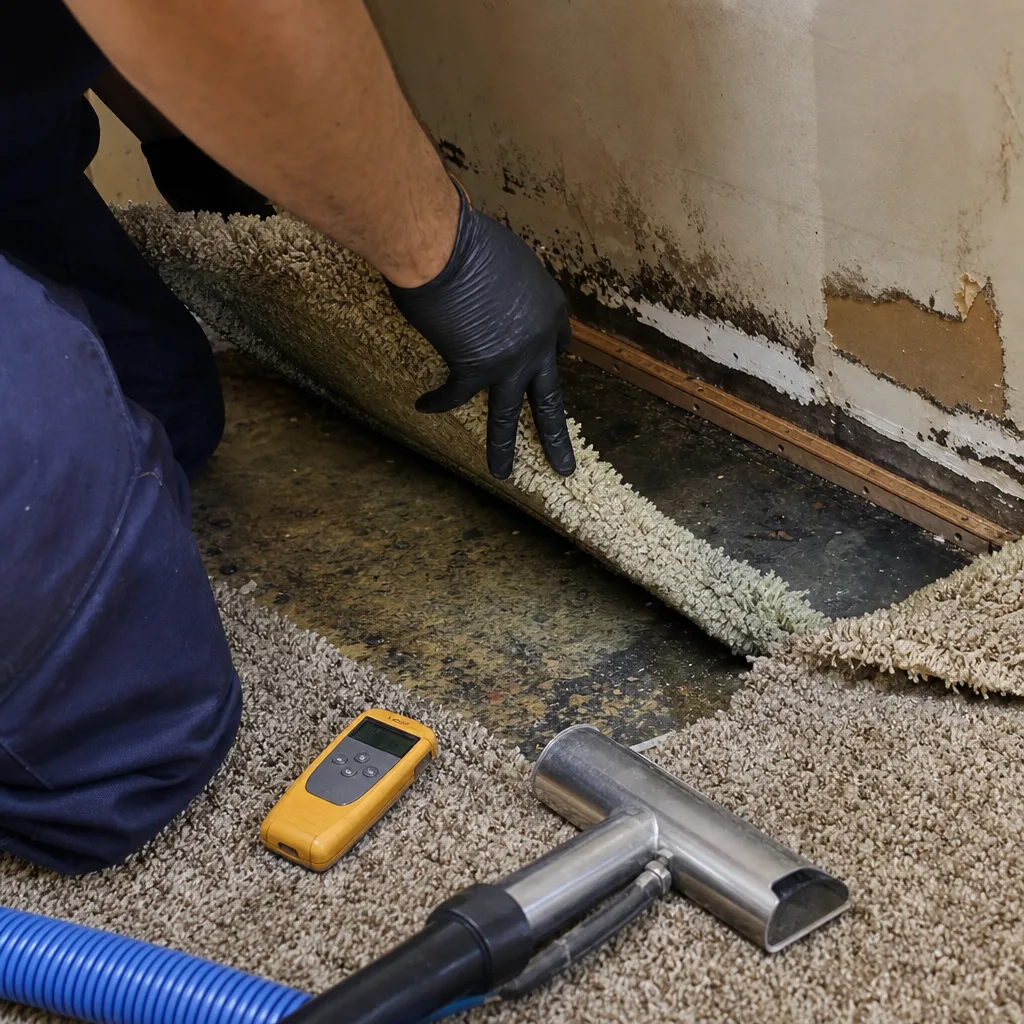
Mold claims succeed or fail on documentation quality. We begin photo documentation on arrival, before any equipment is placed or material is moved. Every image is geotagged, time-stamped, and organized by room. Our estimates are formatted to Xactimate standards, the pricing database used by most major carriers, with line-item codes that adjust for San Diego County labor rates and material costs.
We coordinate directly with your adjuster, providing the moisture readings, drying logs, and scope narrative that turn a restoration invoice into a payable claim. Where multi-unit scenarios arise - the norm in Lake San Marcos’s shared-wall buildings - we document each unit’s damage separately, with clear attribution of cause and extent, so liability questions don’t delay payment.
What We Provide Your Insurer
- Thorough documentation of the loss
- Photos of all damage, room by room
- Moisture readings and drying logs
- A detailed, line-item scope of work
- Direct coordination with your carrier
Built for Lake San Marcos’s Loss Calendar
Lake San Marcos’s mold calendar runs on humidity, not seasonal rainfall. The artificial lake generates persistent moisture load year-round, with peak vapor pressure in August and September when warm lake water meets cooling overnight air. The bowl-like valley geography traps this humidity at building envelopes, producing localized condensation on stucco base courses even when regional humidity reads moderate. Santa Ana wind events, October through January, drive dry air that paradoxically cracks aging stucco and opens new water-intrusion paths for the next marine layer.
Spring brings the heaviest volume of plumbing failures: winter thermal cycling fatigues original galvanized supply lines, and the first warm weekends send residents back to seasonal units where leaks have run undetected for months. Summer peak season sees the most emergency calls - not from rain, but from air conditioning condensate lines backing up into wall cavities where lake humidity already has materials primed for colonization. Our Mold Remediation crews scale staffing to this pattern, with expanded Lake San Marcos coverage June through October.
Mold Remediation Across Lake San Marcos’s Neighborhoods
The original lakefront condo rows along Lake Shore Drive and the adjacent La Bonita Drive corridor present the most complex remediation scenarios. These 1960s buildings share concrete-block wall cavities that run the full height of the structure, so a failed supply line in Unit 12-A typically means moisture mapping in 12-B before demolition starts. The HOA’s architectural review board requires pre-approval of any exterior stucco repair, with color and texture matched to existing - we document pre-loss condition and coordinate ARB submission as standard, not as an add-on.
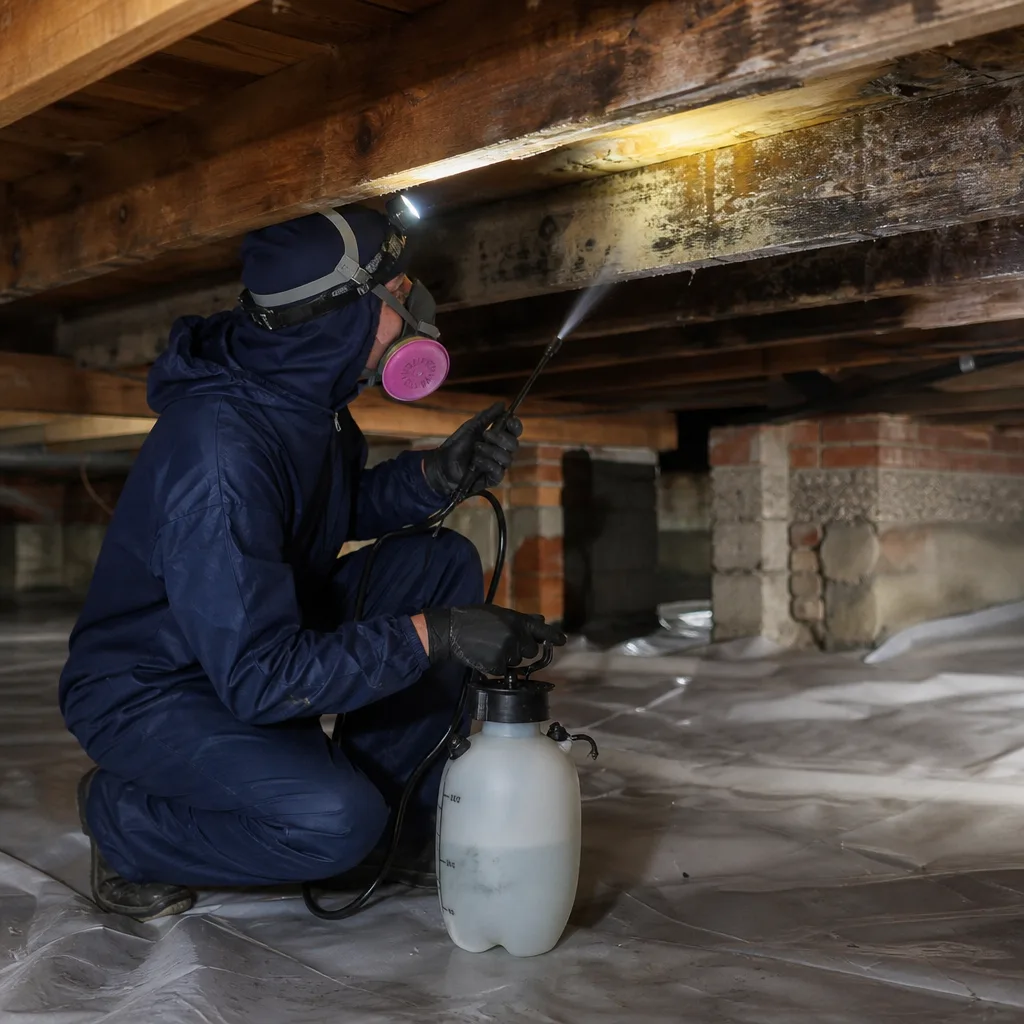
The hillside townhomes above the lake, along Circle Drive and the upper reaches of El Dorado Drive, face different patterns. These units have more independent wall assemblies but share vented crawl spaces where lake humidity pools. Mold in crawl spaces here is often discovered during routine HVAC service or when residents notice musty air from floor registers. Remediation requires crawl space containment, which is physically constrained and demands smaller equipment footprints.
The newer construction on the community’s eastern edge, built in the 1990s and 2000s, has better moisture barriers but still sits in the same humidity bowl. We see fewer shared-wall failures here, more individual-unit roof leaks and window-seal degradation. The ARB process is less stringent for these buildings, but documentation standards remain identical.
Dispatch and scheduling for all Lake San Marcos neighborhoods are coordinated from our Los Angeles office, with crews serving the community locally.
Specialized Mold Remediation Services We Offer in Lake San Marcos
Mold Inspection & Testing
Our inspections begin with moisture mapping and thermal imaging, not guesswork. In Lake San Marcos’s lakefront rows, we inspect adjacent units as baseline - the shared block-wall pattern demands it. Air and surface sampling is available through third-party laboratories when clearance documentation or health-concern verification is required.
Mold Removal
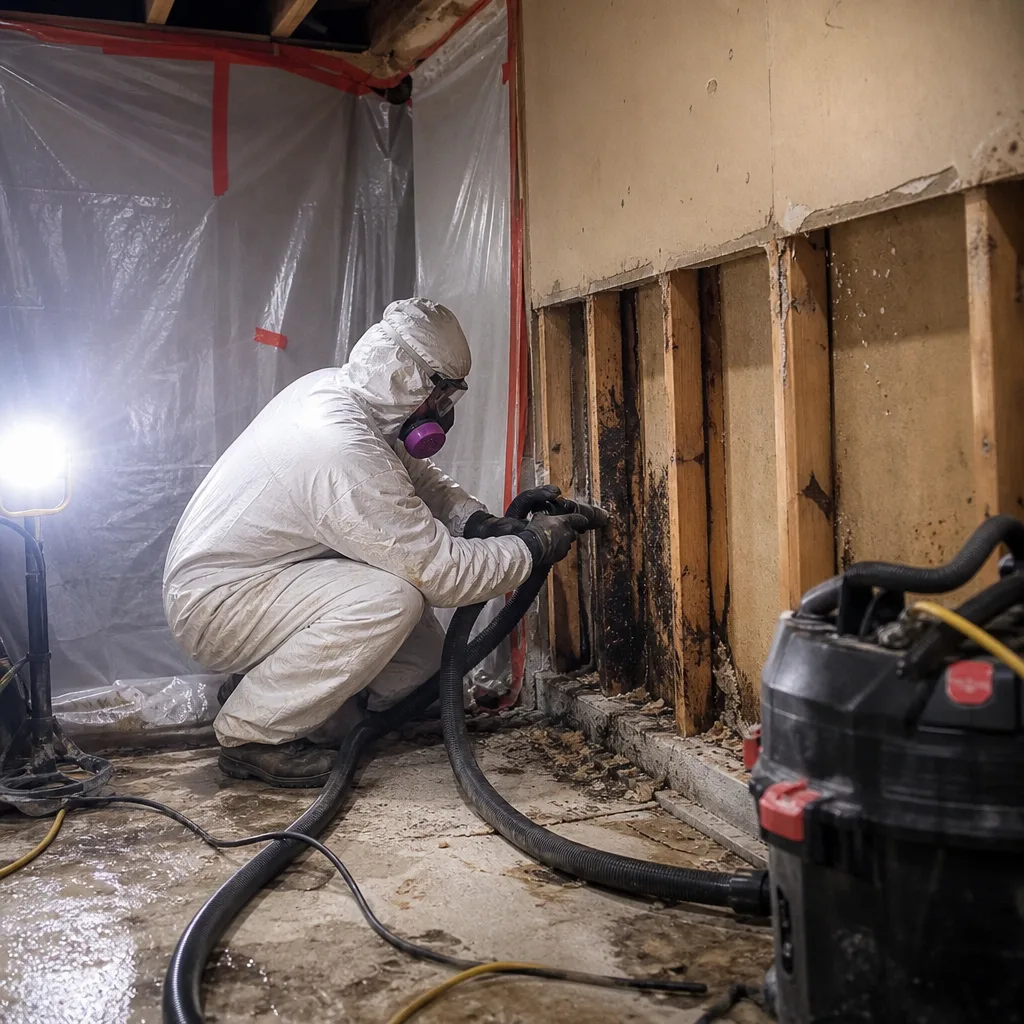
Removal follows IICRC S520 protocols: containment, negative air, HEPA filtration, controlled demolition, and antimicrobial treatment. We remove only what is compromised, with material classifications documented for insurance - Category 1 surface treatment vs. Category 2/3 porous removal - so you aren’t paying for unnecessary reconstruction.
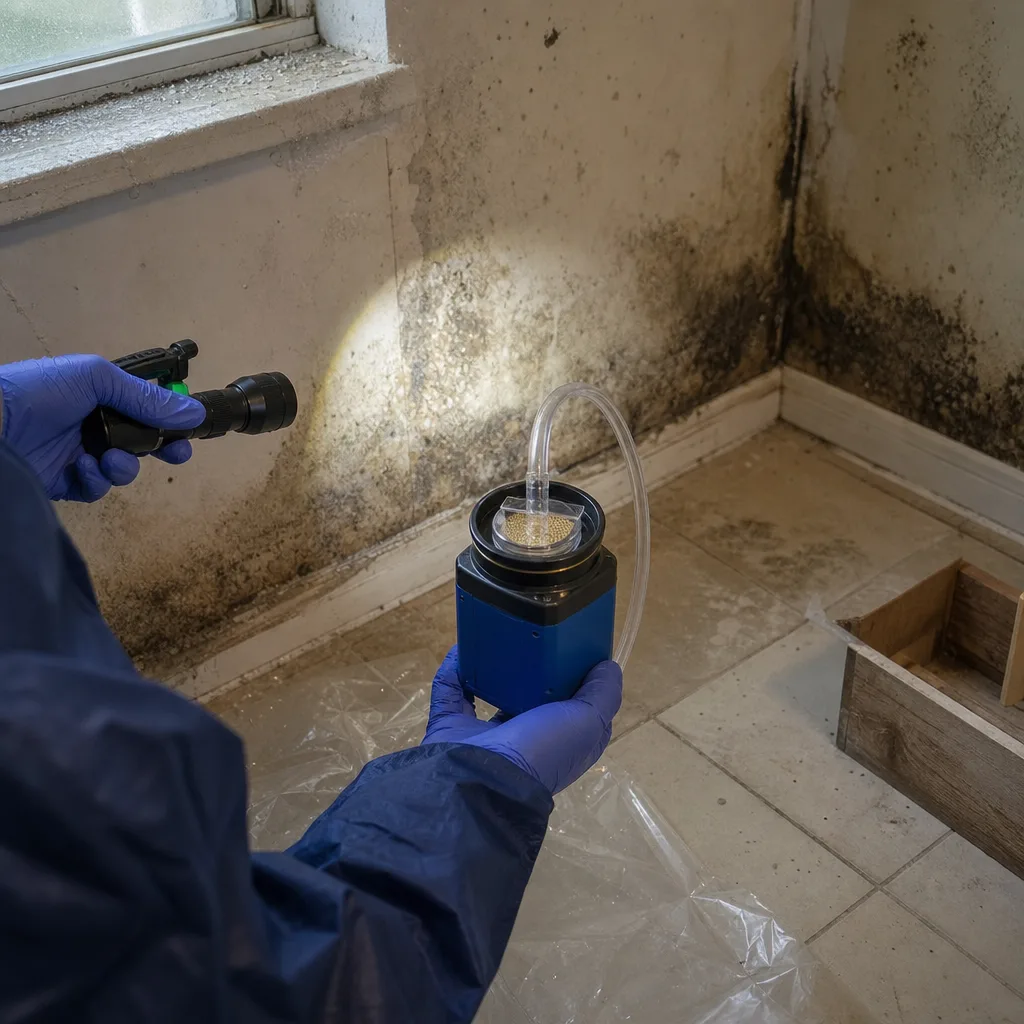
Black Mold Remediation
Stachybotrys chartarum and other toxigenic species require enhanced containment and PPE. We treat black mold with the same documentation rigor as any contamination: photo record, moisture log, written scope, and clearance verification. In Lake San Marcos’s chronically humid buildings, black mold often indicates long-standing concealed moisture - we find and fix the source, not just the symptom.
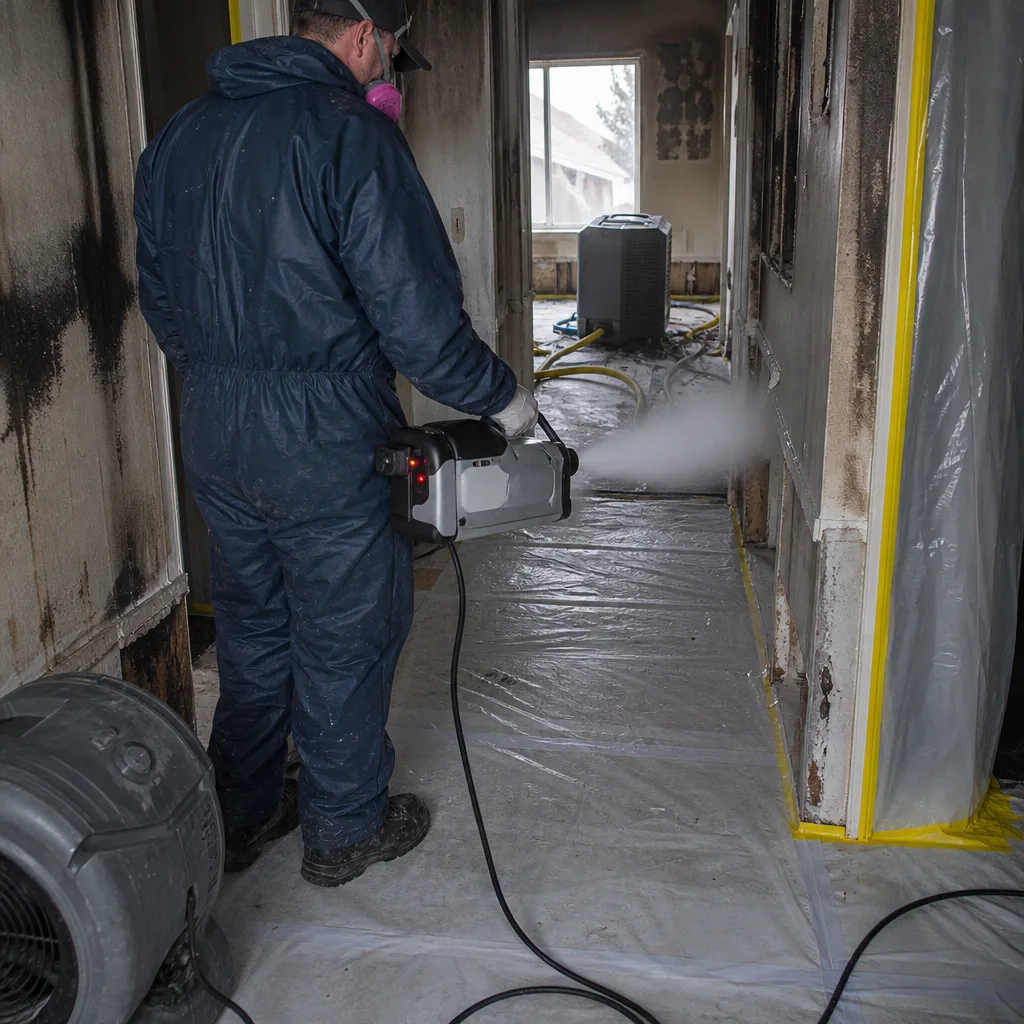
Air Quality Restoration
Post-remediation, we verify air quality through airborne particle counts and, when requested, VOC and mycotoxin screening. HEPA scrubbers run through final clearance to establish baseline conditions that hold once normal occupancy resumes.
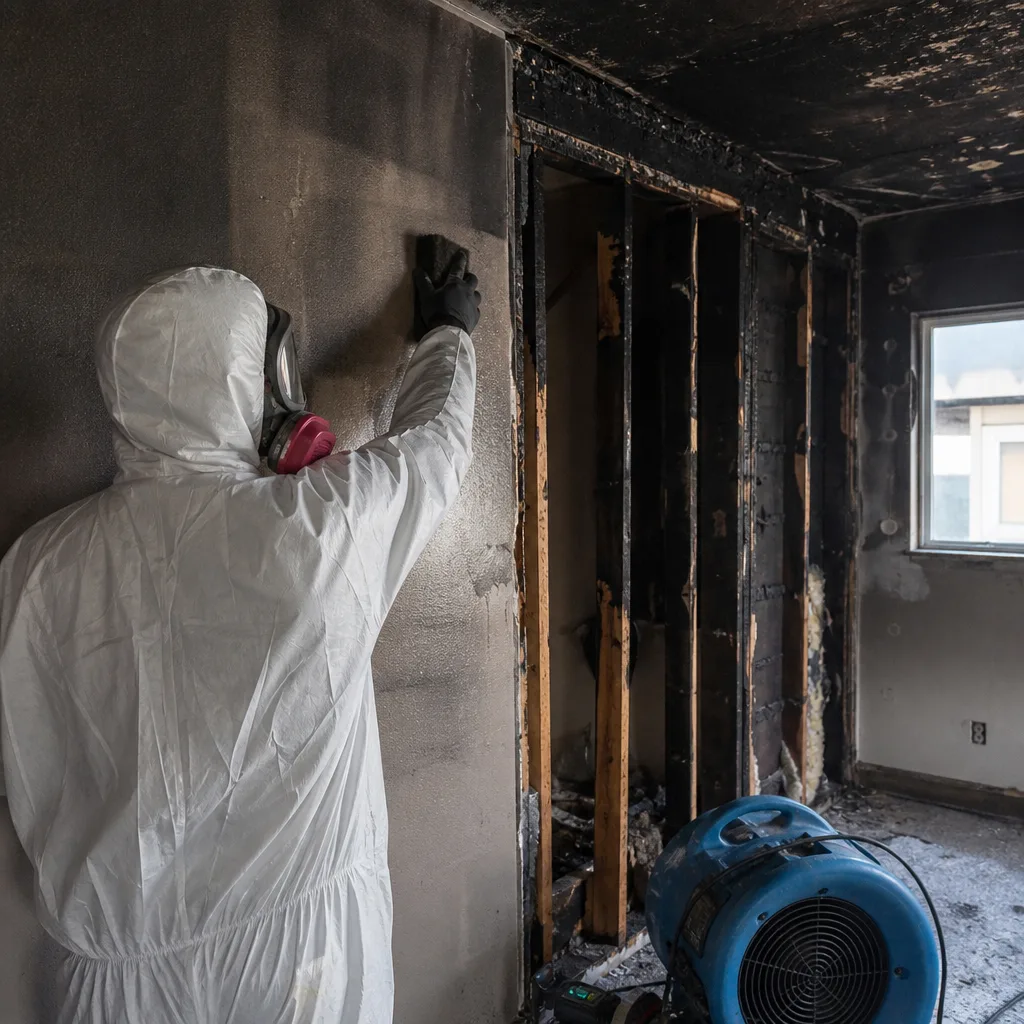
Crawl Space Treatment
Lake San Marcos’s hillside townhomes have vented crawl spaces that trap lake humidity against subflooring and floor joists. We install temporary containment, remove contaminated insulation, treat structural wood, and recommend permanent moisture control solutions - vapor barriers, sealed crawl space conversion, or dehumidification - based on construction type and HOA rules.
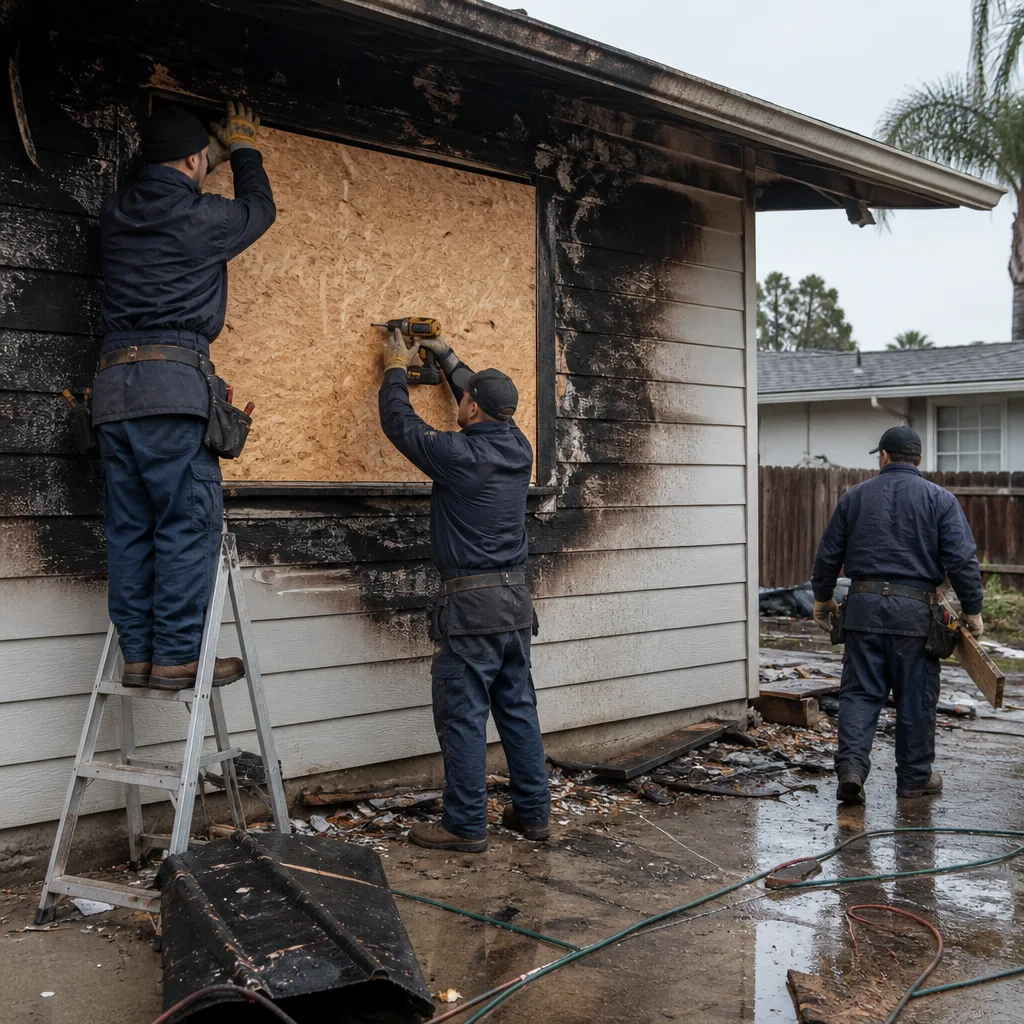
Moisture & Humidity Control
Remediation without humidity control fails in Lake San Marcos. We analyze psychrometric data to specify permanent dehumidification capacity, route condensate drainage, and coordinate with HVAC contractors where system modifications are needed. Our drying logs become the documentation your insurer needs to approve permanent equipment as part of the claim.
What happens when you call
- 1
A real person answersNo phone trees - you reach a local pro.
- 2
You get an upfront price rangeHonest numbers before anyone is dispatched.
- 3
A background-checked tech heads outLicensed & insured, dispatched right away.
- 4
You approve before work beginsNothing starts until you say go.
Mold Remediation Costs in Lake San Marcos, CA
Here is what mold remediation costs in Lake San Marcos’s market, based on 2024-2025 job data:
| Service | Typical Range |
|---|---|
| Single-unit mold inspection with moisture mapping | $350-$650 |
| Limited mold removal (bathroom, small kitchen, contained area under 50 sq ft) | $1,800-$3,200 |
| Moderate remediation with containment and air scrubbing (50-150 sq ft) | $3,500-$5,500 |
| Multi-unit shared-wall remediation with adjacent-unit mapping | $4,500-$8,500 |
| Full crawl space treatment with vapor barrier | $3,000-$6,000 |
| Post-remediation clearance testing | $400-$750 |
What moves the price: square footage of affected material, whether demolition reaches structural assemblies, the number of units involved, and whether ARB-compliant reconstruction requires custom material matching. Insurance typically covers mold remediation when it results from a covered water loss - sudden pipe failure, appliance leak, or storm intrusion - but may exclude long-term humidity damage. We review your policy language and document the cause chain to support coverage arguments. Our free visual inspection produces a written scope with firm pricing before you commit - Haven Standard, Clause 1. Call (760) 546-9565 for your estimate.
We Also Serve Cities Near Lake San Marcos
Our crews respond throughout inland North County from the same dispatch base that serves Lake San Marcos. We also handle mold remediation in Mold Remediation in Lake San Marcos neighboring communities: Oceanside, Camp Pendleton South, Vista, and Camp Pendleton North. Each area has distinct building stock and humidity patterns, and our estimates adjust to local conditions.
Serving Lake San Marcos, CA - Our Local Coverage Area
We’re based in the Lake San Marcos area and know this community well, offering Lake San Marcos Water Damage Restoration. Use the map below to see our service coverage - if you’re nearby, we can almost certainly help.
Lake San Marcos Mold Remediation Questions, Answered
Does my Lake San Marcos HOA need to approve mold remediation work before it starts?
Yes, for any work visible from common areas or affecting exterior surfaces. The Lake San Marcos HOA architectural review board requires pre-approval of stucco repair patches, paint colors, and trim profiles. We document pre-loss condition with photos and submit ARB packages as standard, so remediation proceeds without delay and reconstruction passes inspection on first review. Call (760) 546-9565 to schedule an inspection that includes ARB documentation.
Why do mold problems in Lake San Marcos lakefront condos often involve two units instead of one?
Decades of lake-driven humidity have compromised the 1960s stucco-over-concrete-block base courses in the original lakefront rows, so the shared block-wall cavity between units acts as a continuous moisture pathway. Our field data shows this pattern is so consistent along Lake Shore Drive that we moisture-map adjacent units as baseline - a step that would be unnecessary in Escondido or Vista, where construction and humidity profiles differ. Call (760) 546-9565 and we’ll inspect both sides of the wall.
How fast does mold start growing after a water leak in a Lake San Marcos condo?
Mold colonization begins 24-48 hours after water intrusion in Lake San Marcos’s chronically humid environment, faster than the 48-72 hour baseline in drier inland areas. The lake-generated humidity keeps building materials near the mold-growth threshold even before a leak occurs, so time to visible colonization is shortened. Same-day containment and drying are critical to preventing shared-wall spread. Call (760) 546-9565 for immediate dispatch.
Can you run drying equipment quietly enough for a shared-wall Lake San Marcos townhome?
Yes. We schedule equipment operation around HOA quiet hours, use ducted dehumidifiers with remote compressor placement, and install temporary sound barriers where needed. In shared-wall units, we coordinate access with adjacent owners and contain noise at the airlock. Our crews have completed dozens of Lake San Marcos jobs without noise complaints or HOA fines. Call (760) 546-9565 to discuss scheduling constraints.
What makes mold remediation in Lake San Marcos different from neighboring San Marcos proper or Escondido?
Lake San Marcos’s artificial lake creates a localized humidity anomaly in an otherwise dry inland valley, and the 1960s resort-community construction produced shared-wall buildings with moisture pathways that don’t exist in newer, drier developments. The HOA architectural review process adds a compliance layer absent in most neighboring cities. Our remediation protocols are built around these specific conditions - two-unit moisture mapping, ARB documentation, and lake-climate drying calculations. Call (760) 546-9565 for a Lake San Marcos-specific assessment.
Will my insurance cover mold remediation in Lake San Marcos?
Insurance covers mold remediation when it results from a sudden, accidental water loss - burst pipe, appliance failure, or storm damage - but typically excludes long-term humidity or maintenance-related growth. We document the cause chain, photograph the point of origin, and format estimates to carrier standards to support coverage. For disputed claims, we provide the moisture logs and drying records that demonstrate sudden vs. gradual onset. Call (760) 546-9565 for a free inspection and policy review.
How long does mold remediation take in a Lake San Marcos condo?
Single-unit, contained remediation typically completes in 3-5 days including drying. Multi-unit shared-wall scenarios require 5-10 days to allow for adjacent-unit mapping, extended cavity drying, and sequential clearance testing. Reconstruction time depends on ARB approval cycles, which we expedite with complete pre-submission packages. We provide a written timeline with the scope - Haven Standard, Clause 1. Call (760) 546-9565 for a schedule specific to your building.
Can we stay in our Lake San Marcos home during mold remediation?
For Category 1 and limited Category 2 remediation, residents often remain with containment isolating the work area. For Category 3 contamination, toxigenic species, or multi-unit shared-wall work, temporary relocation is recommended and may be covered by insurance under additional living expense provisions. We discuss occupancy decisions during the inspection, with air-quality data to inform the choice. Call (760) 546-9565 to review your specific situation.
We were called to a ground-floor unit on Lake Shore Drive after a failed supply line under the kitchen sink triggered a Category 2 loss that wicked through the shared concrete-block wall into the neighboring townhome overnight. Our tech ran moisture mapping on both sides of the wall - the neighboring unit’s base course read 28% WME while the visible drywall in the original unit looked dry - so we set containment on both units before any demolition, HEPA-scrubbed the cavity, and applied antimicrobial treatment to the block. Because the HOA’s ARB had to approve the stucco repair patch color and the base-course profile, we documented the pre-loss condition with photos and matched the existing texture and paint before we closed the wall.
Written by Alicia Brennan, Owner at Back to Dry Restoration, serving Lake San Marcos since 2011.