

Free visual inspection and a written scope of work before any mitigation begins - photos, moisture readings, and drying logs go in your claim file
The scope we write is the scope we bill. Anything new gets shown to you, in writing, before we touch it.


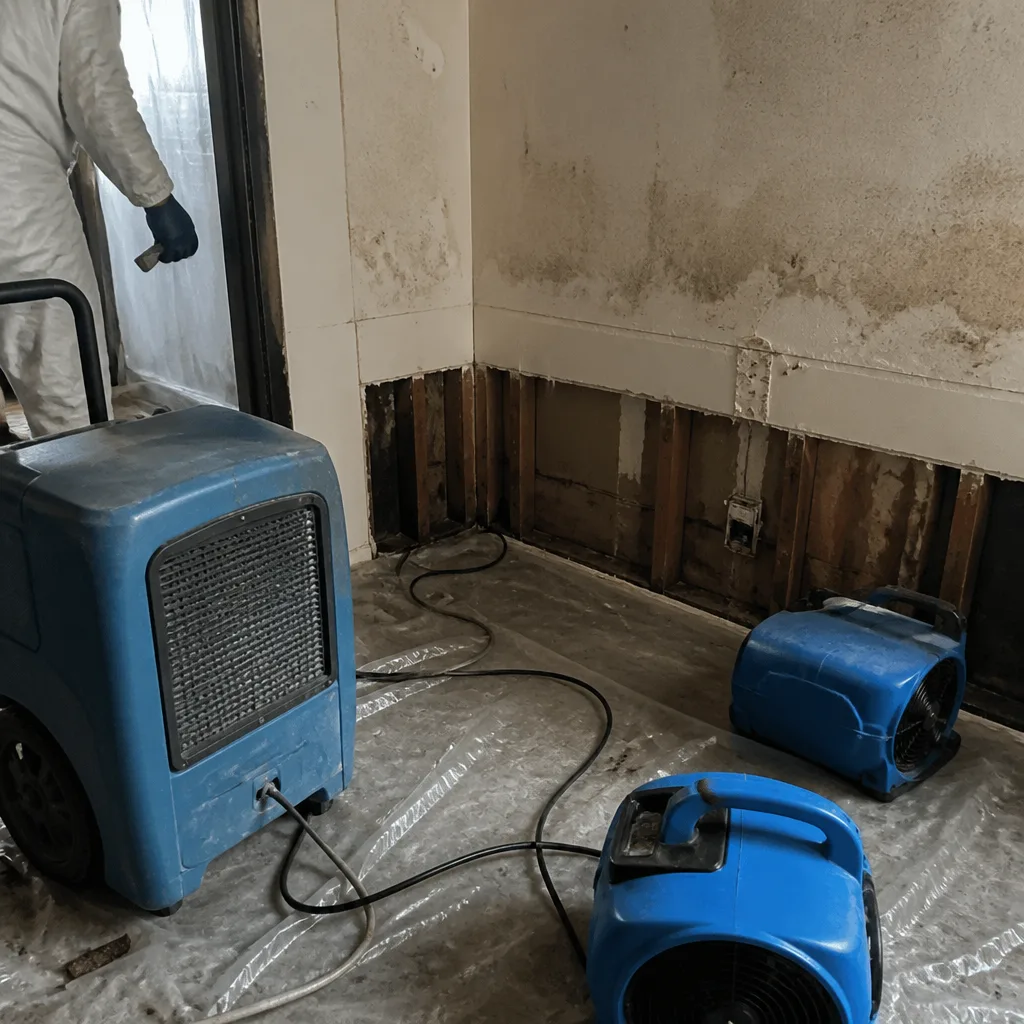 Before
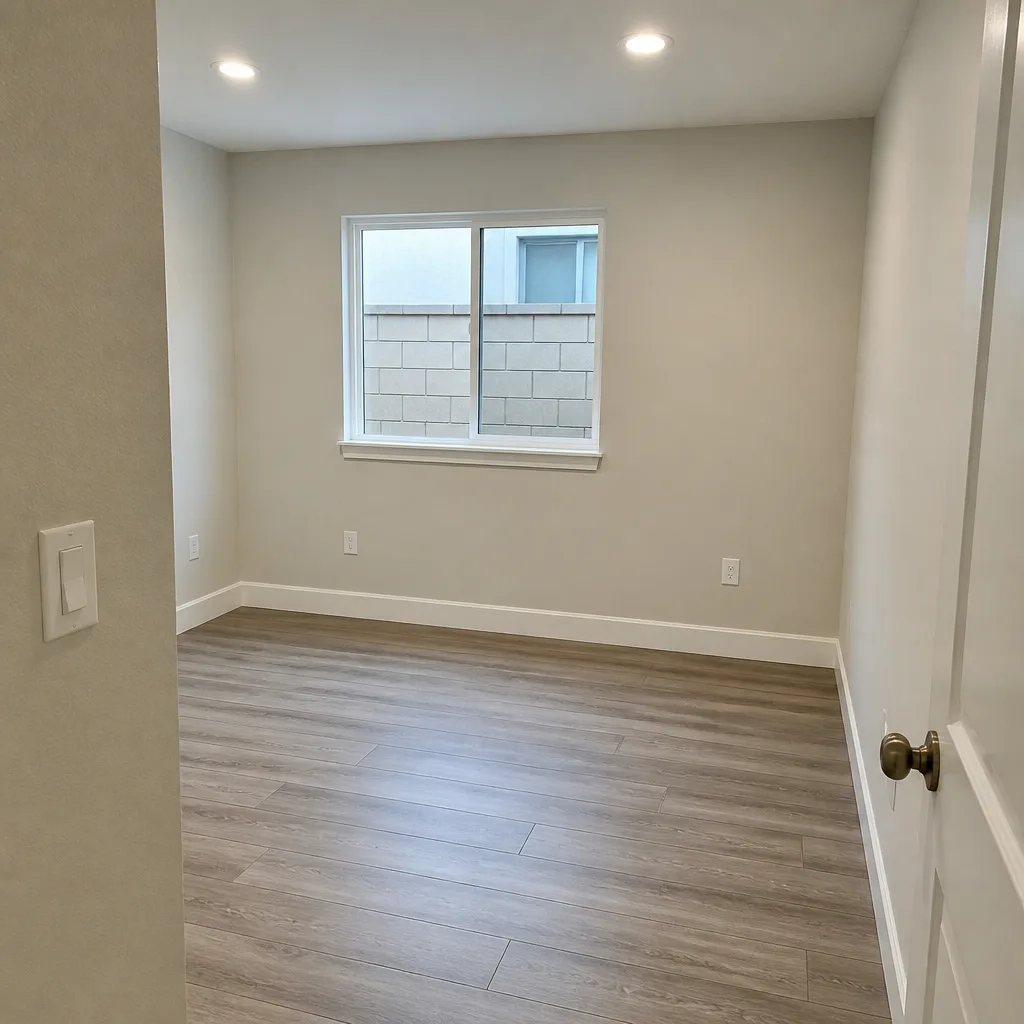 After
After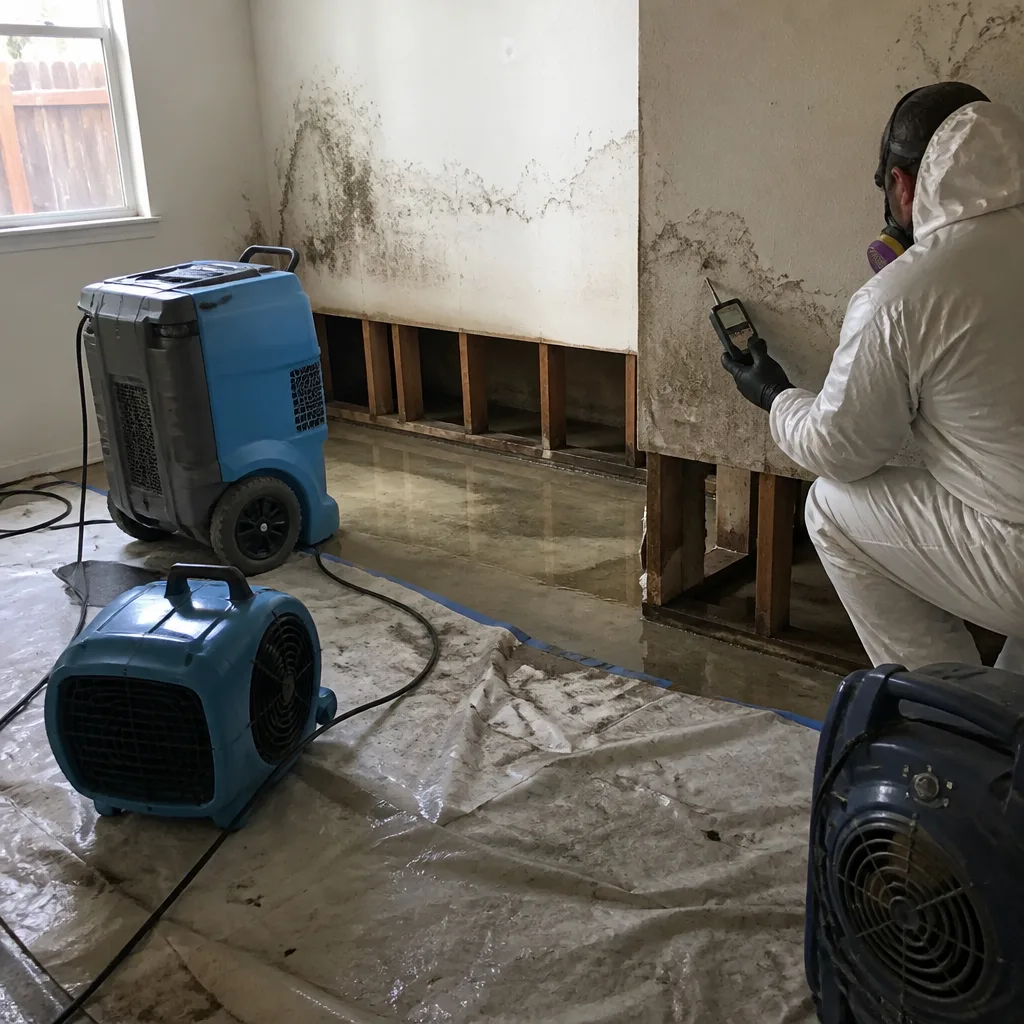 Before
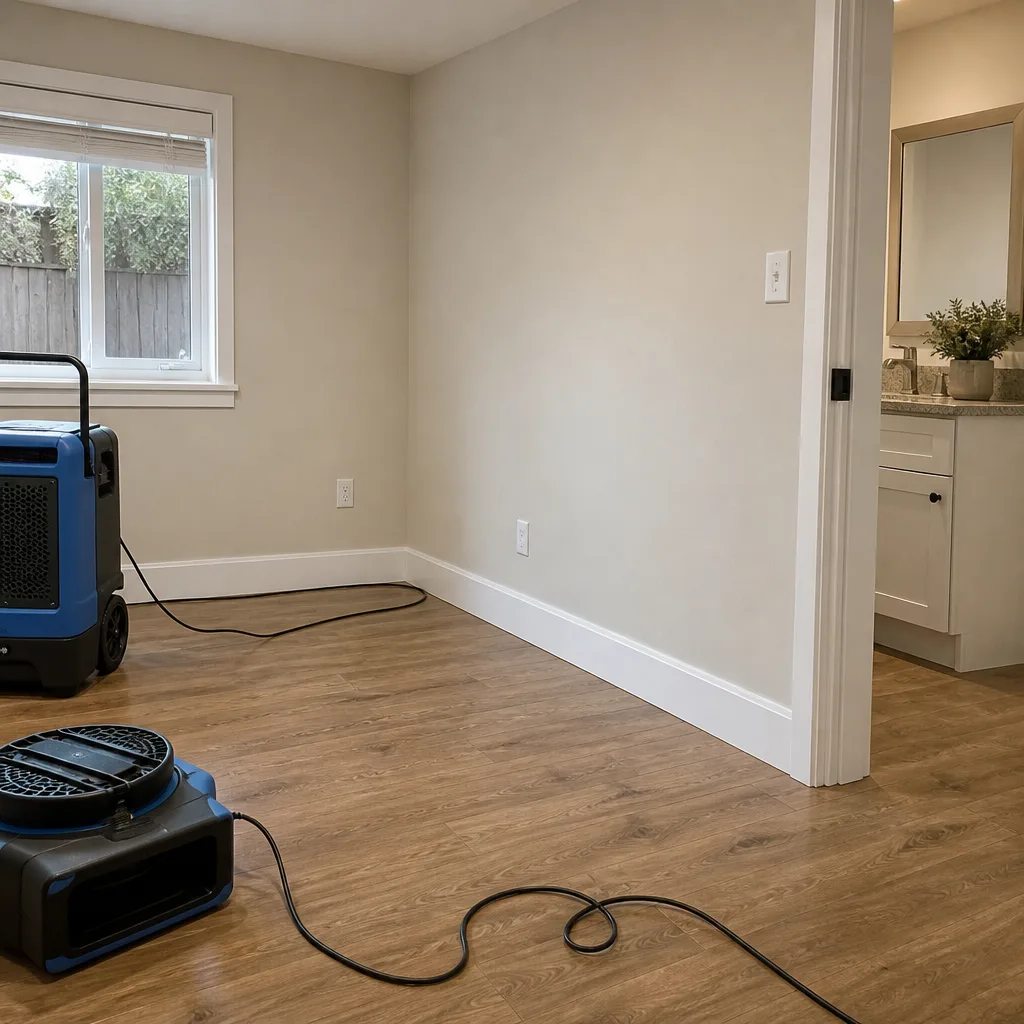 After
After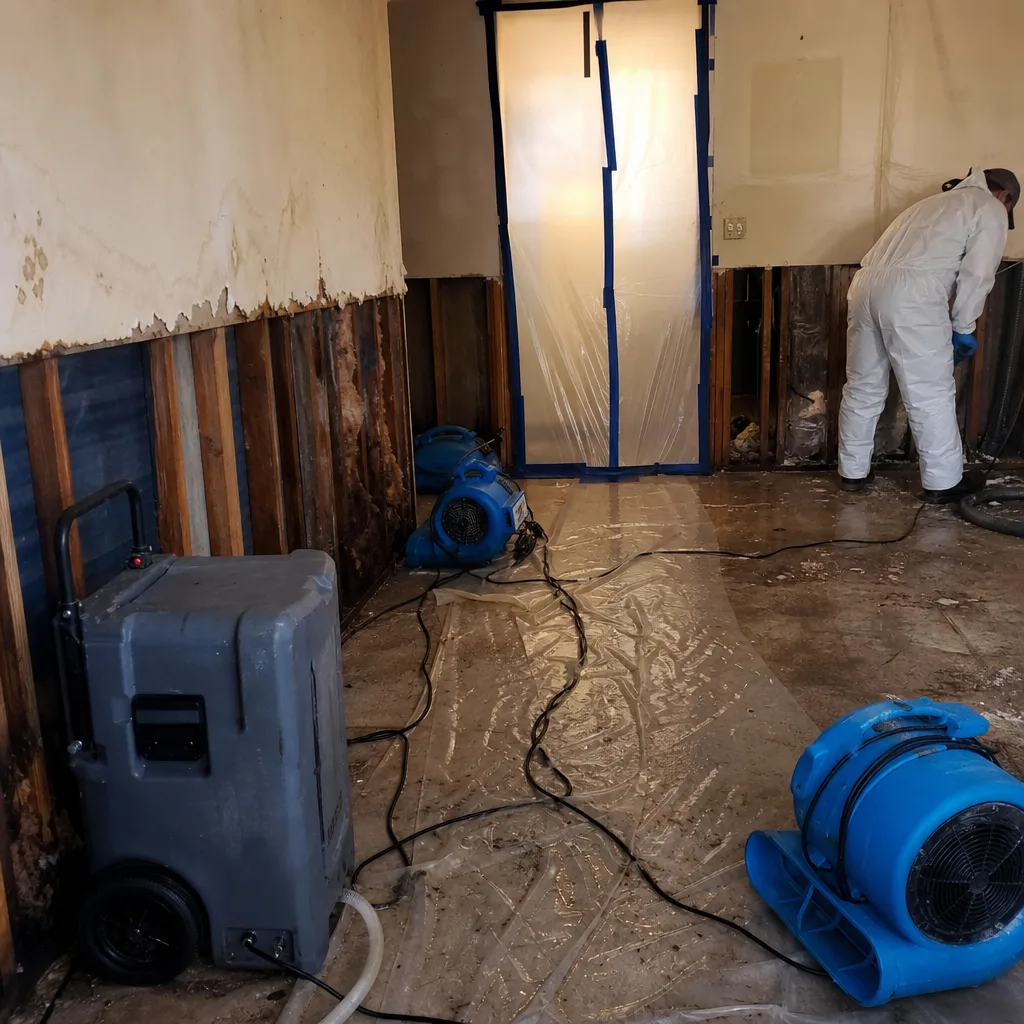 Before
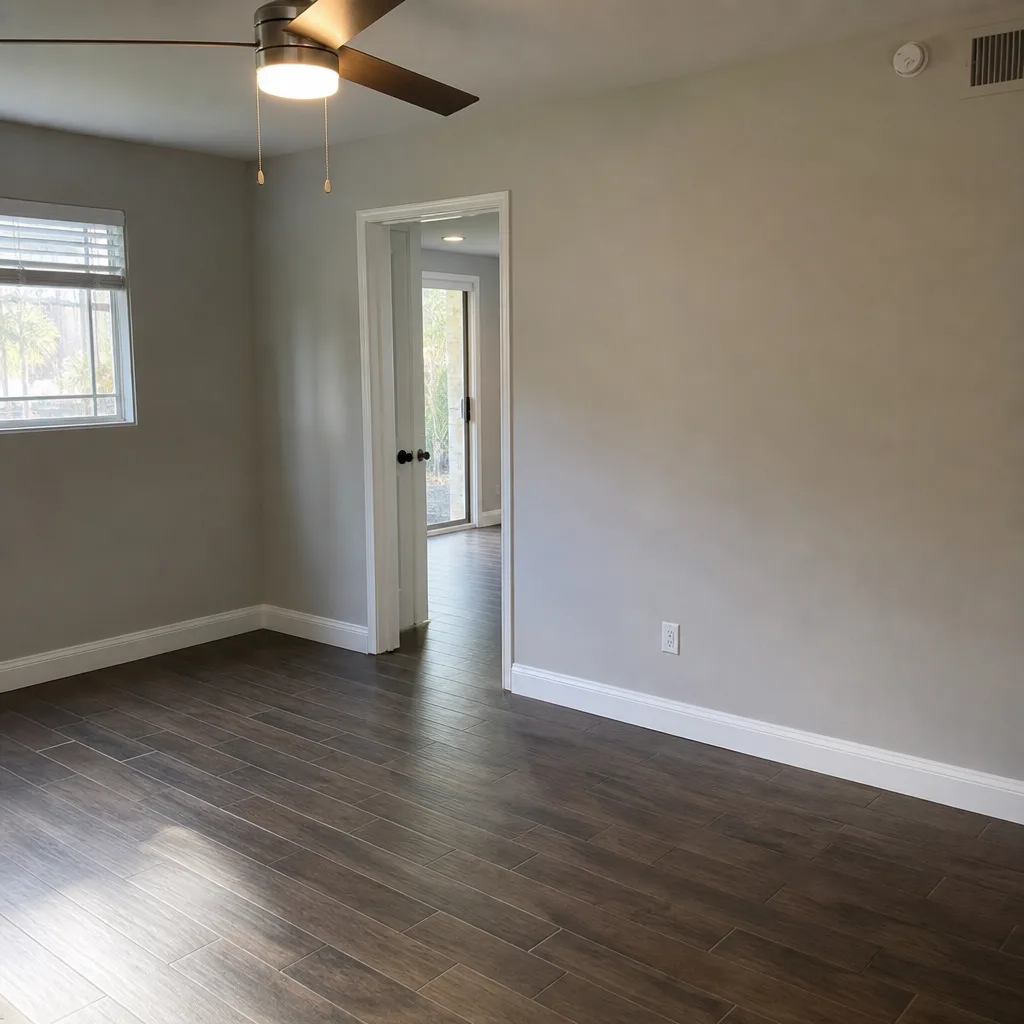 After
After24/7 Emergency Mold Remediation in Escondido
Mold remediation in Escondido typically costs $1,800-$6,500 depending on affected square footage and whether the source was clean water or contaminated runoff. Most containment and removal jobs begin same-day once a written scope is approved. Call (760) 546-9565 now - a live person answers every emergency line, 24 hours a day, with no voicemail trees while moisture is still spreading.
We dispatch crews from our San Diego office to Escondido properties inside 45 minutes. The first hour matters because mold colonization accelerates in Escondido’s warmer inland valley temperatures, often outpacing coastal San Diego by 12-24 hours. We provide a free visual inspection, document moisture readings with thermal imaging, and deliver a written price before any containment goes up - Haven Standard, Clause 1.
Understanding Mold Remediation Severity in Escondido Properties
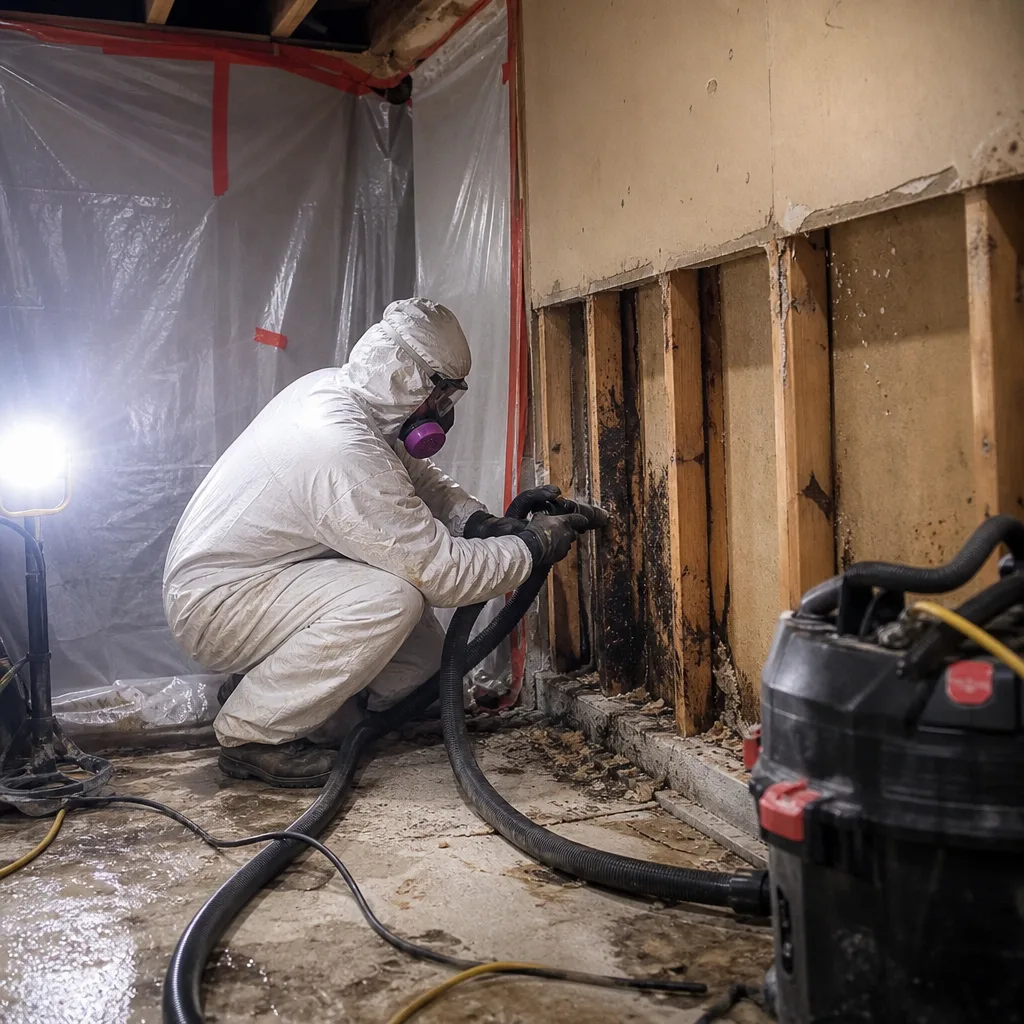
Mold damage in Escondido falls into three containment tiers tied to square footage, material porosity, and water category. Limited contamination under 10 square feet in a single room requires localized containment with polyethylene sheeting and a single HEPA air scrubber. Moderate contamination from 10 to 100 square feet demands full room containment with negative air pressure and sealed HVAC isolation. Extensive contamination exceeding 100 square feet or involving HVAC systems requires whole-area containment, multiple air scrubbers, and third-party clearance testing.
Escondido’s housing stock complicates every tier. The 1950s-1970s tract homes near downtown Grand Avenue often contain original gypsum wallboard with no moisture-resistant backing, paper-faced insulation that wicks water laterally, and galvanized supply lines that fail catastrophically. These materials absorb and retain moisture differently than modern cement board or fiberglass-faced drywall, extending drying timelines and sometimes requiring full removal rather than in-place drying. The 1980s-2000s hillside developments in communities like Hidden Trails present the opposite problem: tight building envelopes with inadequate vapor management that trap humidity in wall cavities after any water intrusion.
Why Escondido Property Owners Choose DryMark Restoration Oceanside
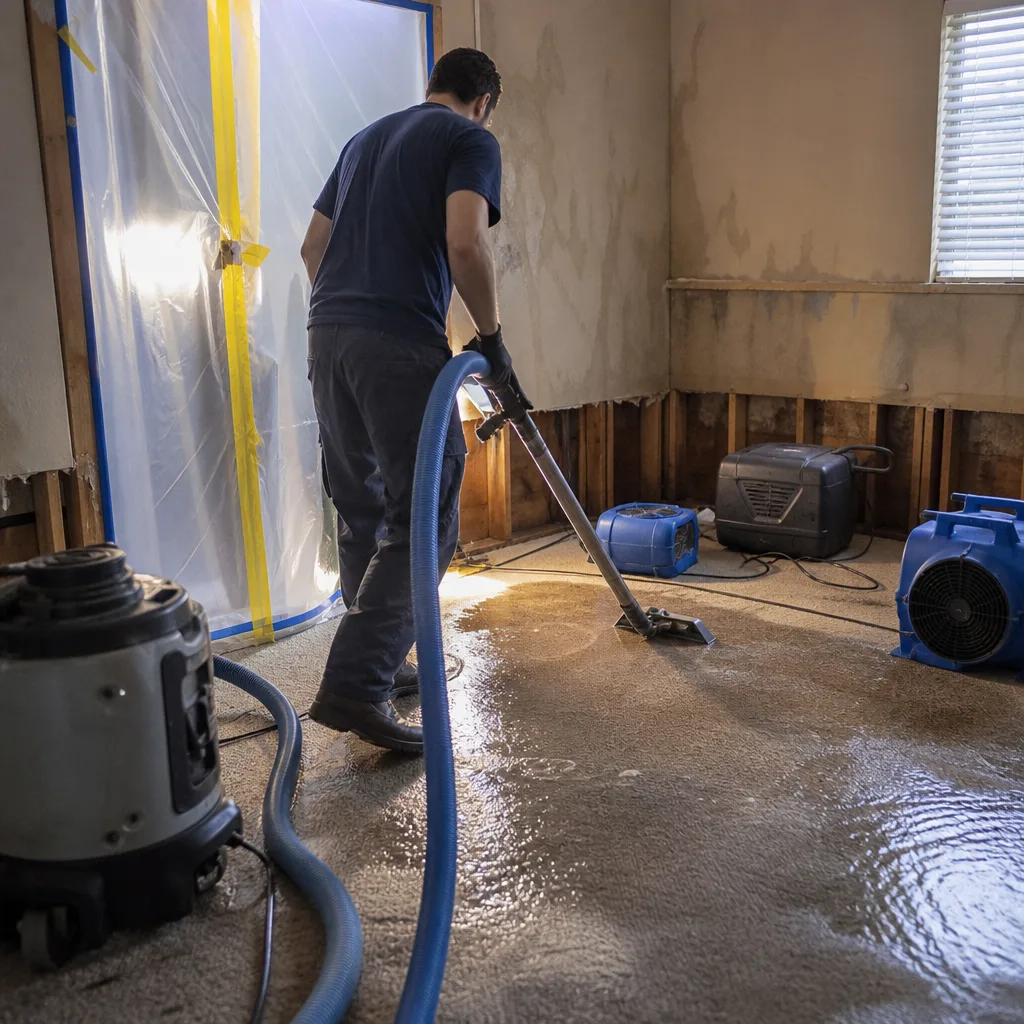
- 45-minute response commitment to Escondido addresses from dispatch, with crews carrying containment materials, HEPA equipment, and moisture meters on every truck.
- 24/7 live answer - a real person, never an automated system, on every emergency line at all hours.
- IICRC-certified crews holding WRT (Water Damage Restoration Technician), AMRT (Applied Microbial Remediation Technician), and FSRT (Fire & Smoke Restoration Technician) certifications for Escondido’s paired fire-and-water losses.
- Free visual inspection with documented moisture readings, thermal imaging, and a written scope delivered before any work begins.
- Direct insurance billing with photo-documented drying logs and room-by-room moisture maps that adjusters recognize and pay without dispute.
- One team from containment to reconstruction - no handoffs between mitigation and rebuild crews that lose institutional knowledge about what was wet, what was removed, and why.
BeforeAfterOur Mold Remediation Process
1. Inspection & Assessment
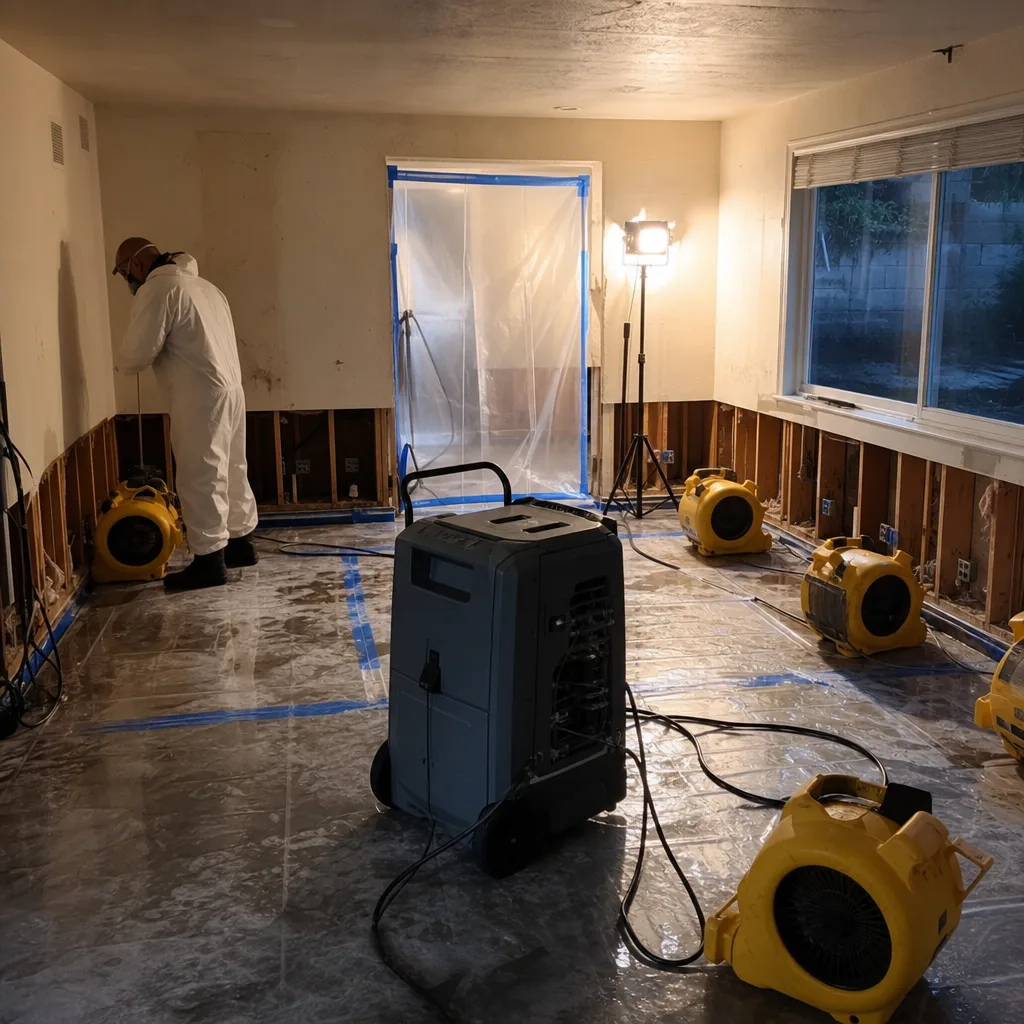
We map moisture with FLIR thermal imaging and penetrating hygrometers, identify the water category (Category 1 clean, Category 2 gray, or Category 3 black/contaminated), and sample visible growth for lab analysis when species identification affects the remediation protocol. Every reading is logged with time, location, and equipment serial number.
2. Containment & Air Quality Control
We build polyethylene containment barriers sealed with duct tape and negative air pressure maintained by HEPA-filtered air scrubbers (Dri-Eaz and Phoenix units rated at 99.97% efficiency at 0.3 microns). HVAC systems are isolated to prevent spore migration. Air quality baseline readings establish the starting point for clearance comparison.
3. Water Extraction & Source Elimination
Standing water is extracted with submersible pumps and weighted vacuums. For Escondido’s debris-flow events, we treat silt-laden runoff as Category 3 from the first bucket - no exceptions. Saturated porous materials that cannot be restored are removed and documented with photos.
4. Drying & Dehumidification
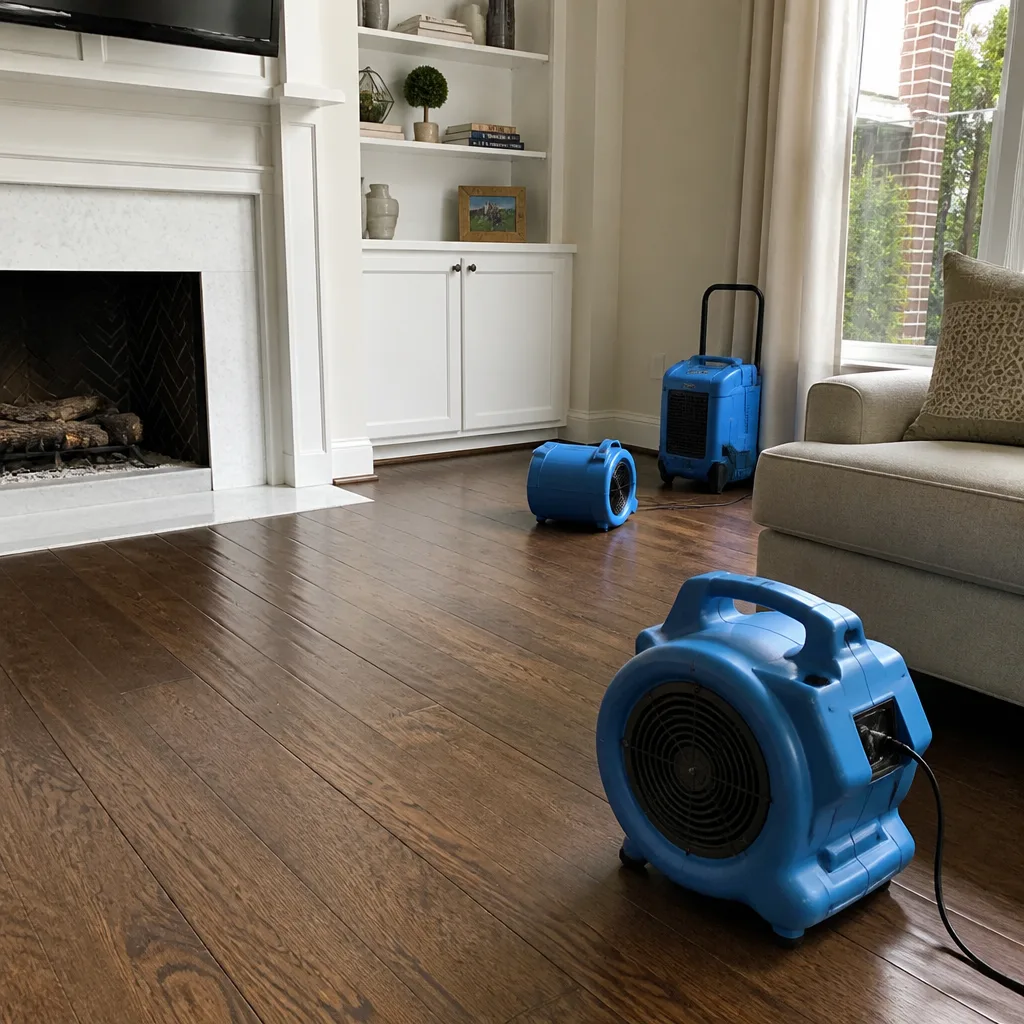
We deploy LGR dehumidifiers (Dri-Eaz Revolution and Phoenix 200 HT) with air movers positioned for optimal vapor pressure differential - the measurable force that drives moisture from wet materials into the drier air. Daily psychrometric data (temperature, relative humidity, specific humidity, and dew point) is logged to IICRC S500 standards.
5. Antimicrobial Treatment & HEPA Cleaning
All affected surfaces receive EPA-registered antimicrobial application followed by HEPA vacuuming and damp-wiping. For Escondido’s legacy homes with original wood framing, we apply borate-based treatments that penetrate cellulose materials and inhibit future fungal growth without compromising structural integrity.
6. Clearance Testing & Documentation
Third-party or in-house clearance testing compares post-remediation air samples to outdoor baseline and pre-remediation readings. We deliver a photo record of every visit, a complete drying log, and the written scope of work performed - the documentation package that turns restoration invoices into payable claims.
Need Emergency Mold Remediation in Escondido Now?
Crews minutes away, answering live 24 hours a day. The sooner we start, the less it costs.
Working With Your Insurance Company
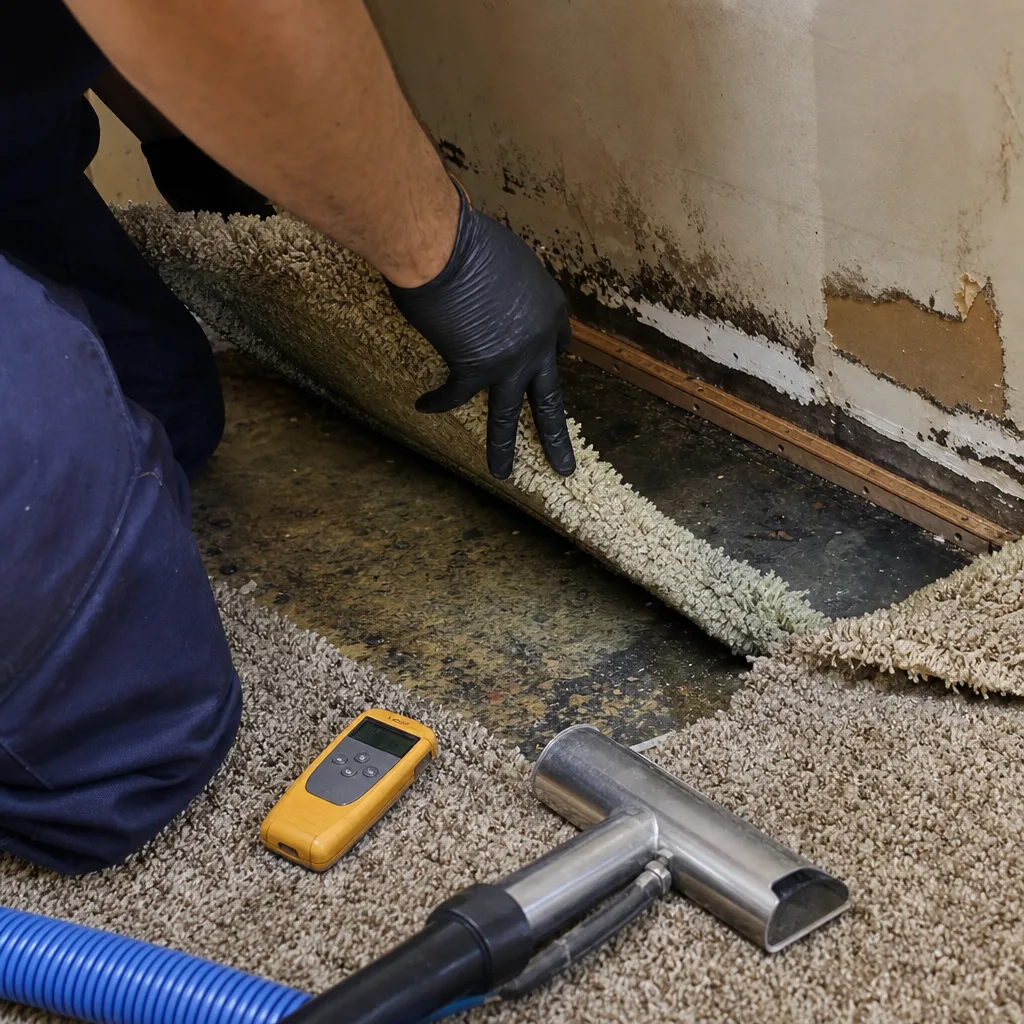
Escondido mold claims succeed or fail on documentation quality. We begin photo documentation from the first hour, before containment disturbs the scene. Our estimates follow Xactimate pricing recognized by all major carriers, and we coordinate directly with your adjuster rather than handing you a bill to submit alone.
The paired fire-then-flood pattern common in Escondido creates unique claim complexity: one property may have separate fire and water deductibles, different coverage limits, and disputes over whether mold resulted from the original fire suppression or the subsequent debris flow. Our documentation separates each loss event with distinct photo records, moisture maps, and written scopes so carriers can apply correct coverage without denial.
What We Provide Your Insurer
- Thorough documentation of the loss
- Photos of all damage, room by room
- Moisture readings and drying logs
- A detailed, line-item scope of work
- Direct coordination with your carrier
Built for Escondido’s Loss Calendar
Escondido’s mold calendar runs opposite to coastal San Diego’s. June through October brings Santa Ana wind events that drive wildfire through the chaparral hills encircling the valley; smoke and ash remediation peaks in these months. November through March delivers the winter rain that turns burned slopes into debris-flow sources. Mold calls spike 30-60 days after the first significant rain, when homeowners discover crawl spaces and ground-floor rooms that stayed wet after the visible water was pumped out.
April and May bring a secondary wave: the older Grand Avenue-area homes with original slab foundations and no vapor barriers show mold in baseboards and carpet tack strips as winter moisture migrates upward through capillary action. Summer heat then drives humidity into wall cavities where previous leaks were inadequately dried, producing late-season calls that trace back to winter damage. Our crews carry equipment year-round because Escondido’s mold season has no true off-month - only different causes.
Mold Remediation Across Escondido’s Neighborhoods
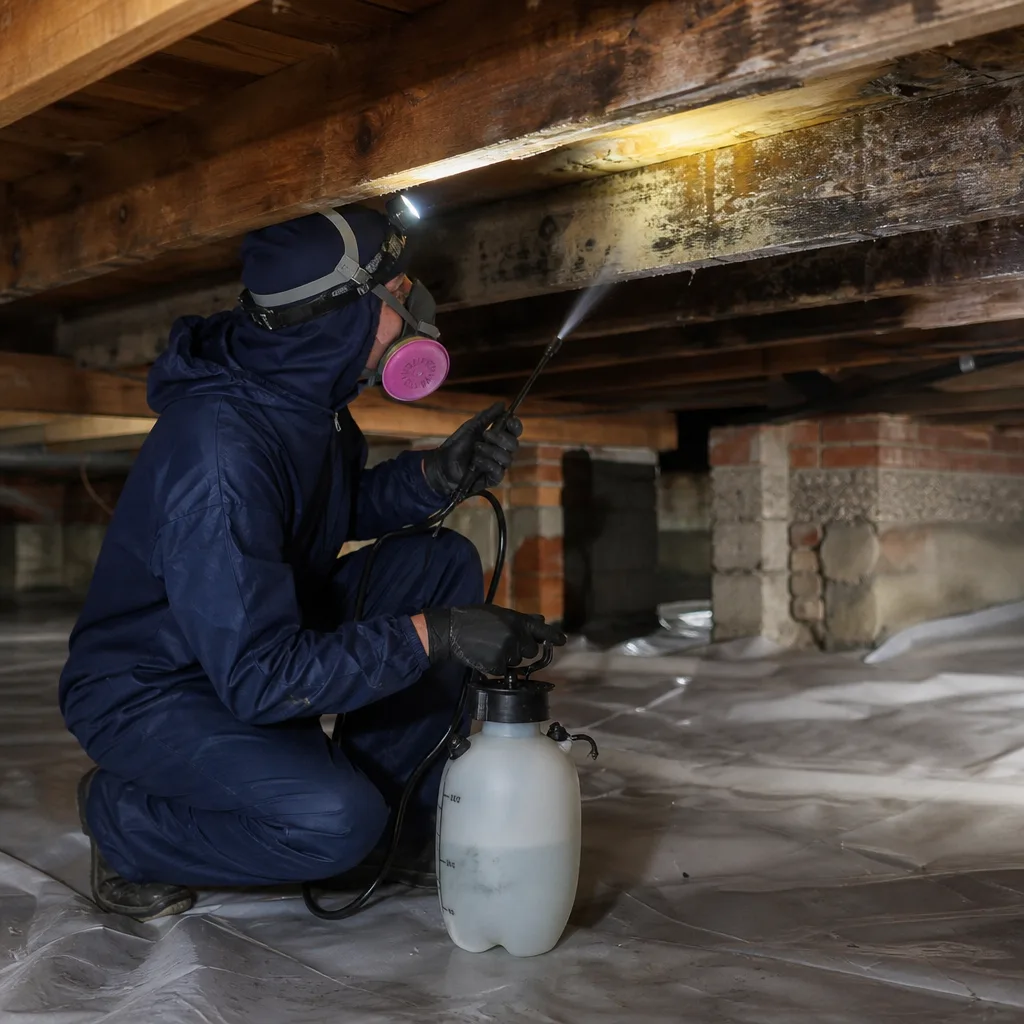
In the older grid neighborhoods near Grand Avenue and the original downtown, we regularly find 1950s-1970s tract homes with original drywall, no vapor barriers, and galvanized plumbing at end of life. A supply line failure in one of these properties typically saturates wall cavities before the homeowner notices, and the paper-faced drywall wicks moisture horizontally across multiple rooms. Remediation here often requires removing drywall to 24 inches above the visible water line, treating framing with borate-based antimicrobials, and installing modern moisture-resistant materials during reconstruction.
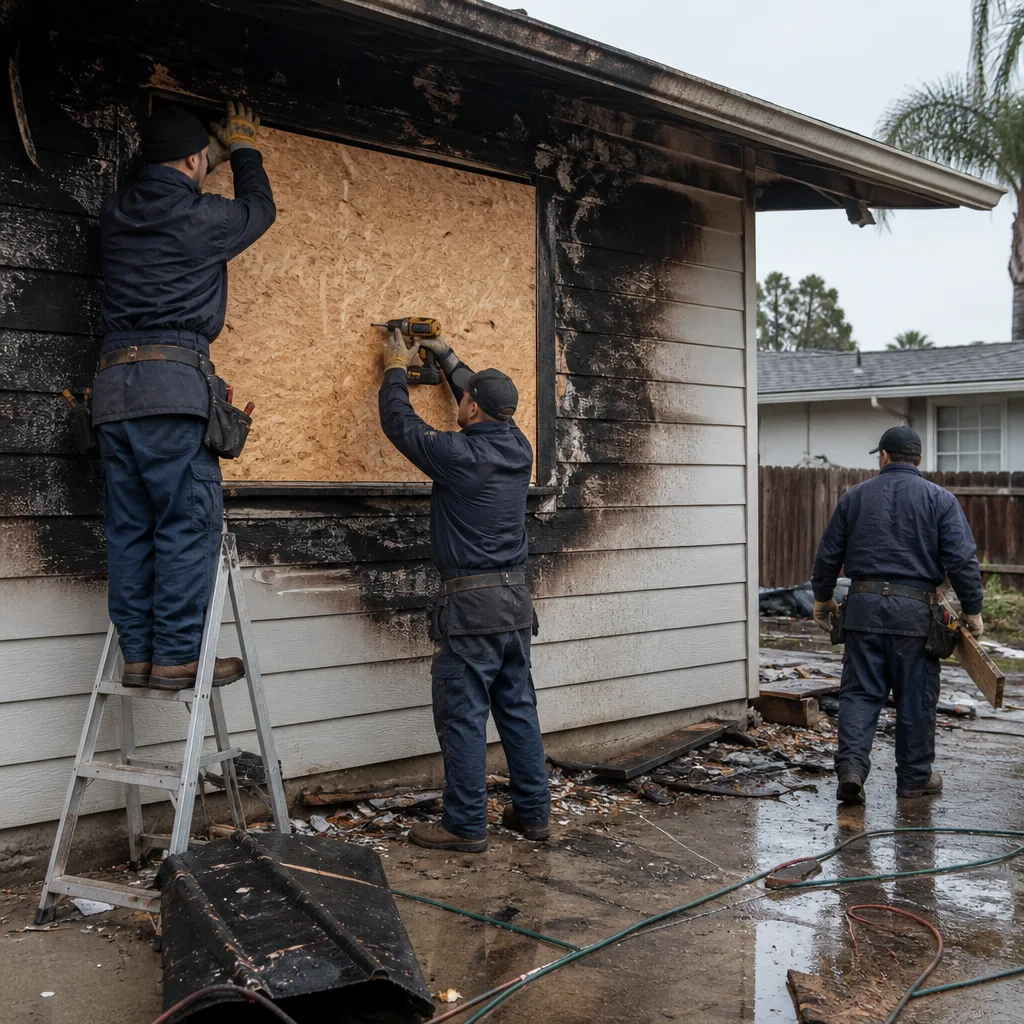
Hidden Trails and the hillside developments backing against Daley Ranch and the northeastern canyon edges present different challenges. These homes have tighter envelopes and modern materials, but they’re exposed to the full fire-then-flood sequence. After the hills above Hidden Trails burned one fall, our crew returned in January to the same streets once rain hit the denuded slopes; a homeowner on a canyon-backing cul-de-sac had already had smoke and ash cleaning, then found 3 inches of silt-loaded water in the crawl space. We ran moisture mapping and readings, set containment, used water extraction and air movers with Dri-Eaz dehumidification, applied antimicrobial treatment to the joists, and logged the crawl space on drying logs. The homeowner said the second wave felt like a different disaster entirely; we treated it as category 3 water because of the silt and soil load, which meant removing saturated insulation rather than trying to dry it.
The communities along Escondido Creek and its tributaries - particularly the lower-lying areas near Washington Avenue and the creek crossing - see seasonal groundwater rise that affects crawl spaces even without surface flooding. These properties need ongoing moisture management, not just one-time remediation.
Specialized Mold Remediation Services We Offer in Escondido
Mold Inspection & Testing
Our inspections combine visual assessment, moisture mapping with thermal imaging, and air/surface sampling sent to independent labs for species identification. In Escondido’s legacy housing stock near Grand Avenue, we specifically test for Stachybotrys chartarum and Chaetomium species that thrive on long-wet cellulose materials. Results typically return in 48-72 hours and inform the containment tier and antimicrobial selection.
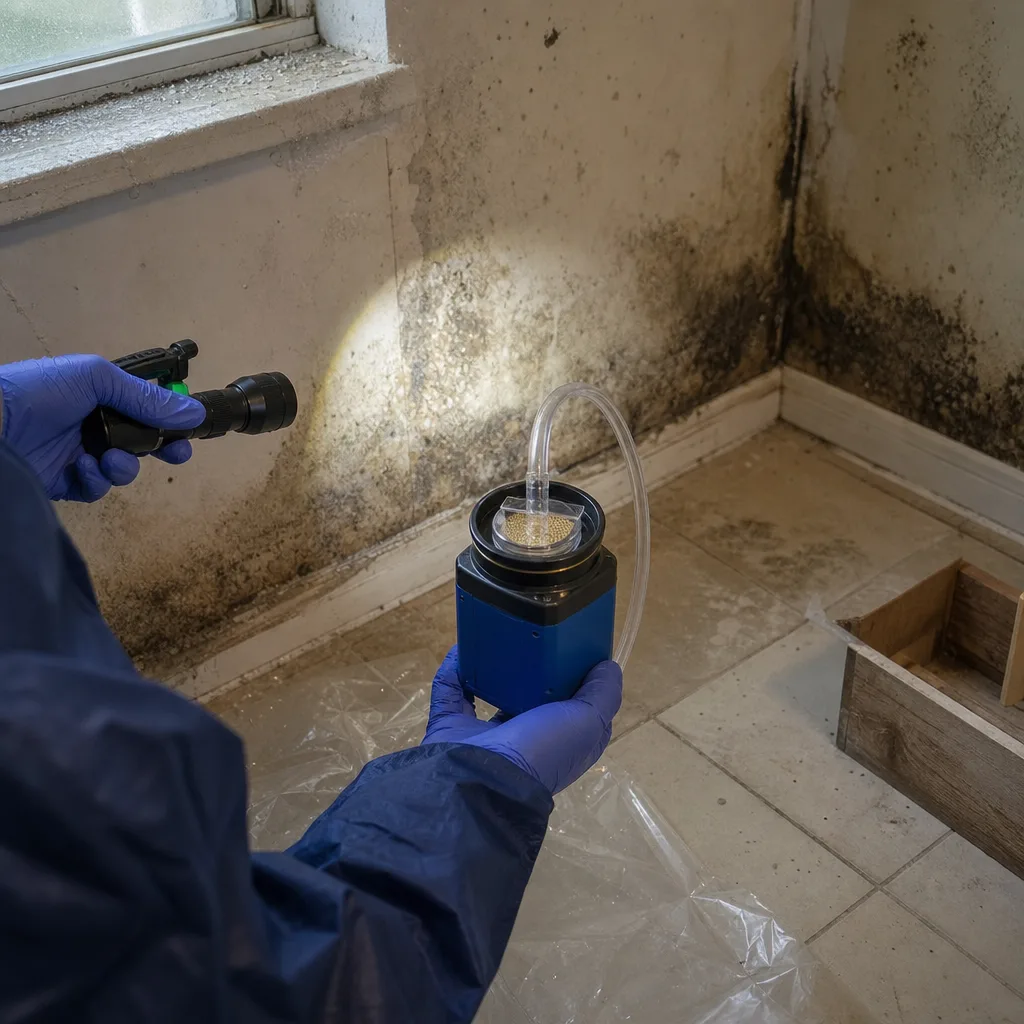
Mold Removal
Removal follows IICRC S520 standards: source elimination first, then controlled demolition of non-salvageable materials, HEPA cleaning of all surfaces, and clearance verification. For Escondido’s hillside homes with fire-damaged structural components, we coordinate removal with structural engineers when charred framing must be addressed alongside mold-affected materials.
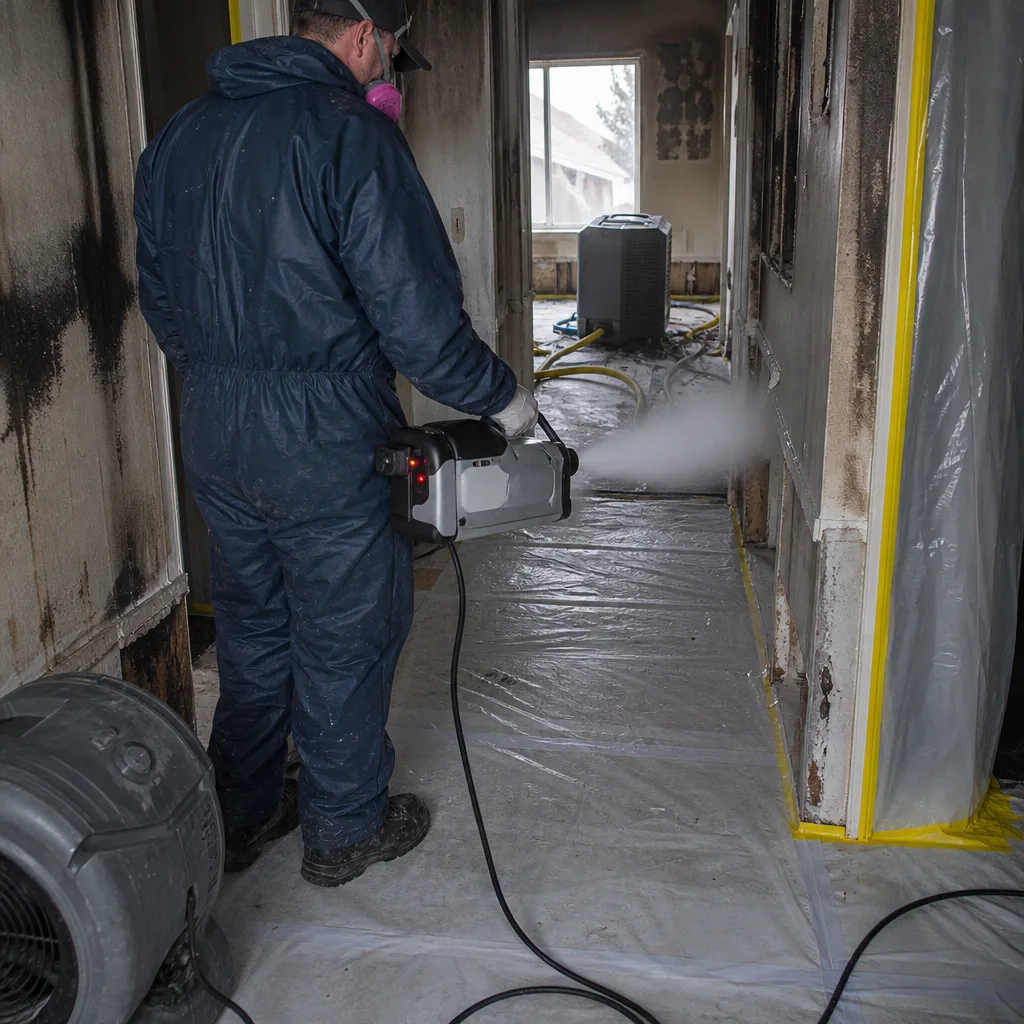
Black Mold Remediation
Stachybotrys and similarly toxigenic species require full containment with negative air pressure, sealed HVAC isolation, and technician PPE including respirators and full-body coverage. We do not attempt in-place cleaning of heavily colonized porous materials - removal and replacement is the only protocol that produces reliable clearance. Documentation for these jobs is especially thorough for insurance and potential real estate disclosure requirements.
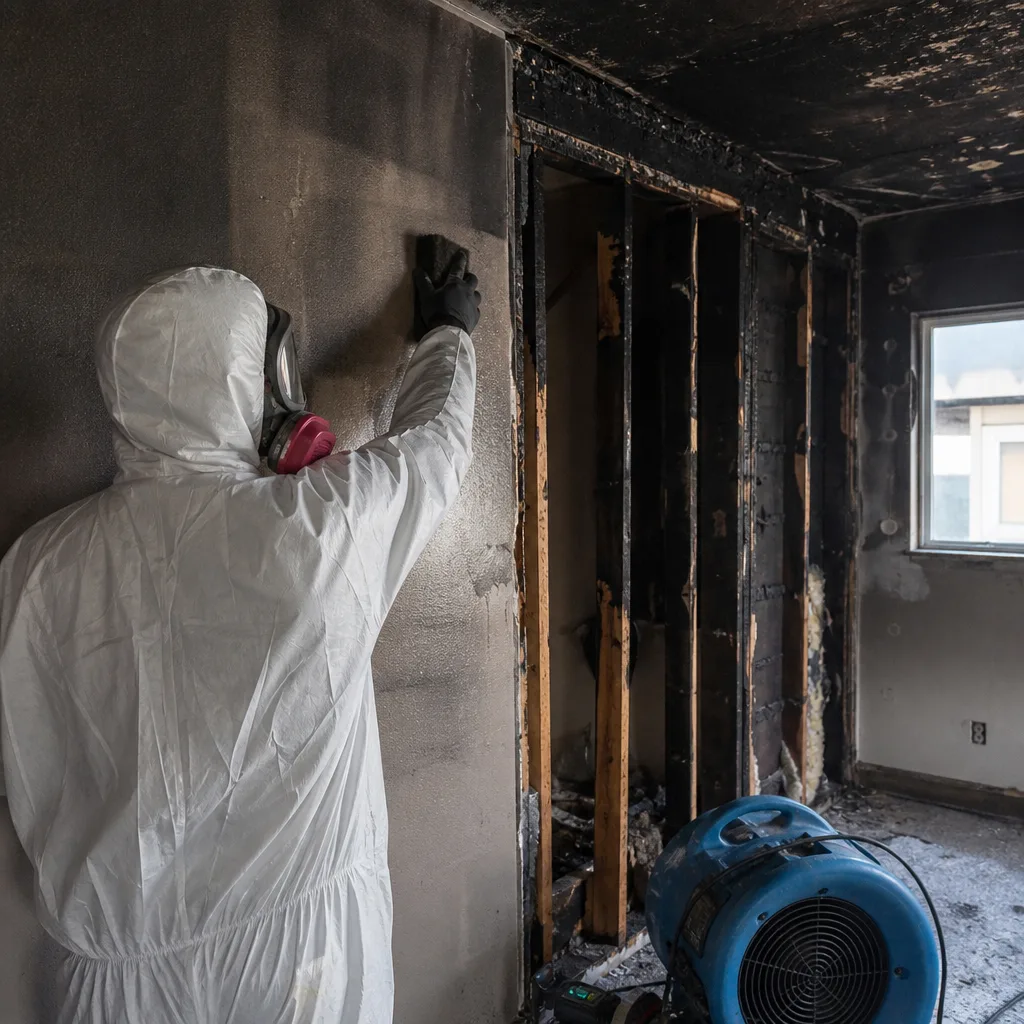
Air Quality Restoration
Post-fire air quality work in Escondido addresses particulate matter, volatile organic compounds from burned synthetics, and residual odor. We deploy activated carbon filtration, hydroxyl generators, and HEPA scrubbing in sequence, with air quality testing at each stage. This service often precedes mold remediation on the same property when the fire-then-flood cycle unfolds.
Crawl Space Treatment
Escondido’s crawl spaces are where the second wave hides. After debris-flow events, we extract standing water, remove saturated insulation and vapor barriers, treat joists and subflooring with antimicrobial, and install new moisture barriers with proper drainage slope. For legacy homes without existing barriers, we recommend full encapsulation with dehumidification to prevent recurrence.
What happens when you call
- 1
A real person answersNo phone trees - you reach a local pro.
- 2
You get an upfront price rangeHonest numbers before anyone is dispatched.
- 3
A background-checked tech heads outLicensed & insured, dispatched right away.
- 4
You approve before work beginsNothing starts until you say go.
Mold Remediation Costs in Escondido, CA
| Service | Typical Range in Escondido |
|---|---|
| Visual inspection with moisture mapping | Free |
| Limited mold remediation (under 10 sq ft) | $1,800 - $3,200 |
| Moderate remediation (10-100 sq ft, single room) | $3,500 - $6,500 |
| Extensive remediation (100+ sq ft, multiple rooms, HVAC) | $7,000 - $15,000+ |
| Crawl space treatment (extraction, removal, antimicrobial, new barrier) | $4,500 - $9,000 |
| Air quality restoration (post-fire, whole-house) | $2,500 - $5,500 |
| Third-party clearance testing | $350 - $650 |
What moves the price: water category (Category 3 contamination requires more removal and more expensive disposal), affected material type (drywall vs. plaster vs. wood framing), and whether the HVAC system is involved. Insurance typically covers mold remediation when the water source was sudden and accidental - a burst pipe, fire suppression, or debris flow - but may exclude long-term leaks that went unreported. Our written scope separates insurance-covered from out-of-pocket items before work begins, so there are no surprises. Bring any competitor’s written estimate and we’ll provide a free second opinion.
We Also Serve Cities Near Escondido
Our crews respond throughout northern San Diego County, including Escondido and neighboring communities. We regularly serve San Marcos for mold remediation in the newer master-planned developments with their own vapor-barrier challenges, Valley Center for rural properties on well water with unique contamination profiles, Vista for coastal-influence moisture issues in older commercial conversions, and Solana Beach for ocean-adjacent properties with salt-air corrosion complicating water damage recovery.
Serving Escondido, CA - Our Local Coverage Area
We’re based in the Escondido area and know this community well. Use the map below to see our service coverage - if you’re nearby, we can almost certainly help.
Escondido Mold Remediation Questions, Answered
Why does mold come back in Escondido homes months after a fire?
The fire-then-flood cycle is the cause. Santa Ana wind fires strip hillside chaparral, winter rain pushes silt-laden debris flows down the same arroyos into crawl spaces and ground-floor rooms, and water that wasn’t fully extracted or that entered after the initial fire remediation creates new mold colonies. We check moisture readings at the original fire-damaged property when winter rains begin, not just when the homeowner calls with visible mold. Call (760) 546-9565 to schedule a post-rain moisture inspection.
Does Escondido’s dry climate mean I don’t need to worry about mold after a water leak?
No. Escondido’s inland valley runs hotter and drier than coastal San Diego, but that same heat accelerates mold colonization once moisture is present - often 24-48 hours faster than coastal timelines. A leak that might take a week to show mold in Del Mar can produce visible growth in 3-4 days in Escondido. The dry climate also encourages homeowners to skip proper drying, assuming nature will handle it, which leaves trapped moisture in wall cavities and crawl spaces. Call (760) 546-9565 for moisture mapping that finds what air-drying misses.
What’s different about mold remediation in older Grand Avenue-area tract homes?
These 1950s-1970s homes typically have original paper-faced drywall with no moisture-resistant backing, no vapor barriers under slabs or in crawl spaces, and galvanized plumbing at failure age. The drywall wicks water laterally across rooms, and the lack of vapor barriers means ground moisture rises into walls continuously. Remediation requires more material removal, borate-based wood treatments, and often installation of modern moisture management during reconstruction. Our Mold Remediation team documents every layer found for insurance. Call (760) 546-9565 for a free inspection with written scope.
Can you tell if crawl space water is Category 2 or Category 3 before you start?
In Escondido’s fire-affected hillside communities, we treat all debris-flow water as Category 3 from the first sample. The silt load from burned chaparral hills contains soil, ash, and potential chemical contamination from burned structures upstream - this is not gray water that can be cleaned in place. We verify with visual inspection (odor, color, visible silt, oil sheen) and sometimes lab analysis, but we do not delay containment waiting for results when Category 3 indicators are present. This protects the homeowner and produces the documentation insurers expect for full removal protocols. Call (760) 546-9565 if you suspect contaminated crawl space water.
Do you use drying logs for Escondido insurance claims?
Yes. Every job gets daily drying logs with psychrometric data - temperature, relative humidity, specific humidity, and dew point - recorded at consistent intervals with equipment serial numbers and technician initials. These logs, combined with our photo record on every visit, are the documentation that transforms restoration invoices into claims adjusters pay without dispute. Our founder built this company as a former claims adjuster who saw how many homeowner claims failed for lack of proper documentation. Haven Standard, Clause 1: written price before work begins; the drying log is how we prove the work was necessary and complete. Call (760) 546-9565 to discuss your claim documentation needs.
How fast can your crew actually get to my Escondido property?
We commit to 45 minutes from dispatch to arrival at Escondido addresses, 24 hours a day, 7 days a week. A live person answers every call - no voicemail trees, no next-business-day callbacks while moisture spreads. Crews carry containment materials, HEPA equipment, and moisture meters on every truck, so assessment begins immediately upon arrival. Call (760) 546-9565 and a real person will confirm current crew availability.
Will my insurance cover mold remediation, or is this out of pocket?
Insurance covers mold remediation when the water source was sudden and accidental - burst pipes, fire suppression discharge, or debris-flow flooding - and when the homeowner reported promptly and took reasonable steps to mitigate. Long-term leaks that went unaddressed for weeks or months are typically excluded. Our documentation package separates covered from excluded items in the written scope before work begins, so you know exactly what insurance will pay and what you may owe. We also coordinate directly with your adjuster and provide the photo records and drying logs that support coverage. Call (760) 546-9565 to review your specific policy situation.
Can my family stay in the home during mold remediation?
For limited containment under 10 square feet in a non-sleeping area, occupants often remain with the contained area sealed and HVAC isolated. For moderate or extensive remediation, or when toxigenic species are suspected, we recommend temporary relocation until clearance testing confirms safe air quality. We provide documentation of containment boundaries and air scrubber placement for your insurer if relocation expenses are covered. Call (760) 546-9565 to discuss your specific situation and timing.
Escondido’s fire-then-flood cycle and legacy housing stock create mold challenges that template remediation can’t address. You need crews who understand why the same property can need smoke cleaning in October and mold containment in January, who know that Grand Avenue-area drywall wicks differently than modern materials, and who document every moisture reading and drying log to the standard your insurer will pay.
Call (760) 546-9565 now. A live person answers 24 hours a day. We’ll schedule your free visual inspection, deliver a written price before any work begins, and start the documentation that protects your claim from day one.
Written by Alicia Brennan, Owner at DryMark Restoration Oceanside, serving Escondido since 2011 under The Haven Standard.
Mold Remediation in Nearby Areas