
Last updated September 23, 2026
Free visual inspection and a written scope of work before any mitigation begins - photos, moisture readings, and drying logs go in your claim file
The scope we write is the scope we bill. Anything new gets shown to you, in writing, before we touch it.
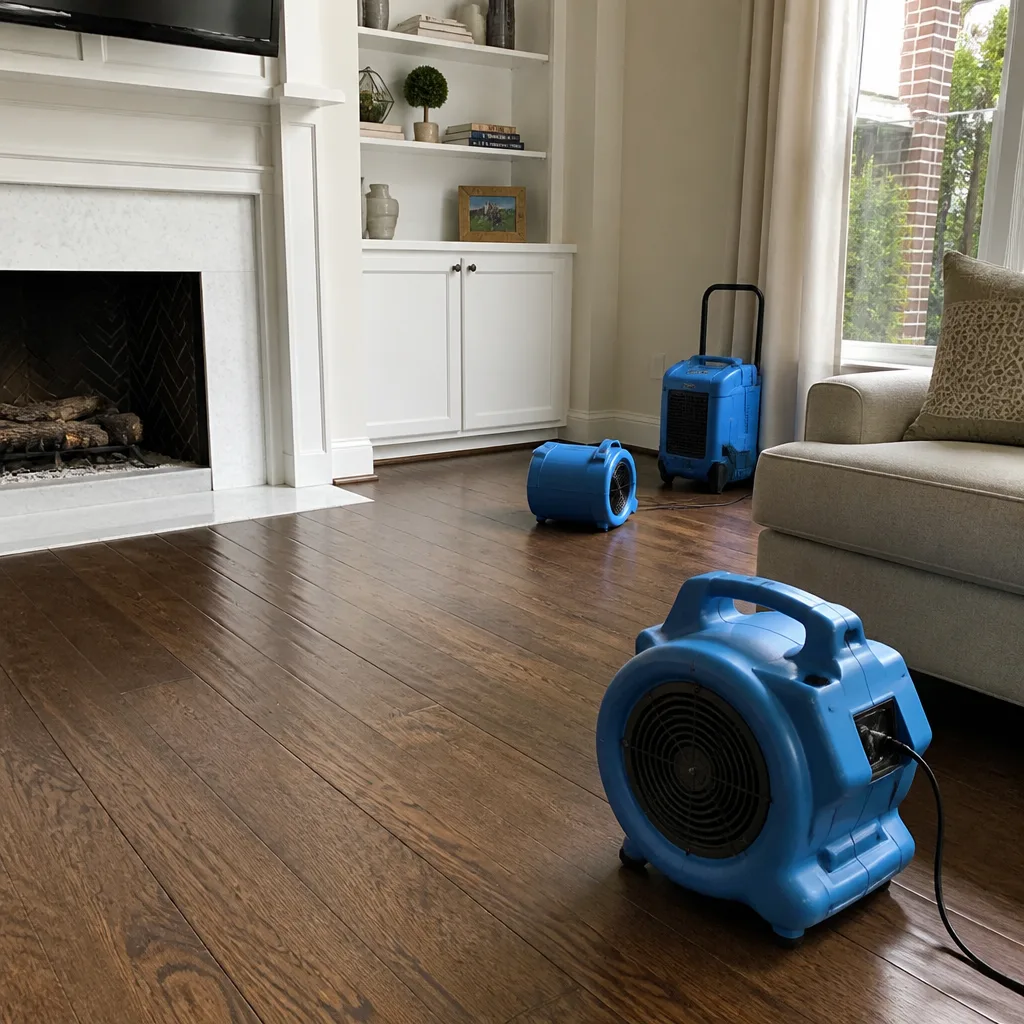

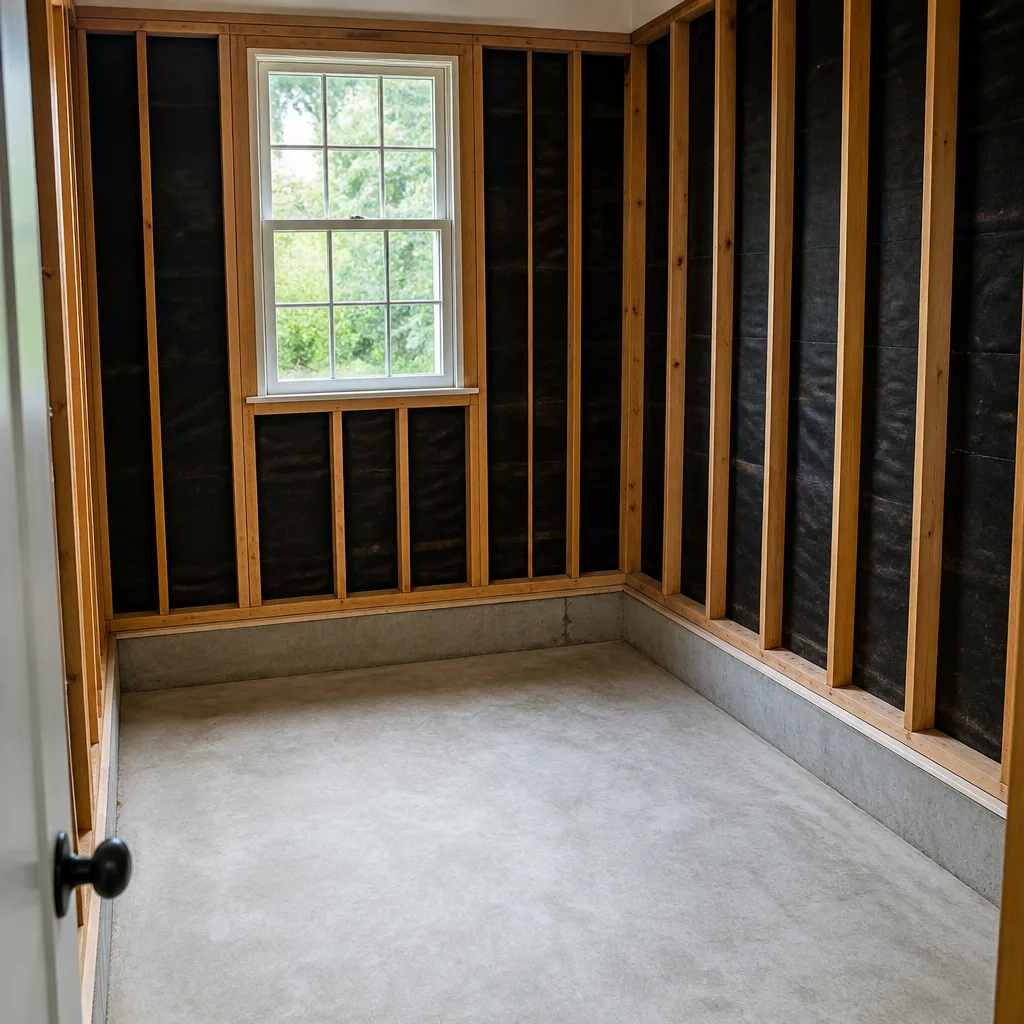

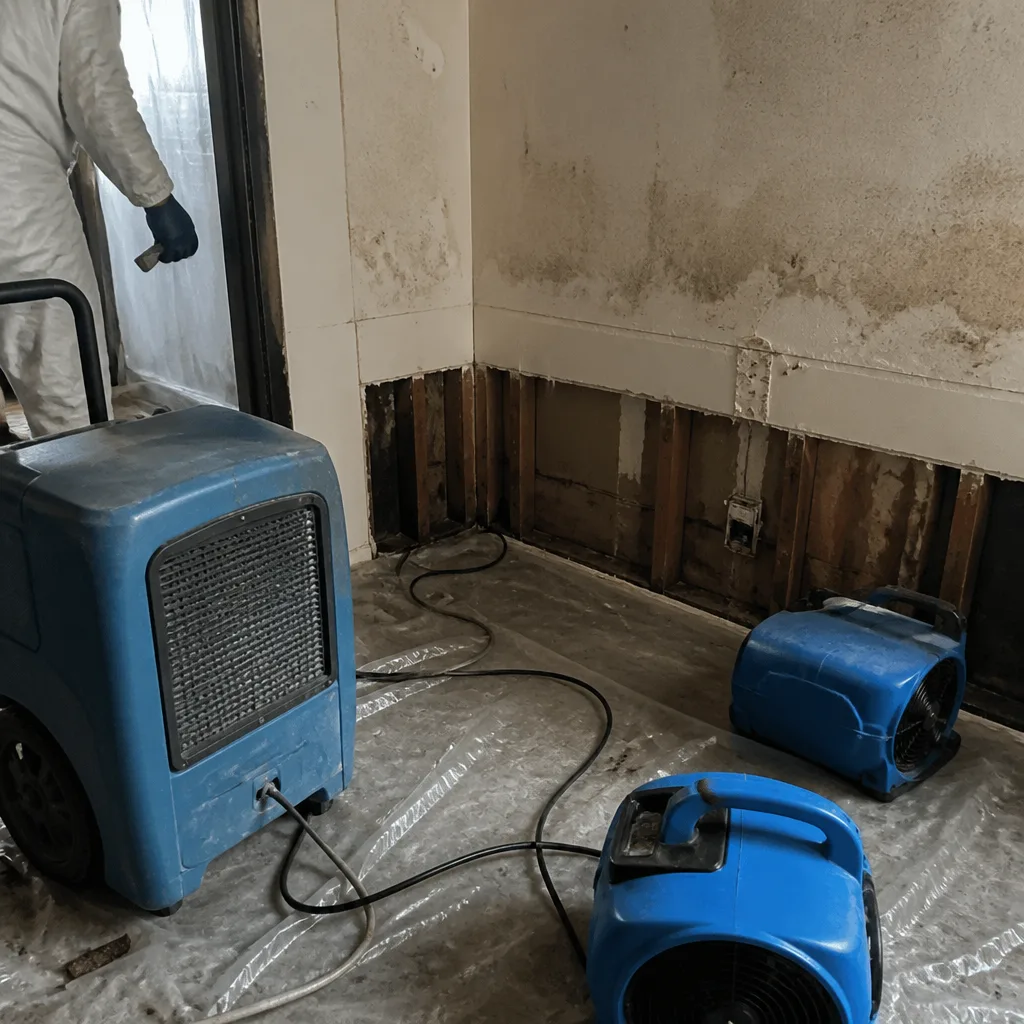 Before
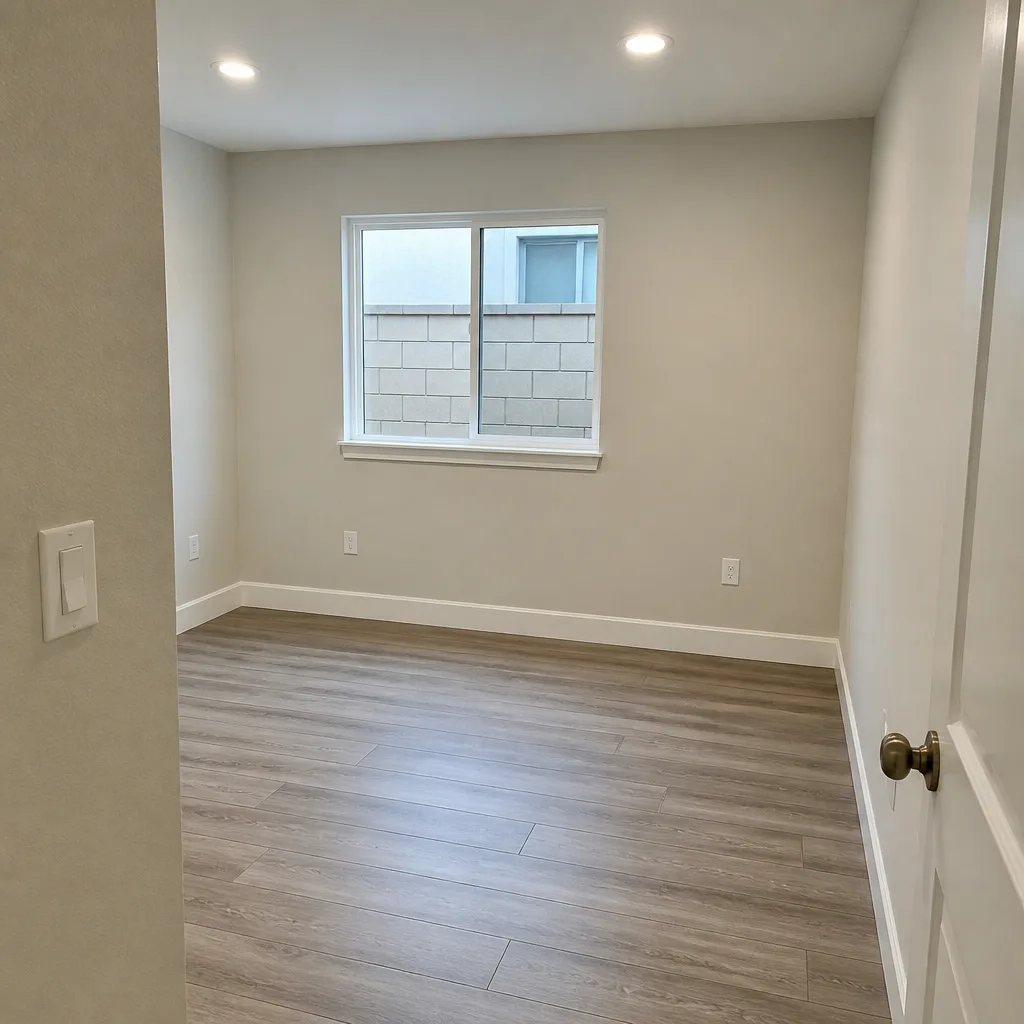 After
After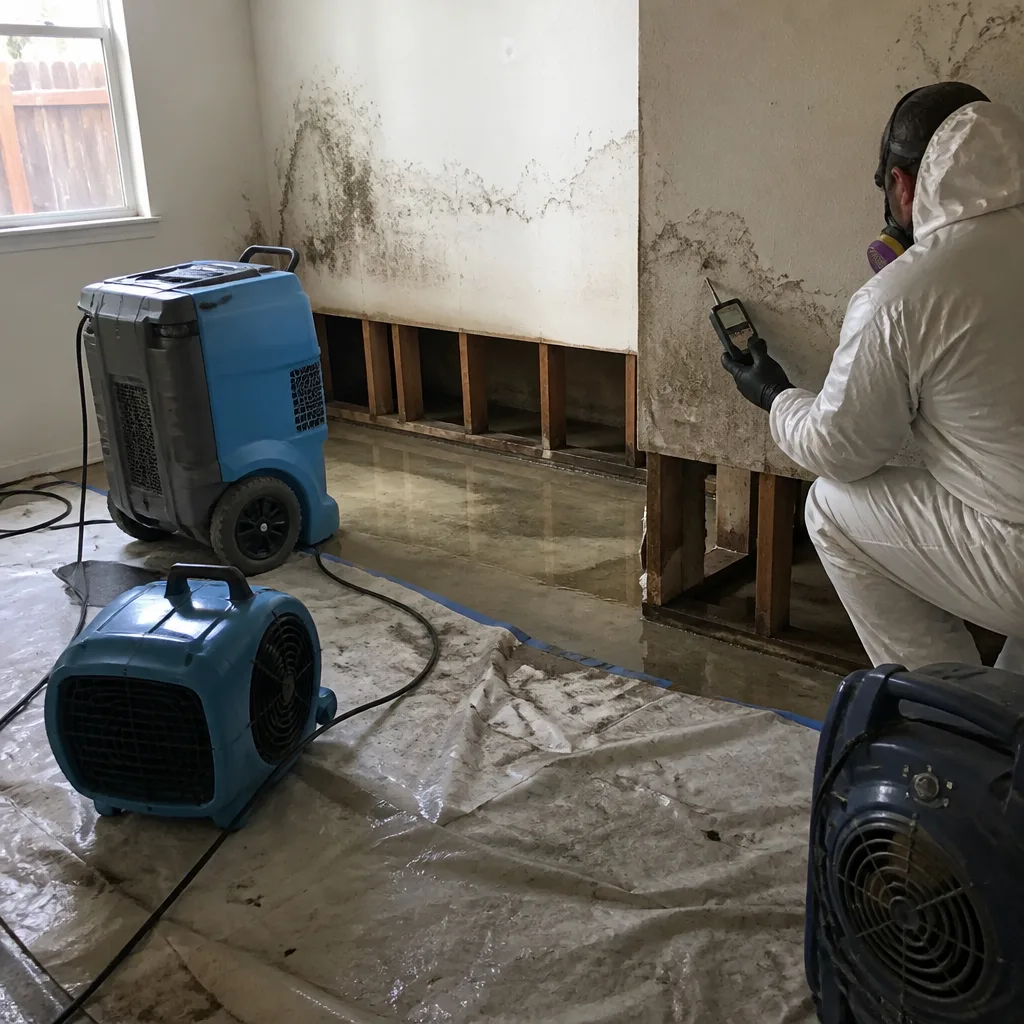 Before
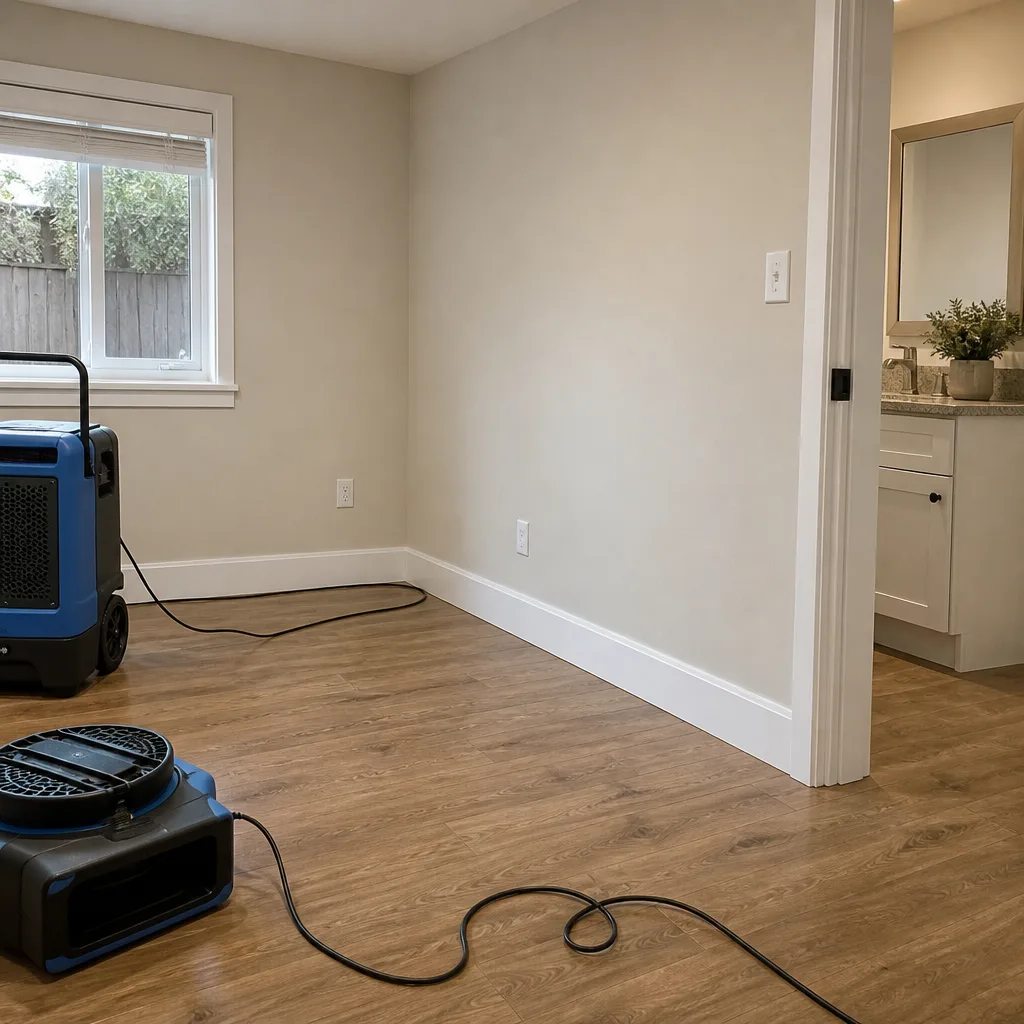 After
After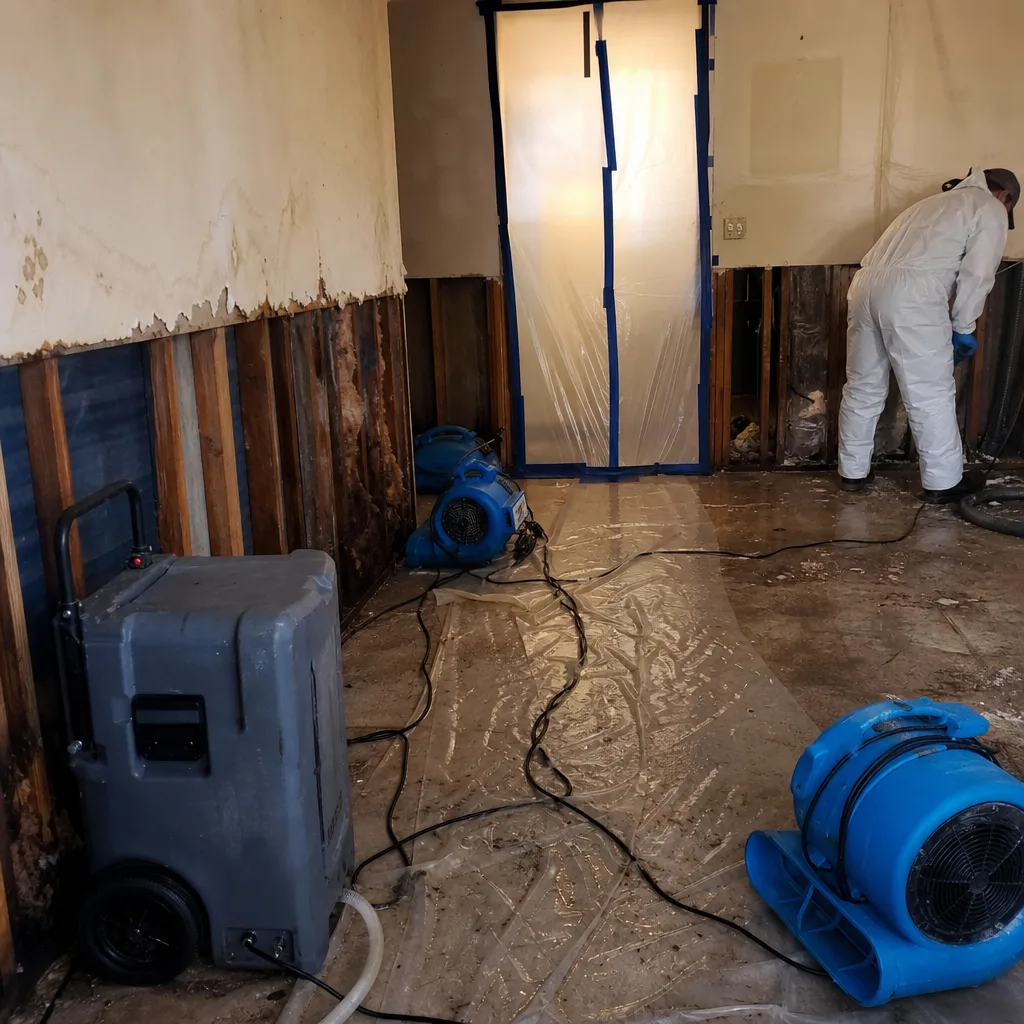 Before
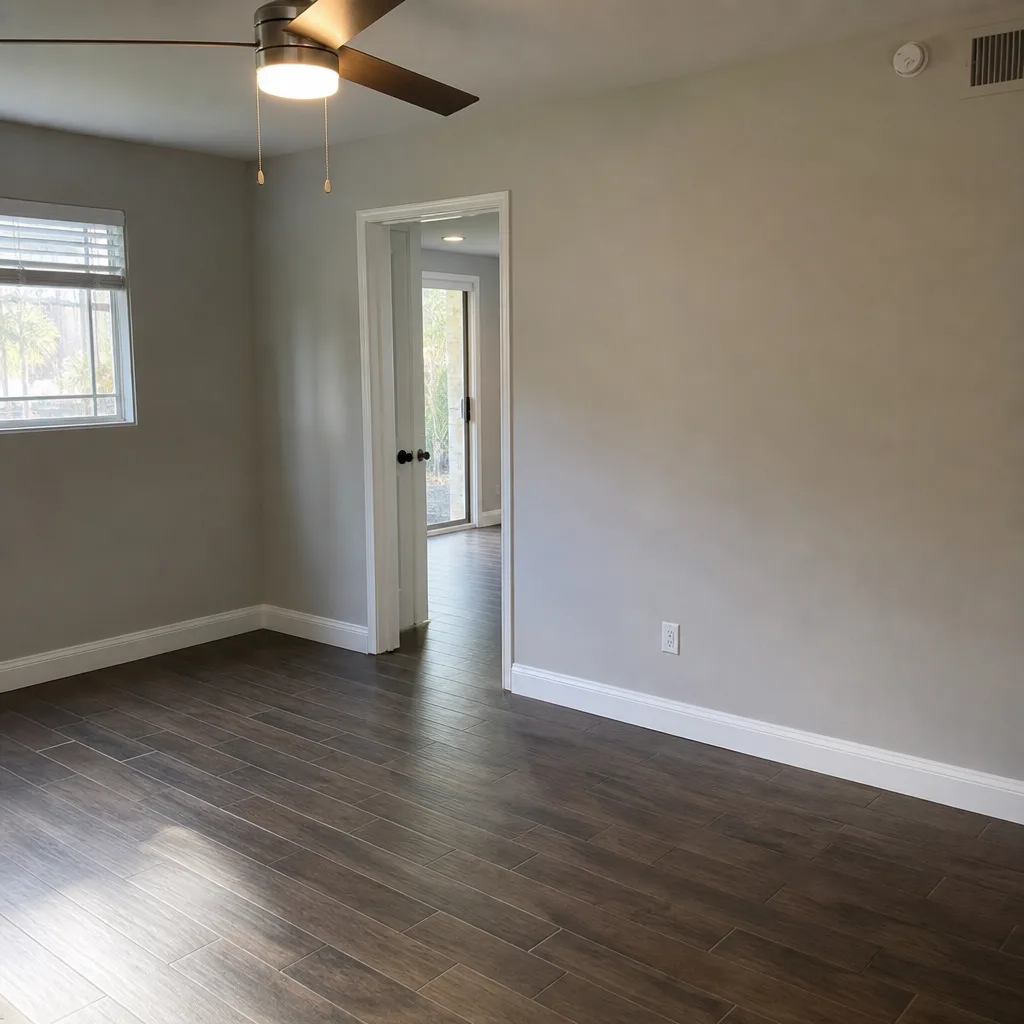 After
AfterDamage Restoration Permits, Codes & Inspections in CA: What You Need to Know
An unpermitted drywall repair after water damage can void your homeowner’s insurance coverage on the affected area, not because the repair failed, but because without an inspection record, no one can verify the work met code. In Oceanside, we’ve seen homeowners discover this only when they filed a secondary claim or prepared to sell. This guide explains which restoration triggers mandatory permits in California, how to read your inspection record, and why the paperwork matters more than the patch. For Damage Restoration Warning Signs: A Oceanside Homeowner’s Reference Guide, see our companion resource.
Quick Answer
Most structural, electrical, or plumbing repairs following water, fire, or mold damage in California require city permits and inspections. Cosmetic drying and cleaning typically do not. The permit creates a verifiable record that transfers liability to your contractor and supports your insurance claim if defects appear later.
Table of Contents
- When Restoration Work Requires a Permit in California
- Oceanside and San Diego County Specific Rules
- Title 24 Energy Compliance in Restoration Work
- How to Read and Request Inspection Records
- City Inspector Sign-Off vs. IICRC Protocol Compliance
- Open Permits and Failed Inspections: The Home Sale Problem
- Common Mistakes to Avoid
- When to Call a Professional
- Frequently Asked Questions
BeforeAfterWhen Restoration Work Requires a Permit in California
California Building Standards Code (Title 24) and the California Residential Code govern what triggers a permit. For restoration work, the threshold is functional, not cosmetic. If the repair restores the structure to its pre-loss condition without altering layout or systems, it may still need a permit if it crosses certain lines.
Permit typically required:
- Drywall replacement exceeding one wall or 32 square feet in a single room, or any drywall that conceals electrical or plumbing
- Structural repairs to wall studs, ceiling joists, subflooring, or load-bearing elements
- Electrical outlet or switch replacement after water exposure, even if like-for-like
- Plumbing repairs beyond fixture replacement, including pipe rerouting or valve replacement behind walls
- HVAC duct replacement or modification, including condensation line repairs
- Window or door replacement with altered rough opening dimensions
- Roofing repairs exceeding 100 square feet or involving structural decking
- Mold remediation requiring demolition of structural materials (studs, sheathing, subfloor)
Permit typically not required:
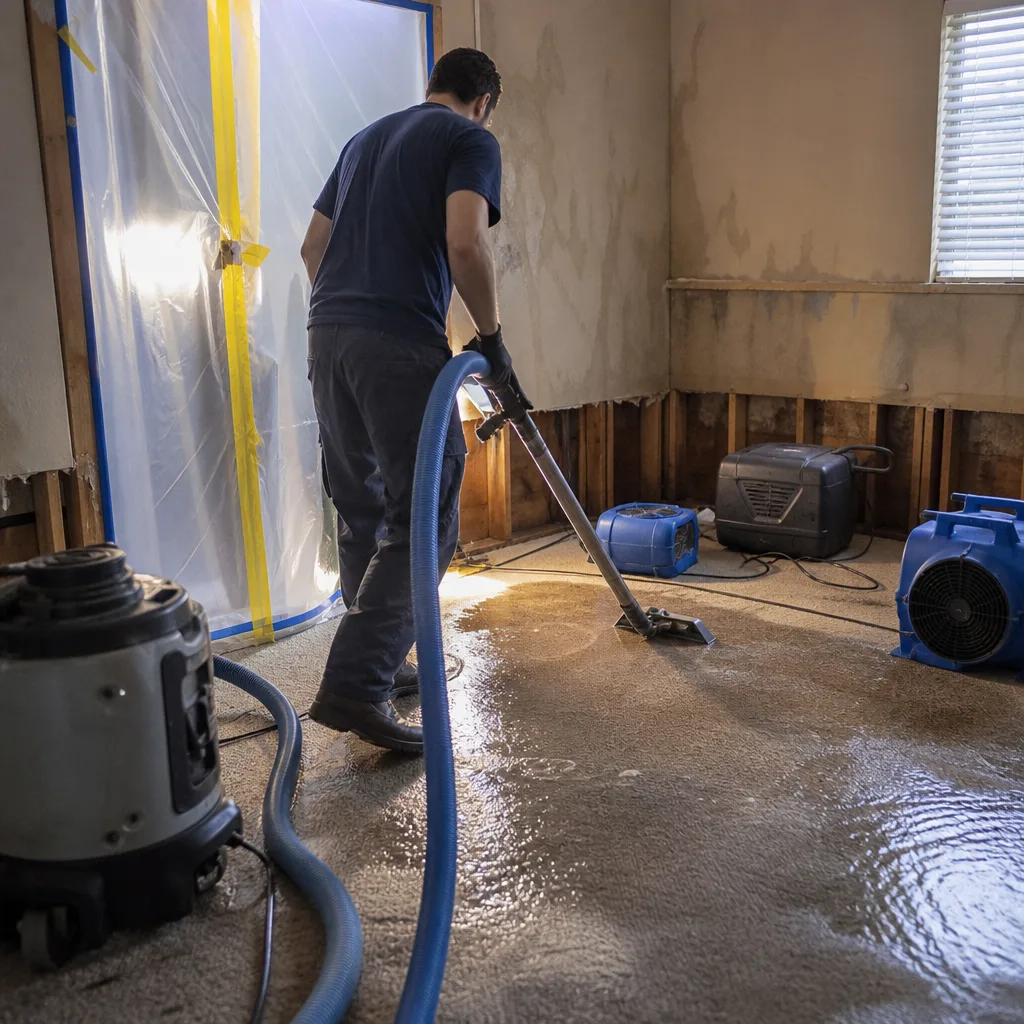
- Water extraction and structural drying using professional-grade equipment (Dri-Eaz, Phoenix, XPOWER, B-Air, Injectidry systems)
- Surface cleaning and antimicrobial application on intact materials
- Removal and replacement of baseboards, trim, or non-structural finish carpentry
- Carpet and pad removal and replacement with identical materials
- Cabinet removal and reinstallation without plumbing or electrical disconnection
- Paint and texture matching on intact surfaces
The critical distinction: permits attach to concealed work. Once a contractor opens a wall, ceiling, or floor assembly, the repair that closes it creates a concealed condition. California code treats concealed work as higher risk because future owners and inspectors cannot visually verify quality. The permit and inspection create the verification pathway.
We’ve documented thousands of jobs since 2011. The ones that generate post-completion disputes almost always involve concealed work performed without permit. The homeowner has no independent record that the work met code. The contractor’s word becomes the only evidence, and that word rarely holds up in a claim dispute or home sale.
Water damage restoration in Oceanside often straddles this line. A Category 1 water loss with rapid extraction and drying may need no permit. The same loss left for 72 hours, with wicking into walls and subsequent drywall replacement, almost certainly does. The difference is not the water source. It’s the material damage that follows.
Oceanside and San Diego County Specific Rules
Oceanside operates under the San Diego County Building Code, which adopts California Title 24 with local amendments. The Oceanside Building Division issues permits and conducts inspections for work within city limits. Unincorporated areas of San Diego County fall to the County Department of Environmental Health and Land Use and Environment Group.
Local thresholds that matter:
- Oceanside requires a permit for any electrical work beyond replacing a like-for-like receptacle or switch cover. This includes GFCI replacement after water damage, even with identical specifications.
- Plumbing permits trigger for any work behind a wall or under a slab, including pinhole leak repairs and angle stop replacement in concealed locations.
- Structural repairs to load-bearing walls require engineered plans if the repair exceeds 4 linear feet of stud replacement or involves any header modification.
- Roofing permits apply to repairs exceeding 100 square feet or 10 percent of total roof area, whichever is less. In Oceanside’s coastal climate, with salt air accelerating fastener corrosion, inspectors scrutinize decking attachment more closely than inland jurisdictions.
- Demolition permits are required for any structural element removal, including selective demolition for mold remediation, if the work affects weather protection or structural stability.
Coastal climate considerations:
Oceanside’s marine layer and salt-laden air create restoration conditions that inland California cities don’t face. Moisture readings that would dry to standard in Riverside or Escondido may plateau in Oceanside due to ambient humidity. This affects permit timing: if drying extends beyond the permit’s effective period (typically 180 days for building permits in Oceanside), the contractor must request an extension or reapply. We’ve seen jobs where the drying phase, properly documented with daily psychrometric data, ran 14 to 21 days longer than equivalent inland losses. The permit timeline must accommodate this reality.
San Diego County also enforces stricter wildfire-urban interface standards in certain zones. If fire damage restoration touches exterior walls or roofing in these areas, materials must meet enhanced ignition-resistant standards. The permit application must specify compliant materials, and the inspector verifies installation against the approved plan.
Permit fees in Oceanside (approximate ranges):
- Electrical repair permit: $85-$180
- Plumbing repair permit: $95-$220
- Building repair permit (drywall, structural): $180-$450, scaled by valuation
- Roofing repair permit: $150-$380
- Demolition permit: $130-$290
These fees are trivial compared to the cost of discovering unpermitted work during a home sale. California Civil Code Section 1102 requires disclosure of unpermitted work. A seller who knowingly omits this faces liability that far exceeds the original permit cost.
Title 24 Energy Compliance in Restoration Work
California’s Title 24, Part 6 (the Energy Code) creates a compliance layer that many restoration contractors and homeowners miss. When restoration touches walls, ceilings, or roofs in certain assemblies, the repair must meet current energy standards, not the standards in place when the home was built.
Title 24 triggers in restoration:
- Drywall replacement on exterior walls where insulation will be exposed or replaced
- Ceiling drywall replacement in conditioned attics or where insulation is disturbed
- Window or door replacement in any exterior wall
- Roofing replacement where insulation or radiant barrier is modified
- Any repair that alters the thermal envelope’s continuity
The practical impact: if water damage requires removing drywall from an exterior wall in an Oceanside home built in 1985, the insulation behind that drywall must meet current R-value requirements, not the R-11 or R-13 that was likely original. The contractor cannot simply reinstall what was there. The permit inspection will fail if the assembly doesn’t comply.
This creates cost and scope implications that should appear in the written price before work begins. Haven Standard, Clause 1 requires that written price. Title 24 compliance is one reason why that price sometimes exceeds a homeowner’s expectation based on visible damage alone.
We’ve encountered competitors’ estimates that omitted Title 24 compliance, either from ignorance or to present a lower initial number. The homeowner then faces a change order mid-job or a failed inspection that stops work. Neither serves the customer. Our written scopes specify the insulation type, R-value, and installation method that will satisfy Oceanside’s inspector before any demolition begins.
Title 24 also mandates certain efficiency features for replaced equipment. If a water heater fails due to flooding and requires replacement, the new unit must meet current efficiency standards. If HVAC equipment is damaged and replaced, the system must comply with current sizing and efficiency rules. These are not upgrades the homeowner elects. They are code requirements triggered by the loss.
The documentation that matters: the permit application should list the specific Title 24 compliance method (prescriptive, performance, or HERS-verified). The inspection record should note compliance confirmation. This paperwork becomes part of the home’s permanent record and supports future energy audits or resale disclosures.
How to Read and Request Inspection Records
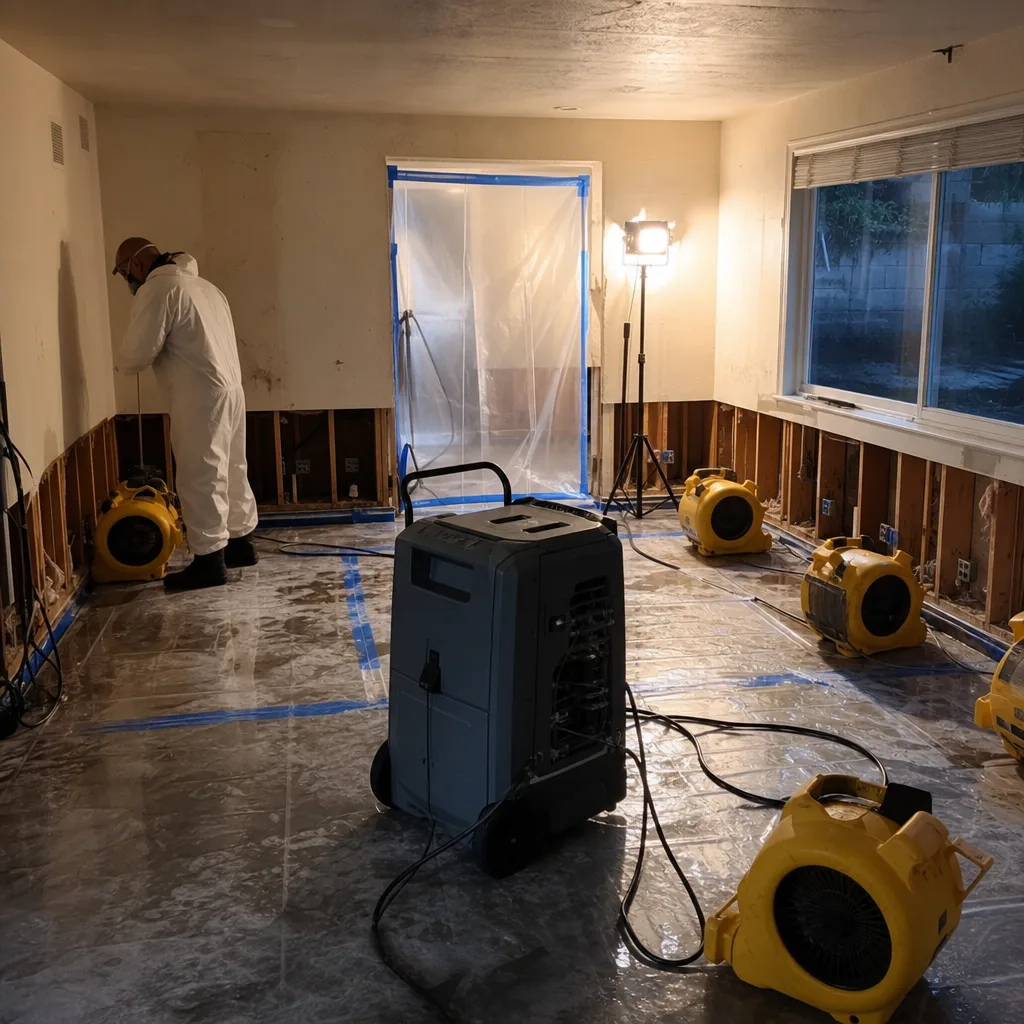
The inspection record is the legal proof that permitted work met code. It is not the contractor’s invoice, not the photo record of work in progress, not the final walkthrough checklist. It is the document issued by the city or county inspector after physical verification.
How to request your inspection record:
- Obtain the permit number from your contractor. It should appear on the permit card posted at the job site and on any written correspondence from the building department.
- Contact the issuing department: Oceanside Building Division for city permits, San Diego County Land Use and Environment Group for unincorporated areas.
- Request a copy of the inspection history and final sign-off. Many jurisdictions provide online access through their permitting portal. Oceanside uses a system that allows property owners to search by address or permit number.
- Verify that the inspection record matches the permit application line-for-line. The scope described in the application should equal the scope verified in the inspection. Any discrepancy is a red flag.
- Confirm the final inspection status shows “approved,” “passed,” or equivalent. “Final inspection scheduled” is not completion. “Correction notice issued” means work failed and must be redone and re-inspected.
- Retain the record with your home’s permanent files, alongside insurance claim documentation and contractor warranties.
What the record should contain:
- Permit number, issue date, and expiration date
- Property address and legal description
- Scope of work as approved
- Inspection dates, types (rough, final, etc.), and results for each
- Inspector identification and signature or electronic approval
- Correction notices, if any, with resolution dates
- Final approval date and certificate of occupancy or completion, if applicable
The line-for-line match between permit application and inspection record matters because it prevents scope substitution. A contractor who obtains a permit for drywall repair but performs electrical work without amending the permit creates an uninspected condition. The permit provides no protection for that work. We’ve reviewed competitor jobs where the permit scope was narrower than the actual repair, leaving the homeowner exposed.
Our documentation package for every job includes the permit application, inspection schedule, and final sign-off, cross-referenced to our photo record and drying logs. The homeowner receives this as a complete file, not scattered documents. When an adjuster or future buyer asks for verification, the answer is in one place.
City Inspector Sign-Off vs. IICRC Protocol Compliance
These two verification systems serve different purposes, and restoration customers need both in their file. Confusing them, or accepting one when the situation requires both, creates gaps that appear only when something goes wrong.
City inspector sign-off:
The municipal inspector verifies that work meets California Building Code and local amendments. They check structural adequacy, electrical safety, plumbing integrity, and energy compliance. They do not verify that water damage was properly dried, that mold was fully remediated, or that indoor air quality meets health standards. Their jurisdiction ends at code compliance, not restoration quality.
IICRC protocol compliance:
The Institute of Inspection, Cleaning and Restoration Certification publishes standards for water damage restoration (S500), mold remediation (S520), and fire and smoke damage restoration (S700). These are industry consensus standards, not law, but they define the professional standard of care. IICRC-compliant work includes documented moisture readings, psychrometric data (temperature, relative humidity, vapor pressure), drying equipment placement logs, and post-drying verification.
No city inspector checks for this. A drywall patch can pass municipal inspection while concealing saturated insulation or residual mold. The wall looks correct, meets code, and fails functionally.
Why you need both:
- The city inspector’s approval satisfies legal requirements and supports property value.
- IICRC protocol documentation satisfies insurance requirements and proves the restoration addressed the actual damage, not just the visible symptoms.
- Together, they create a complete record: the structure is legal, and the structure is dry.
- Either alone leaves exposure. Code-compliant but damp construction invites secondary damage. Properly dried but unpermitted work creates legal and resale risk.
Our crews document to IICRC, RIA, and IFA standards using equipment from Dri-Eaz, Phoenix, XPOWER, B-Air, and Injectidry. Daily moisture logs record readings by room, by material, by date. This data, combined with permit and inspection records, produces the documentation package that turns a restoration invoice into a payable insurance claim. We’ve processed over 12,000 homes since 2011 on this basis.
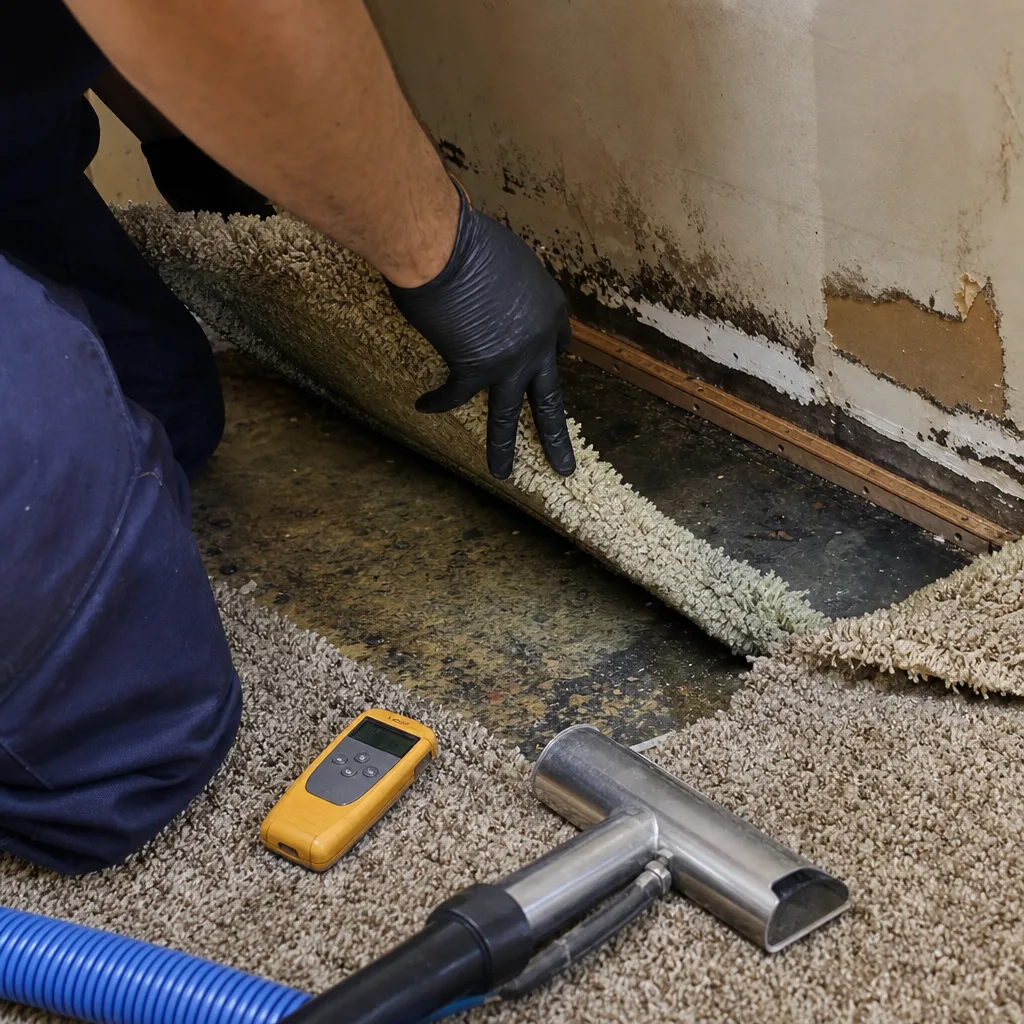
Mold remediation in Oceanside illustrates the gap clearly. A city inspector may verify that removed drywall was replaced with correct materials. They will not verify that the remaining structure reads below 16 percent moisture content on a pinless moisture meter, or that airborne spore counts dropped to background levels post-remediation. Only IICRC S520 protocol documentation proves that. We provide both.
Open Permits and Failed Inspections: The Home Sale Problem
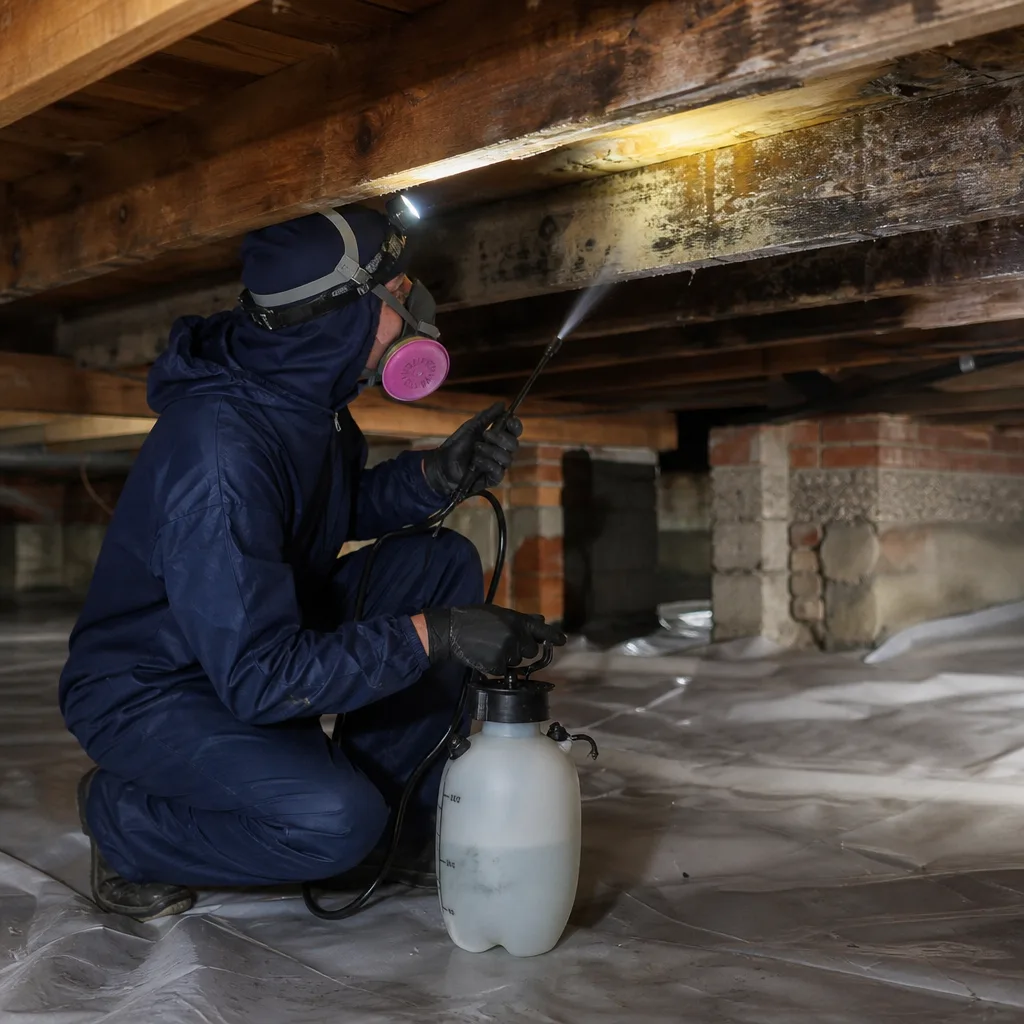
California Civil Code Section 1102 requires sellers to disclose material facts affecting property value or desirability. Unpermitted work, open permits, and failed inspections are material facts. A seller who fails to disclose faces rescission claims, damage liability, and in some cases, fraud allegations.
The disclosure obligation specifically includes:
- Any work performed without required permits
- Any permit applied for but not yet finaled
- Any inspection that failed and was not corrected
- Any notice of violation from a building department
In Oceanside’s active real estate market, where homes from the 1970s and 1980s trade frequently, these disclosures surface regularly. A buyer’s inspector or title search often reveals permits that the current owner inherited from a prior restoration. The current owner then faces the choice of delaying sale, reducing price, or completing the permit process retroactively, which is typically more expensive and time-consuming than original compliance.
The retroactive permit process in Oceanside:
- The owner applies for a permit for work already performed, marking the application as “as-built” or “existing conditions.”
- The building department charges a fee, often 1.5 to 2 times the original permit fee, to cover additional review complexity.
- An inspector examines the work. If it is accessible and code-compliant, they may approve it. If it is concealed, they may require destructive testing, exposure, or reconstruction to verify compliance.
- If the work fails inspection, the owner must correct it and schedule re-inspection, repeating until approval.
- Once approved, the permit is finaled and the record updates. The disclosure obligation is satisfied.
This process can take weeks or months. In a sale transaction, it can kill the deal. The cost of original permitting, by contrast, is days and a few hundred dollars.
We’ve been called to Oceanside homes where a pre-sale inspection revealed unpermitted water damage repairs from years prior. The original contractor is gone. The current owner has no documentation. Our role becomes forensic: determine what was done, whether it meets code, and what must be redone to obtain a clean permit record. This is always more expensive than doing it right the first time.
The protection is simple. For any restoration involving concealed work, require the contractor to pull permits and provide final inspection records before final payment. Include this requirement in your written contract. Our Haven Standard documentation package includes permit and inspection records as standard deliverables, not optional add-ons.
Common Mistakes to Avoid
- Accepting a contractor’s assurance that permits “aren’t needed for this small job.” The threshold is set by code, not contractor convenience. In Oceanside, even a single electrical outlet replacement behind wet drywall requires an electrical permit.
- Paying in full before final inspection approval. A contractor who has been paid has reduced incentive to schedule and pass re-inspection if corrections are needed. Structure payment to require final sign-off.
- Assuming insurance adjuster approval equals permit compliance. Adjusters verify coverage and scope; they do not verify code compliance. A covered loss can still generate unpermitted work if the contractor skips the permit step.
- Failing to match inspection record to permit application scope. Discrepancies mean some work was uninspected. Request both documents and compare them.
- Ignoring Title 24 implications in older homes. The insulation you remove may not be what you can legally reinstall. This surprise appears at inspection, not during estimate.
- Discarding documentation after claim closure. Permit and inspection records are permanent property records. Keep them with your deed, insurance policies, and contractor warranties.
- Hiring a contractor who cannot explain their documentation system. If they cannot describe their permit process, inspection coordination, and record delivery, they likely do not perform these steps consistently.
When to Call a Professional
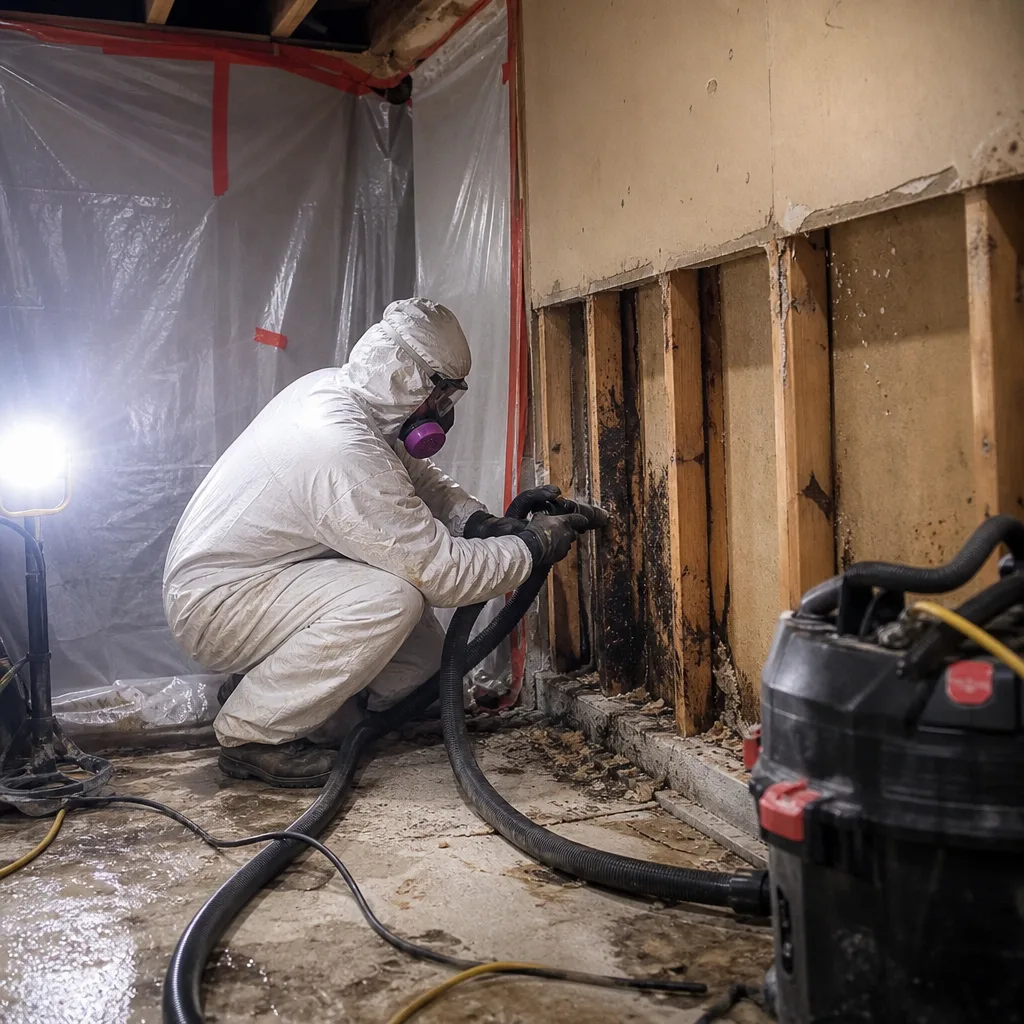
Call a licensed restoration contractor when your loss involves structural materials, electrical or plumbing systems, or mold growth beyond 10 square feet. For help deciding, read our DIY vs Professional Damage Restoration: The Oceanside Homeowner’s Decision Guide. These conditions trigger permit requirements that an unlicensed handyman cannot legally satisfy. In Oceanside, unlicensed work on these systems is a violation of California Business and Professions Code, and the permit will not issue to an unlicensed applicant.
Also call when your insurer requests documentation that you cannot produce, when a prior repair feels incomplete, or when you’re preparing to sell and discover open permits in your property history. DryMark Restoration Oceanside offers free estimates in Oceanside. Call (760) 546-9565. We also provide a Free Second Opinion on any competitor’s written estimate, reviewing their scope and documentation plan at no charge.
Frequently Asked Questions
Insurance typically covers the cost of proper restoration, including permit fees, but may deny coverage for defects arising from unpermitted work. If a leak recurs because unpermitted plumbing failed, the insurer may classify that as a maintenance issue or workmanship defect, not a covered loss. We document permit compliance on every job to prevent this gap.
Simple permits (electrical, plumbing) often issue same-day or within 48 hours through Oceanside’s online system. Building permits for structural repairs may take 5 to 10 business days for plan review. Emergency permits for hazardous conditions can sometimes be obtained after hours through the on-call inspector system. We coordinate permit timing with our drying schedule so work proceeds without unnecessary delay.
Mold remediation itself does not require a permit, but the demolition and repair work that accompanies it often does. If remediation requires removing drywall from exterior walls, replacing subflooring, or modifying HVAC systems, those elements need permits. Our written scopes separate the remediation protocol (IICRC S520) from the reconstruction permits (city building division) so both are clear.
A contractor’s license (issued by California CSLB) authorizes them to perform certain trades. A permit (issued by the local building department) authorizes specific work at a specific address. A licensed contractor can still perform unpermitted work, which is illegal. Always verify both: CSLB license status and permit application in your property’s name.
Yes. Oceanside provides online permit history by property address through their permitting portal. San Diego County offers similar search for unincorporated properties. Search your address and review all permits for status: issued, finaled, expired, or correction. Any open or expired permit needs resolution before sale or further work.
Your restoration contractor should coordinate directly with your adjuster to document that permitted work meets code and that code-required upgrades (like Title 24 insulation) are part of the covered scope. We provide adjusters with permit applications, inspection schedules, and final sign-offs as standard documentation, alongside our moisture logs and photo records. This direct coordination prevents the adjuster from denying code-compliance costs as “upgrades.”
The Bottom Line
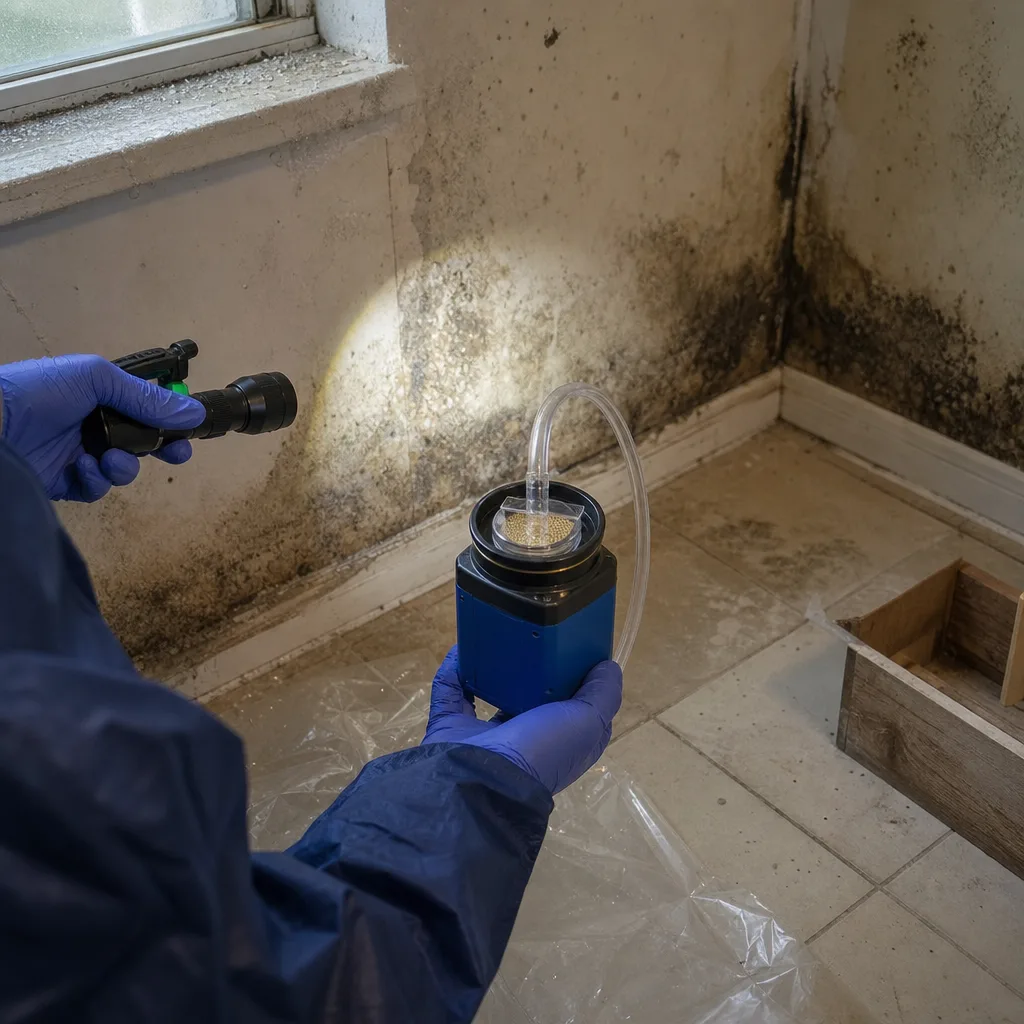
Permits and inspections are not obstacles to restoration. They are the mechanism that makes your contractor’s work verifiable, your insurer’s coverage defensible, and your property’s title clean. In Oceanside’s coastal climate, where moisture conditions extend drying timelines and salt air accelerates material degradation, the documentation trail matters even more. Skipping a permit to save time or cost transfers every subsequent risk, from failed inspection to voided coverage to sale delay, onto the homeowner. The written price before work begins should include permit costs. The completed file should include inspection records. Anything less is incomplete restoration.
Written by Alicia Brennan, Owner at DryMark Restoration Oceanside, serving Oceanside since 2011.