
Last updated September 23, 2026
Free visual inspection and a written scope of work before any mitigation begins - photos, moisture readings, and drying logs go in your claim file
The scope we write is the scope we bill. Anything new gets shown to you, in writing, before we touch it.
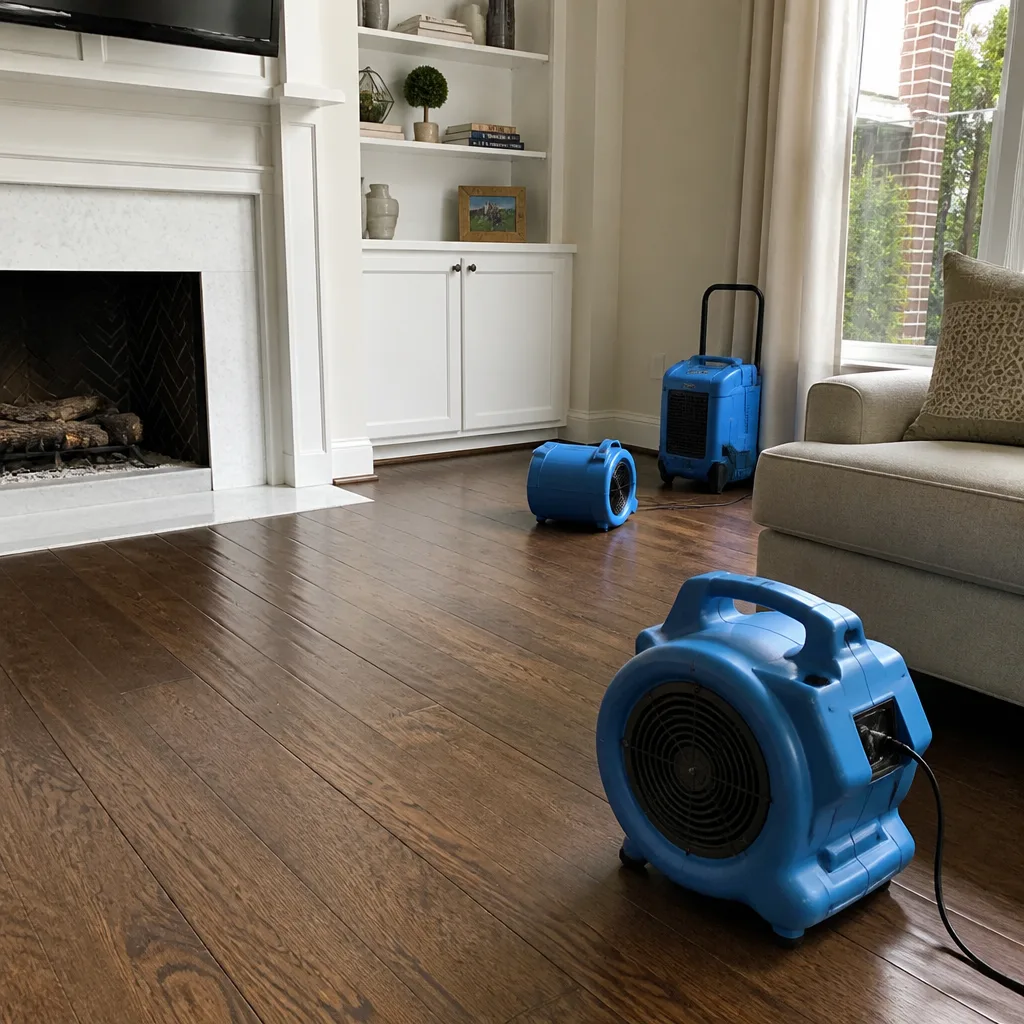

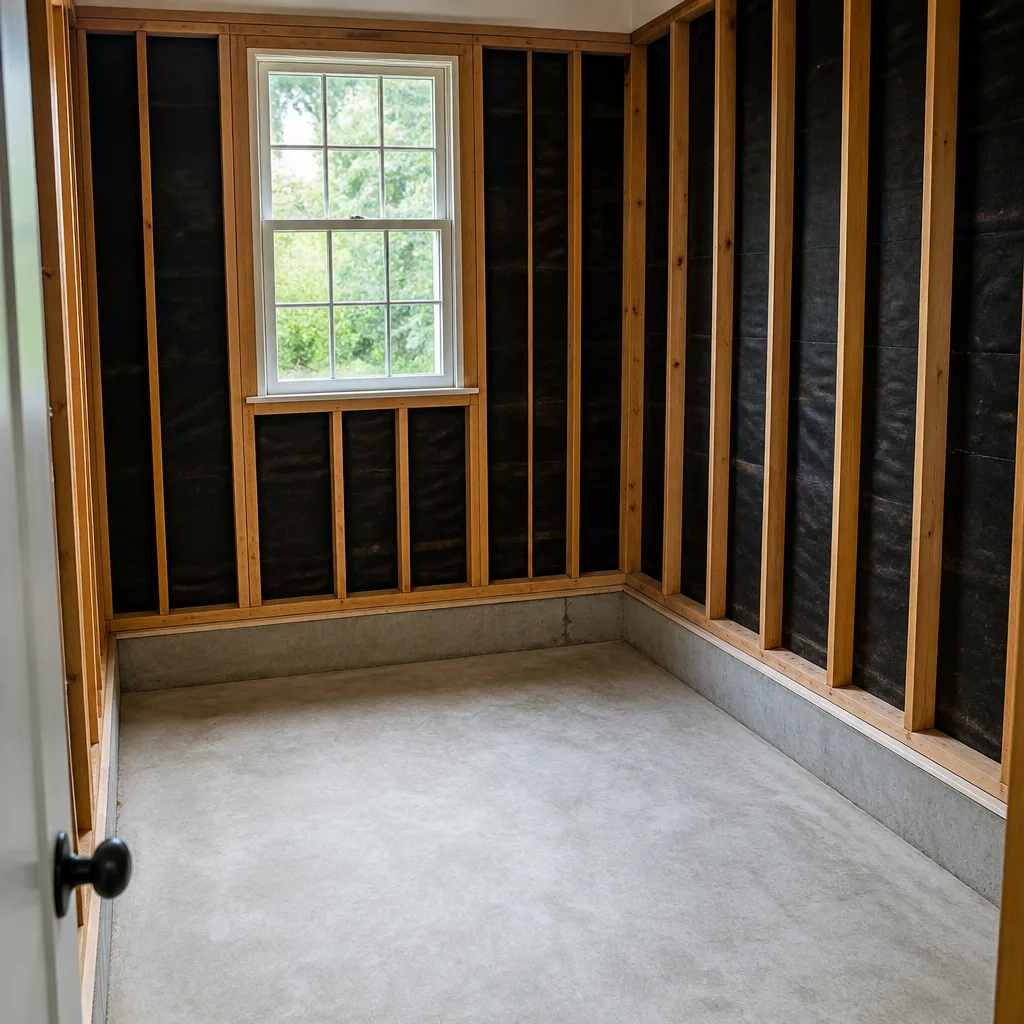

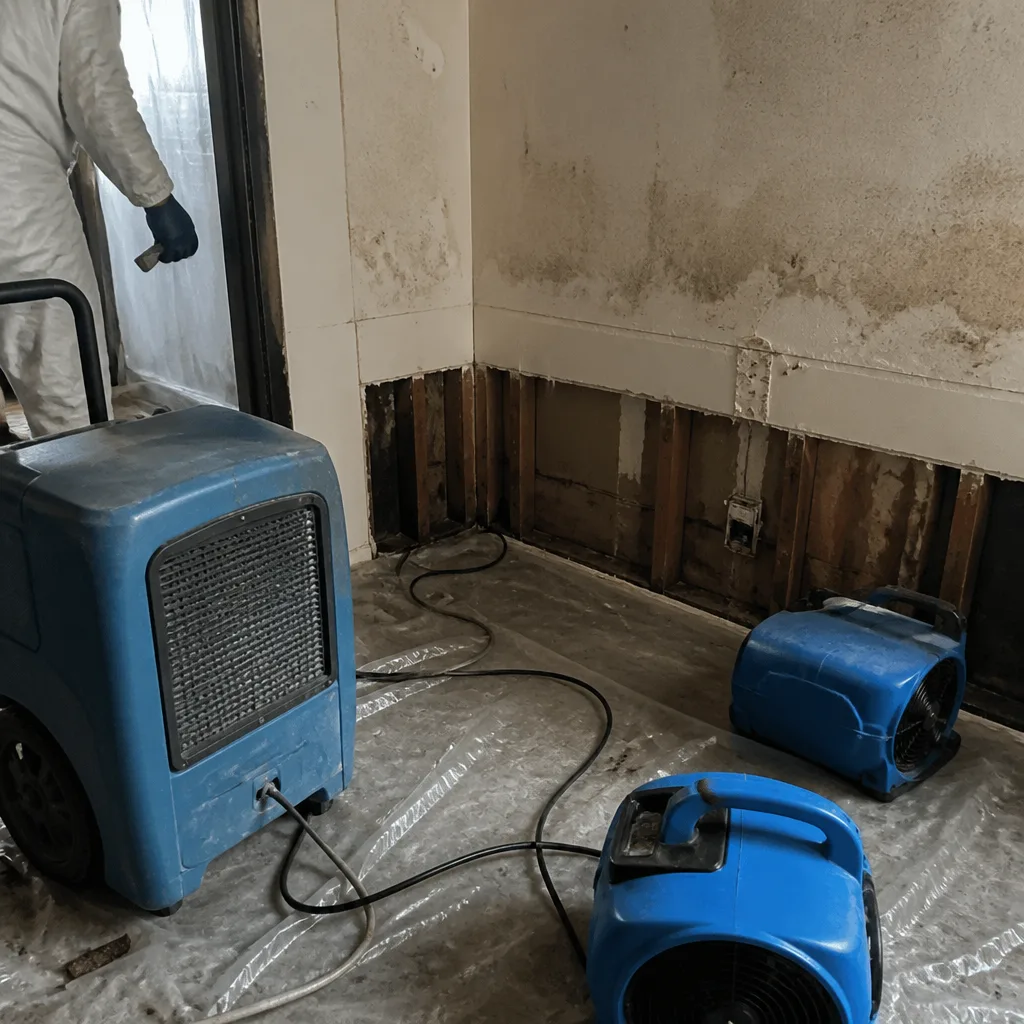 Before
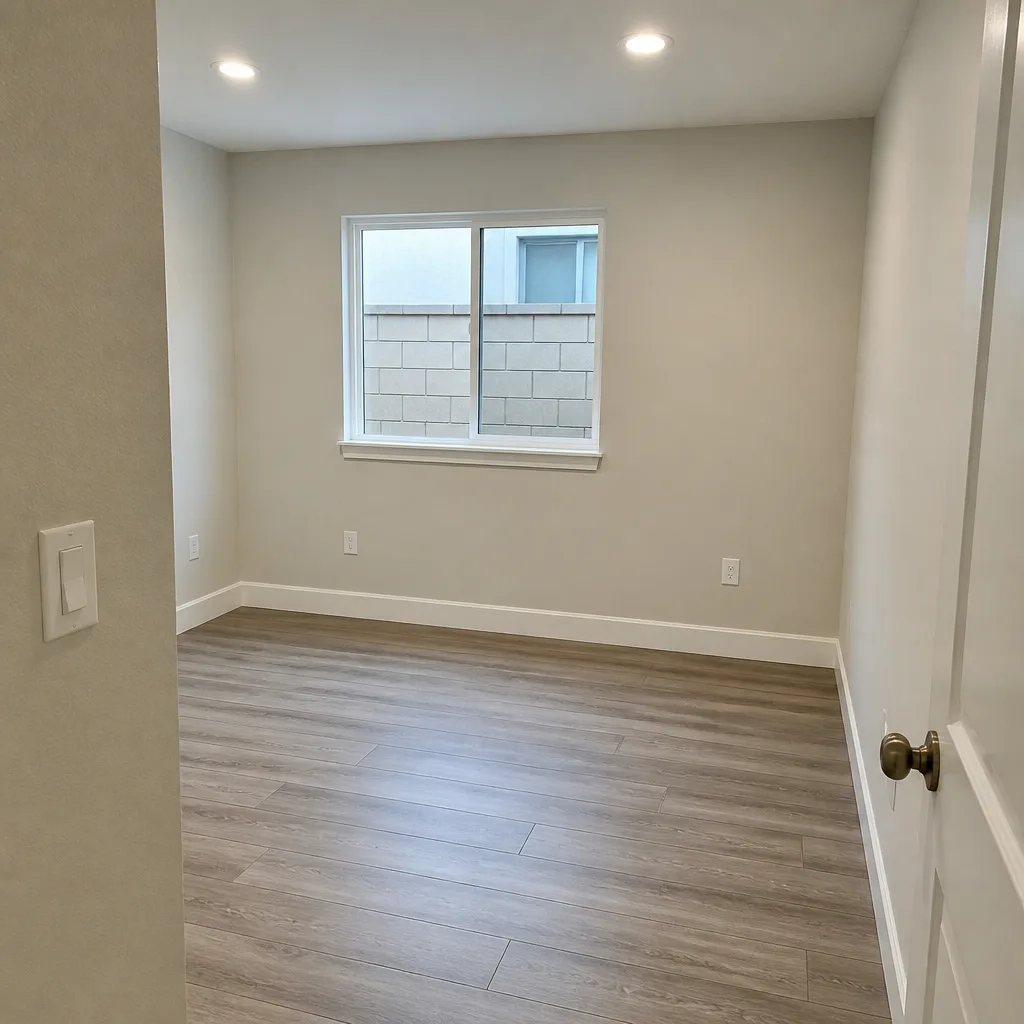 After
After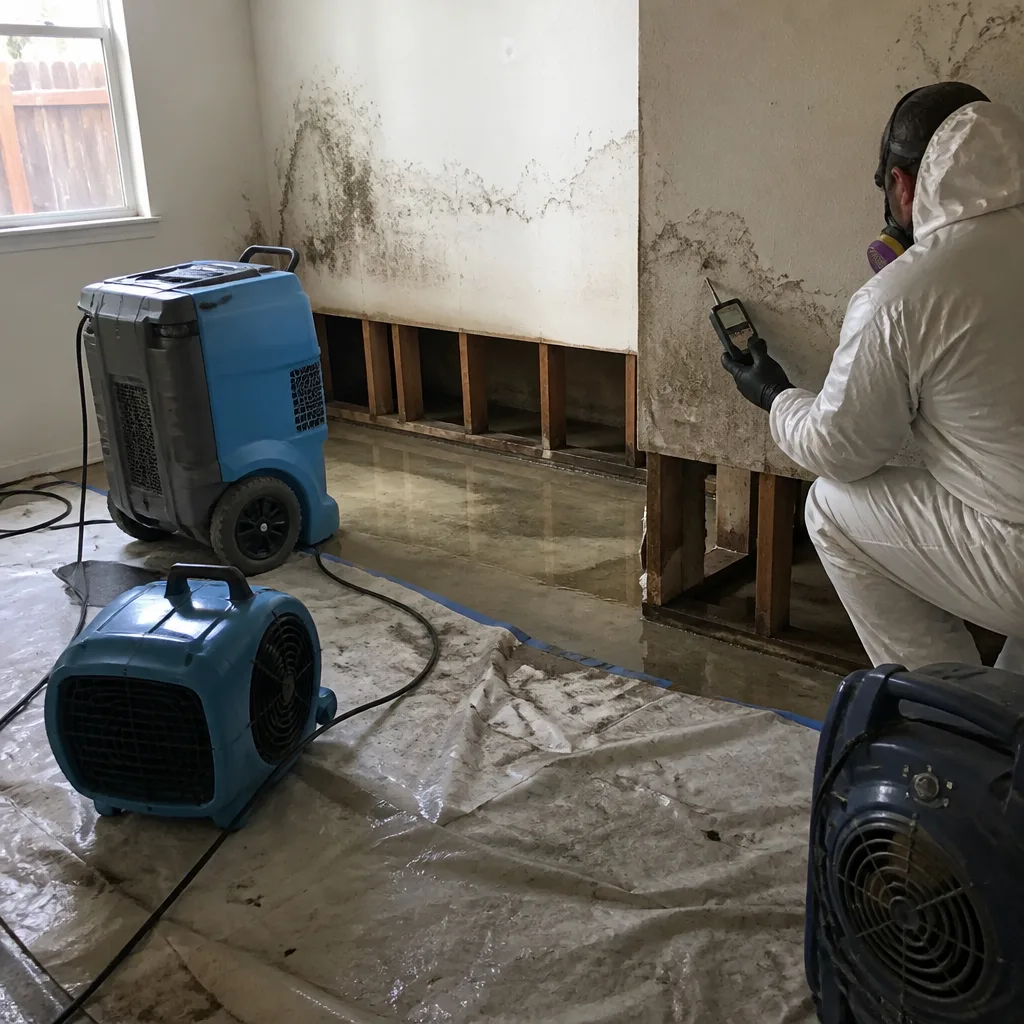 Before
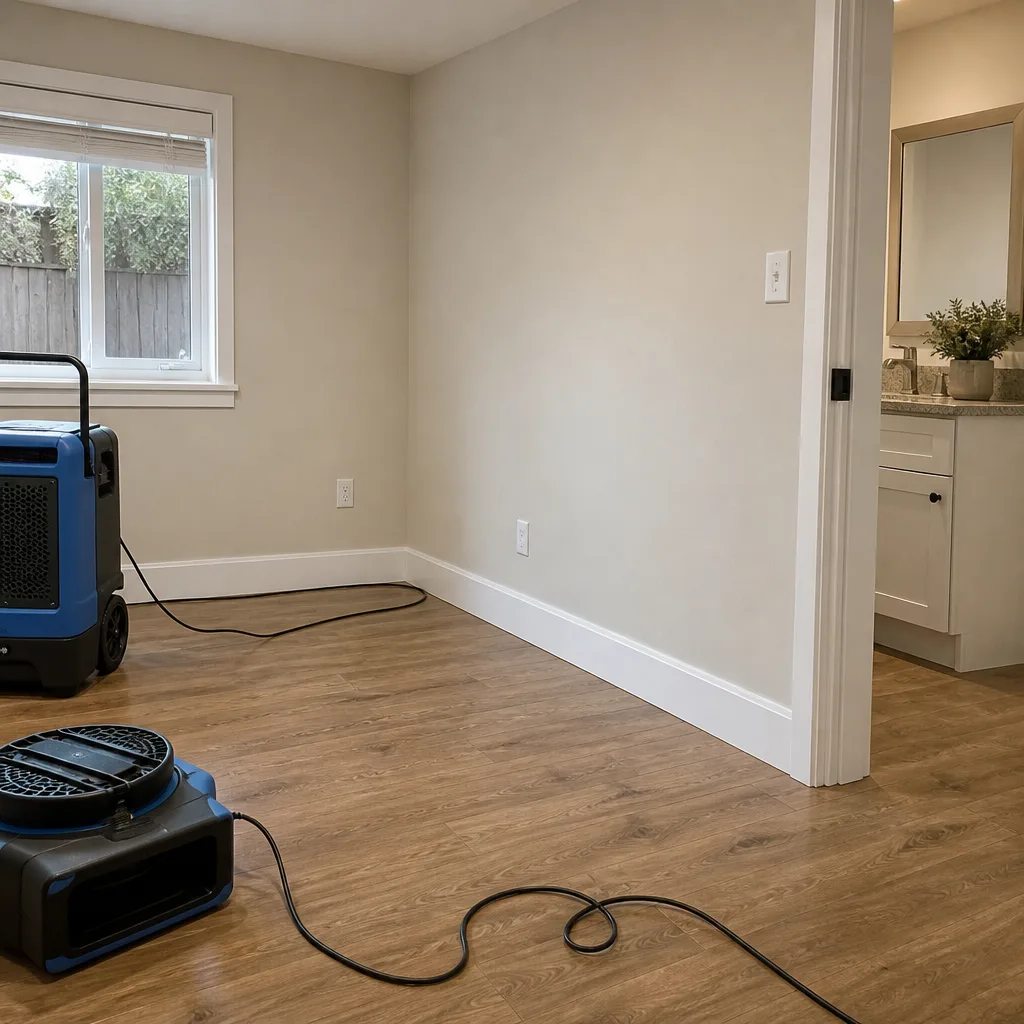 After
After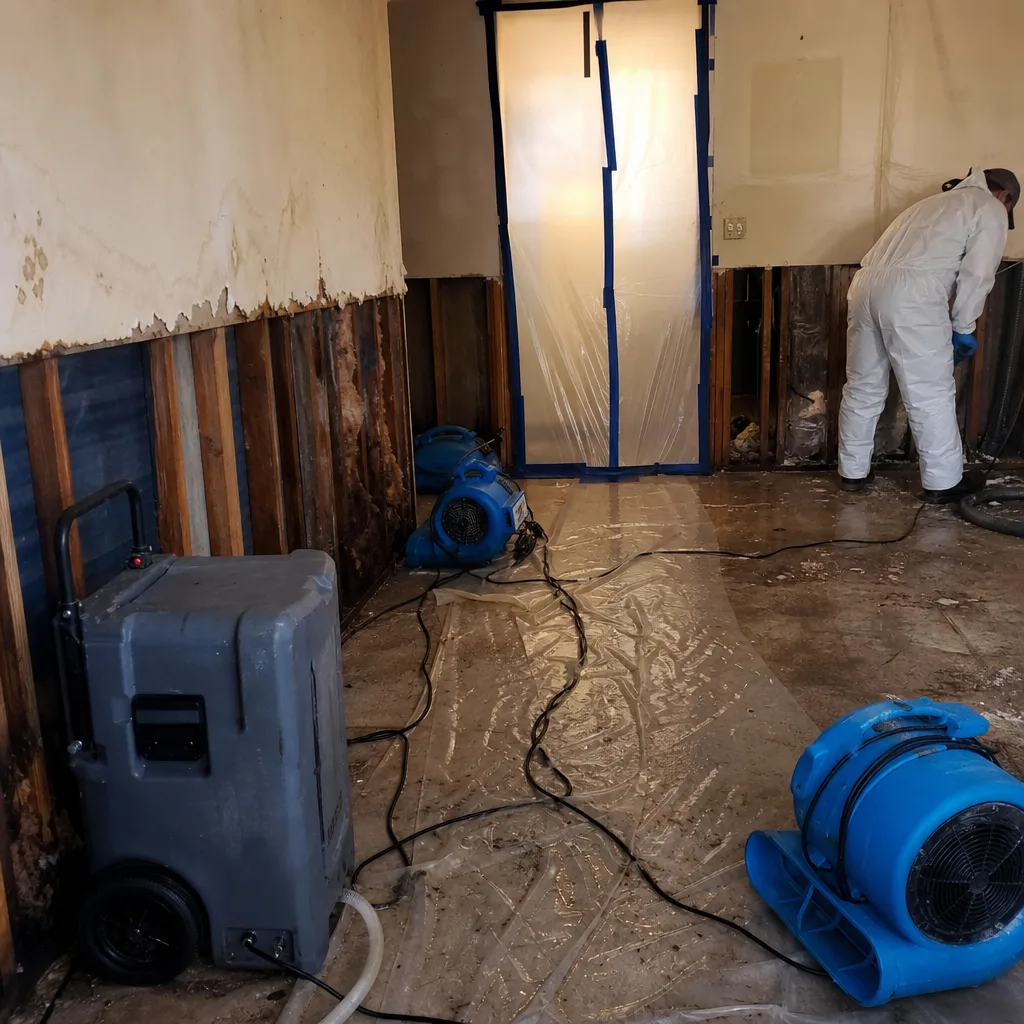 Before
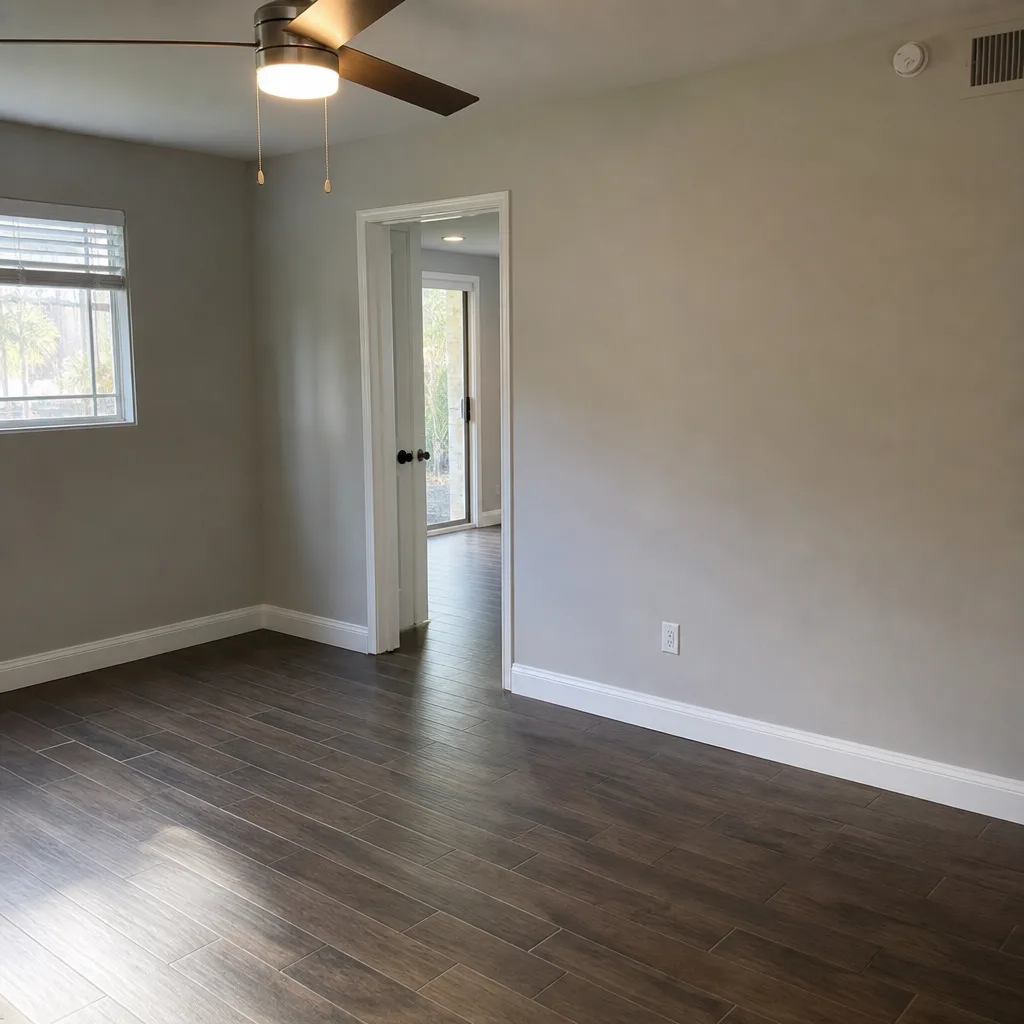 After
AfterDamage Restoration Warning Signs: A Oceanside Homeowner’s Reference Guide
A musty smell in your Oceanside closet is not a warning sign. It’s a late indicator. By the time an odor is detectable, mold colony counts typically exceed 10,000 spores per cubic meter, the threshold where surface cleaning fails and professional remediation becomes mandatory under California Department of Public Health guidance. The damage that costs homeowners the most money, the kind that triggers coverage disputes and six-figure reconstruction bills, is already weeks old by the time it’s visible. This guide pairs each observable sign with the hidden condition it indicates and the specific measurement that confirms it, so you can document what you found before it becomes a “known pre-existing condition” argument against your claim. For more guides & resources on protecting your Oceanside home, visit our blog.
Quick Answer
The most costly damage in Oceanside homes begins silently behind walls and under floors, visible only through moisture meter readings and thermal patterns before surface signs appear. Homeowners should watch for efflorescence on concrete block, rust bleed on stucco fasteners, and condensation mapping on single-pane coastal windows as early indicators, while treating any moisture reading above 16% in drywall or 20% in wood subfloor as an immediate call threshold. Document every observation with dated photos and written measurements to preserve your insurance position.
Table of Contents
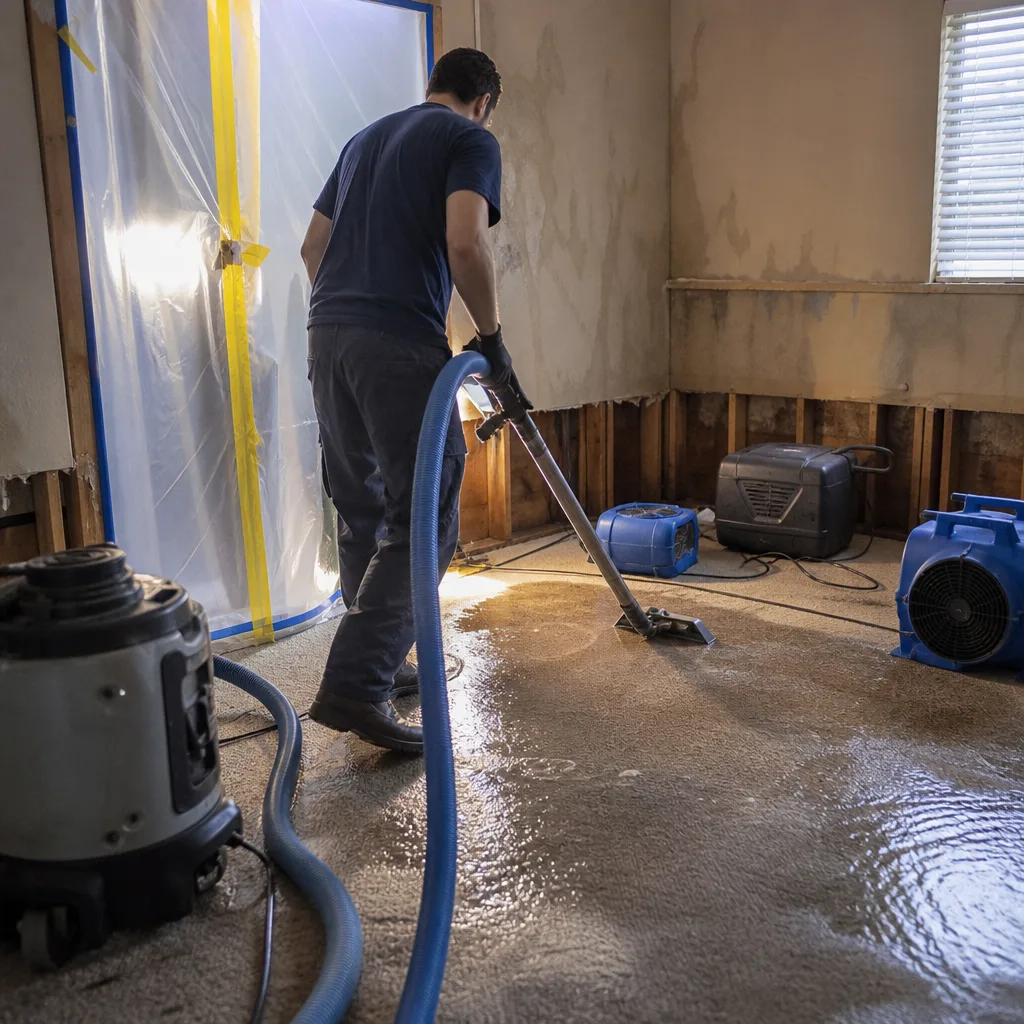
- Water Damage Warning Signs: Visible vs. Hidden
- Mold Indicators: From Microscopic to Obvious
- Fire and Smoke Damage: The Signs That Linger
- Storm and Disaster Damage: Coastal-Specific Risks
- Sewage and Biohazard Warning Signs
- Structural Red Flags in Oceanside’s Building Stock
- How to Document Warning Signs for Your Insurance Claim
- Which Signs Trigger Mandatory Contractor Notification Under California Insurance Policies
BeforeAfterWater Damage Warning Signs: Visible vs. Hidden
Water damage in Oceanside follows patterns shaped by our coastal climate, our 1970s-1990s building stock, and the slab-on-grade construction common in neighborhoods from Fire Mountain to South O. The visible signs most guides list, stains, buckling, and soft drywall, arrive after the damage is already structural. What matters is what precedes them.
Observable Sign vs. Hidden Condition: A Two-Column Reference
| What You See | What It Actually Indicates (and When) |
|---|---|
| Water stain on ceiling, brown ring with defined edge | Active leak above, typically 48-72 hours old. The defined edge means moisture is still migrating outward. Moisture reading at stain center: usually 18-35% in drywall. Call threshold: any reading above 16% in painted drywall indicates saturation beyond evaporation drying. |
| Buckling laminate or engineered wood floor | Subfloor moisture at or above 20% for wood, 100% relative humidity at concrete surface. Buckling means the flooring has absorbed enough to expand against its joints. In Oceanside’s climate, this typically requires 5-10 days of sustained moisture exposure. |
| Baseboard pulling away from wall | Moisture wicking up from slab or subfloor, often from irrigation overspray against stucco in our sandy soils. The gap indicates swelling in the bottom plate of the wall frame. Check with pinless meter 2 inches above floor: 18%+ means fungal growth conditions exist. |
| Efflorescence on concrete block or slab edge | Capillary moisture movement through porous concrete, carrying mineral salts to the surface. In Oceanside’s marine layer environment, this signals chronic moisture, not a single event. Indicates vapor pressure differential consistent with ongoing water intrusion, not humidity alone. |
| Paint bubbling or peeling on exterior stucco | Moisture trapped behind stucco, often at weep screed failures or missing flashing above windows. Rust bleed at nail heads (see below) usually accompanies this. The bubble is the last stage; the moisture behind it has been present for weeks. |
Moisture Meter Thresholds for Oceanside Materials
We use pinless moisture meters calibrated to material density, then confirm with pinned probes at suspect locations. These are the readings that separate “monitor” from “mitigate now”:
- Drywall (gypsum, painted): 10-12% is normal equilibrium in coastal Oceanside. 13-15%: elevated, trace leak or humidity spike. 16%+: saturated, drying required, potential mold amplification zone. We document to 0.1% precision on every visit.
- Wood subfloor (plywood, OSB, plank): 12-14% normal. 15-19%: elevated, source investigation needed. 20%+: structural concern, fungal growth possible, replacement often required per IICRC S500. In our Fire Mountain jobs, we see 22-28% readings where homeowners reported “just a small spot.”
- Stucco lath (wood or metal): Pinless meters struggle here; we use thermal imaging to detect evaporative cooling patterns, then probe at weep screeds. Temperature differential of 4°F or more from surrounding wall indicates active moisture behind stucco.
- Concrete slab: Relative humidity testing per ASTM F2170 is the standard. 75% RH or below: acceptable for flooring installation. 76-85%: elevated, vapor barrier compromised. 86%+: active moisture intrusion, flooring will fail, mold risk in any organic overlay.
Our Water Damage Restoration in Oceanside crews carry meters from Dri-Eaz and Phoenix, calibrated quarterly, with readings logged to the drying record that accompanies every invoice.
The Oceanside-Specific Early Warnings Competitors Miss
Three conditions appear regularly in Oceanside homes and rarely in inland guides:
- Efflorescence on concrete block foundations and stem walls. Our marine layer deposits salt on surfaces nightly; when block is dry, it brushes off. When capillary moisture is active, the salt crystallizes in fuzzy white deposits that return after cleaning. This is not cosmetic. It indicates a vapor pressure differential consistent with liquid water movement through the block matrix, typically from failed perimeter drainage or irrigation saturation in our sandy, fast-draining soils that paradoxically allow deep water penetration.
- Rust bleed on stucco nail heads. The galvanized fasteners in Oceanside’s stucco systems from the 1980s-2000s corrode when moisture reaches the lath. The rust stain on the stucco surface means water has penetrated the scratch coat and reached the metal. By this stage, the paper-backed lath is often compromised, and the sheathing behind it has been wet through multiple drying cycles. We’ve replaced 400+ square feet of sheathing in South O homes where this sign was ignored for two rainy seasons.
- Condensation mapping on single-pane windows. Original windows in Oceanside’s coastal neighborhoods, from the bungalows near the pier to the 1970s tract homes east of El Camino Real, run condensation in patterns that reveal wall insulation failures. A full “sweat” pattern across the glass indicates high interior humidity, often from an unseen leak. A pattern limited to the bottom corners suggests thermal bridging at the sill plate, common in homes where slab moisture has reached the wall bottom. We photograph these patterns during initial assessment; they often guide us to the actual moisture source.
Mold Indicators: From Microscopic to Obvious
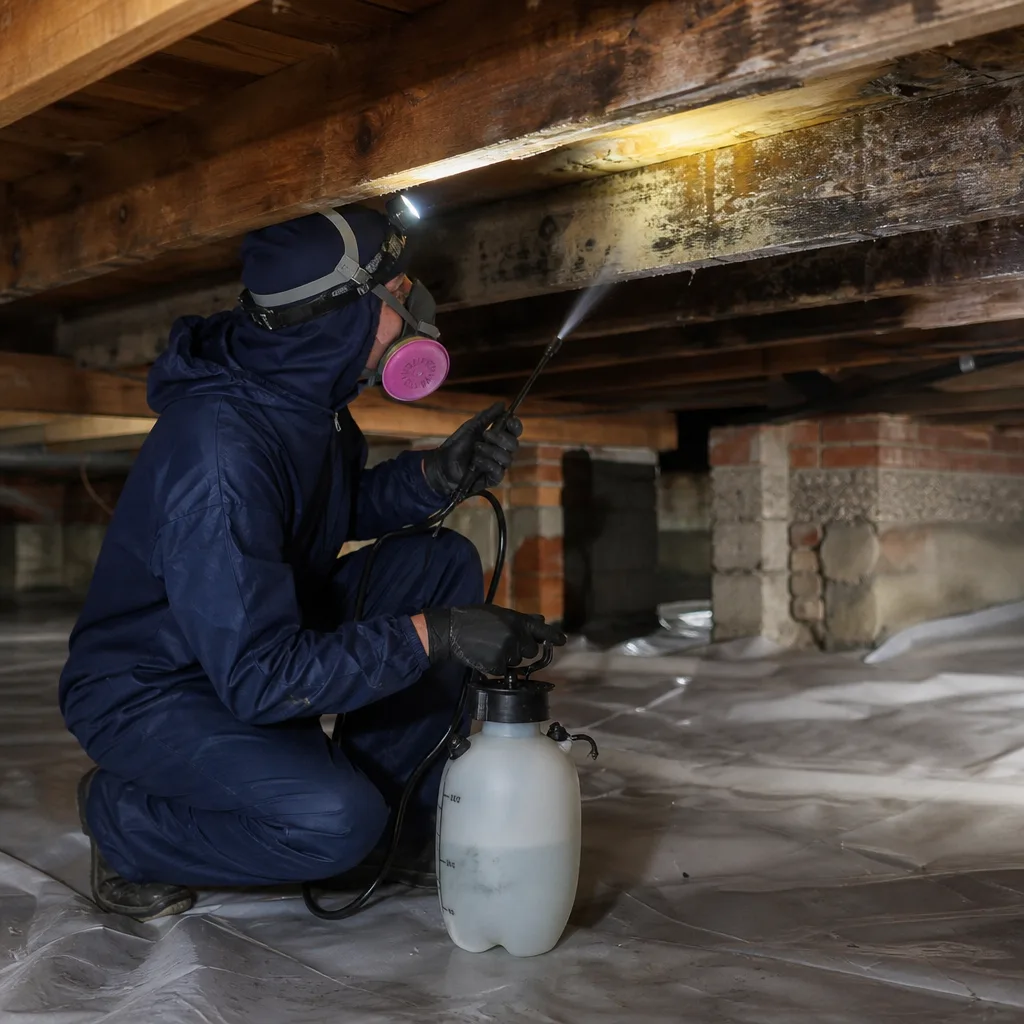
Mold in Oceanside operates on a timeline compressed by our mild temperatures and marine humidity. The 48-72 hour colonization window taught in IICRC classes assumes 60% relative humidity and 70°F. In a closed Oceanside closet near the coast, with RH sustained at 75-85% by a small leak, that window shortens. We’ve documented active growth at 36 hours in summer conditions.
The Stages of Mold Visibility
| Stage | What You Observe | What It Means (Spore Count Context) |
|---|---|---|
| Pre-visible | Nothing. Possibly a slight sweet or earthy note when entering the room. | Colony forming units (CFU) typically 500-2,000 per cubic meter, still below most human detection thresholds. Air sampling at this stage often shows elevation above outdoor baseline. This is the ideal remediation window: contained, lower cost, minimal disruption. |
| Microscopic visible | Faint discoloration on grout, caulk, or painted drywall in corners. May wipe away with bleach, then return in 48-72 hours. | CFU 2,000-10,000. Hyphae have penetrated the substrate surface; wiping removes the fruiting body, not the colony. Bleach on porous material feeds the problem: the water component penetrates deeper, and the ionic residue can support new growth. |
| Visible colonization | Defined patches, green/gray/black, with texture. May show circular expansion pattern. | CFU 10,000-50,000. Remediation required, not cleaning. In Oceanside, we see this stage most often in: closet ceilings under roof leaks (slow drip, insulation hides it); behind toilets where wax rings fail slowly; under kitchen sinks with garbage disposal drain seepage. |
| Advanced colonization | Thick growth, multiple colors, associated musty odor detectable from adjacent rooms. Possible structural material degradation. | CFU 50,000+. Drywall, insulation, and often framing require removal. HVAC contamination likely if return air pathways are involved. This is the stage that generates $15,000-$40,000 remediation invoices in Oceanside’s 1,500-2,500 square foot homes. |
The “musty smell = call now” rule is not conservative enough for our market. In Oceanside’s coastal zone, any sustained humidity above 65% in a closed space with organic material (drywall paper, wood, dust) creates amplification risk. We recommend digital hygrometers in: under-sink cabinets, closet interiors, garage storage areas, and rooms with north-facing exterior walls where marine layer moisture lingers longest.
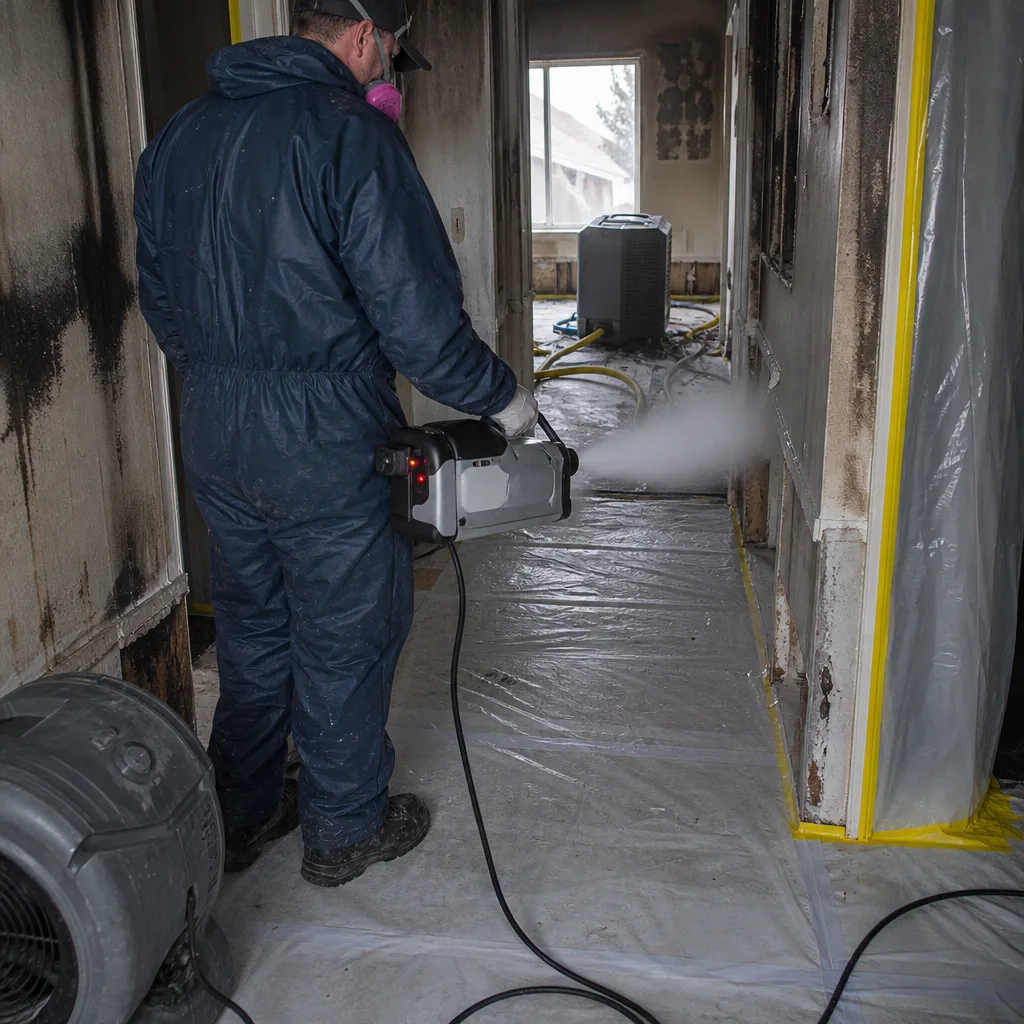
Our Mold Remediation in Oceanside protocol begins with air and surface sampling to establish baseline CFU, followed by containment and negative air pressure before any disturbance. The photo record starts at arrival and continues through post-remediation verification.
Fire and Smoke Damage: The Signs That Linger
Fire damage in Oceanside carries patterns distinct from inland regions. Our marine layer deposits salt on exterior surfaces, which interacts with acidic smoke residues to accelerate metal corrosion. Homes within two miles of the coast show etching on glass and stainless steel 40-60% faster than identical fire damage in inland North County. The warning signs of incomplete restoration appear months later, when corrosion blooms or odors resurface during humid periods.
Immediate vs. Delayed Fire Damage Indicators
- Visible soot on horizontal surfaces: Indicates settled particulate, usually from incomplete combustion. The particle size (measured in microns during assessment) determines cleaning protocol: dry sponging for particles above 10 microns, wet cleaning with specialized surfactants below that threshold. In Oceanside, salt particulate from open windows during fire events bonds with soot, requiring pH-neutral pre-cleaning before standard smoke residue removal.
- Acrid odor after “cleaning”: Suggests incomplete source removal, not surface residue alone. Smoke odor compounds (pyrolized materials, VOCs) penetrate porous substrates: drywall, insulation, unfinished wood, upholstery foam. Surface cleaning without thermal fogging or hydroxyl generation leaves these reservoirs intact. The odor returns when humidity rises, which in Oceanside means reliably, every marine layer season.
- Discoloration of painted surfaces near heat source: Heat line indicators show where temperatures exceeded 200°F, the point where paint binders begin to degrade. Above this line, surfaces may appear clean but have compromised adhesion; repainting without primer sealant fails within 12-18 months. We mark heat lines during assessment and photograph them for the scope document.
- Corroded metal fixtures, switch plates, or HVAC registers: Smoke residues are acidic (pH typically 3.0-5.0). Combined with coastal salt deposition, they initiate galvanic corrosion on dissimilar metals. We see this most in Oceanside’s oceanfront condos and in homes from the 3200 block of Ocean Street corridor where windows remained open during evacuation. Replacement, not cleaning, is usually required for affected electrical components.
The documentation standard for fire damage is higher than for water. Every affected item is photographed in place before movement. The written scope specifies: cleaning method by material class, sealant application where required, and air quality verification with particulate measurement before occupancy. Our Fire & Smoke Damage Restoration in Oceanside includes this documentation as standard, not supplemental.
Storm and Disaster Damage: Coastal-Specific Risks
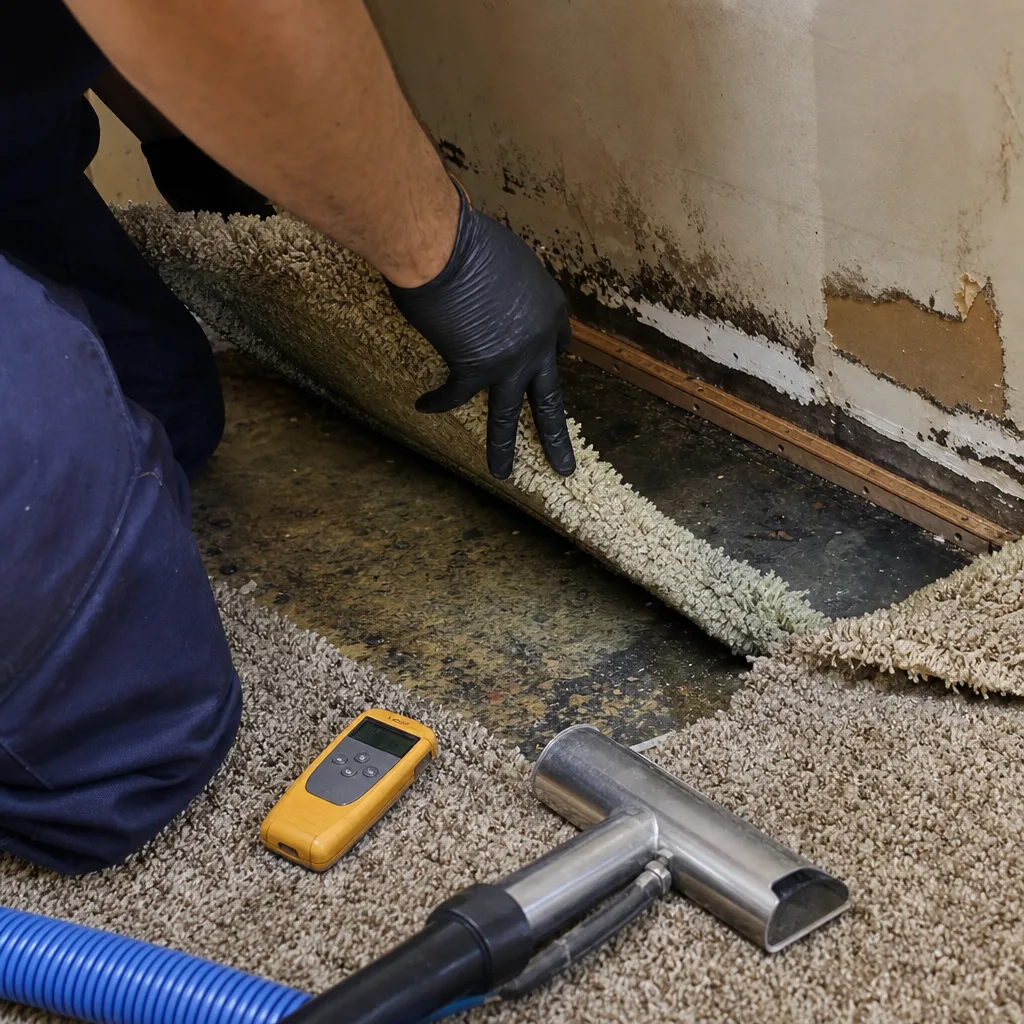
Oceanside’s storm damage profile differs from Southern California’s general reputation. We’re not hurricane country, but our winter storm systems carry sustained onshore flow that drives rain through stucco weep screed failures, overwhelms flat-roof drainage on 1970s commercial conversions, and creates hydrostatic pressure against slab foundations in low-lying neighborhoods near the San Luis Rey River floodplain.
Post-Storm Inspection Checklist: Ordered by Priority
- Roof and attic: Check for displaced tiles or shingles at ridgelines where wind velocity peaks. In Oceanside’s tile-roof neighborhoods (Rancho Del Oro, Arrowood), broken tiles at valleys indicate debris impact or fastener corrosion from prior moisture intrusion. Attic inspection with moisture meter at sheathing: 20%+ means active leak, even if ceiling shows no stain yet.
- Exterior stucco and flashing: Wind-driven rain penetrates at window head flashing, deck ledger attachments, and any stucco crack wider than 1/16 inch. The critical measurement: moisture reading at sheathing behind stucco, accessible through electrical box cutouts or weep screed probes. Readings above 18% at sheathing require opening and drying.
- Slab perimeter and garage: Hydrostatic pressure during saturated soil conditions forces moisture through slab edges and expansion joints. Check for: darkening at slab perimeter, efflorescence at garage door threshold, rust staining at metal post bases. In Oceanside’s sandy soils, drainage failure shows first at the lowest point of the slab perimeter.
- HVAC and crawl space: If your home has a raised foundation (common in pre-1970 Oceanside neighborhoods near downtown), inspect crawl space vapor barrier integrity and framing moisture. Post-storm humidity in enclosed crawl spaces can sustain 90%+ RH for weeks, creating mold amplification in floor insulation and subfloor.
- Window and door seals: Wind-driven rain tests seal integrity at gaskets and weatherstripping. Check for: water staining at sill corners, swelling in wood window frames, operation difficulty indicating frame distortion. Single-pane aluminum windows in coastal Oceanside homes show seal failure first at the sill track, where salt corrosion accelerates gasket degradation.
Storm response documentation matters for insurance. We photograph each checklist item, timestamped, with moisture readings where applicable. This creates a contemporaneous record that predates any dispute about whether damage was “sudden and accidental” or gradual deterioration.
Sewage and Biohazard Warning Signs
Sewage backup and biohazard events require immediate recognition because the health risk escalates faster than visible damage spreads. Category 3 water (sewage, ground surface water, flooding from seawater) carries bacterial loads that render porous materials non-salvageable under IICRC S500 standards, regardless of appearance after cleaning.
Recognition and Response Thresholds
| Observable Sign | Classification and Required Response |
|---|---|
| Backed-up floor drain with gray water, no solid waste visible | Category 2, potentially Category 3 if origin is unknown. Requires antimicrobial treatment and controlled drying. Porous materials within 2 feet of splash zone are evaluated for removal. We document water origin through camera inspection where possible. |
| Black water with solid waste, or any water from beyond the trap | Category 3, unconditional. All porous materials in contact zone removed: carpet, pad, baseboard, drywall to 2 feet above highest water line, insulation. Subfloor treated with antimicrobial, dried to 16% or below, sealed before reconstruction. No exceptions under The Haven Standard. |
| Seawater intrusion from storm surge or overtop flooding | Category 3 due to bacterial and chemical loading. Salt content complicates drying: standard dehumidification is insufficient, desiccant drying or specialized flushing required. Metal corrosion begins within 24 hours; electrical components in contact zone require evaluation by licensed electrician before re-energization. |
| Unattended death or trauma scene | Biohazard, regulated under California Health and Safety Code. Requires OSHA Bloodborne Pathogens compliance, documented waste manifesting, and ATP testing verification before clearance. We do not perform this work without written scope and property owner authorization, with law enforcement release where applicable. |
The warning sign most homeowners miss: a floor drain that “always has been slow.” Chronic slow drainage indicates partial blockage that will become complete under load. In Oceanside’s older neighborhoods with combined sewer laterals and mature tree root intrusion (notably the streets east of Mission Avenue with their 1950s-1960s clay pipe), we recommend annual camera inspection as preventive documentation.
Structural Red Flags in Oceanside’s Building Stock
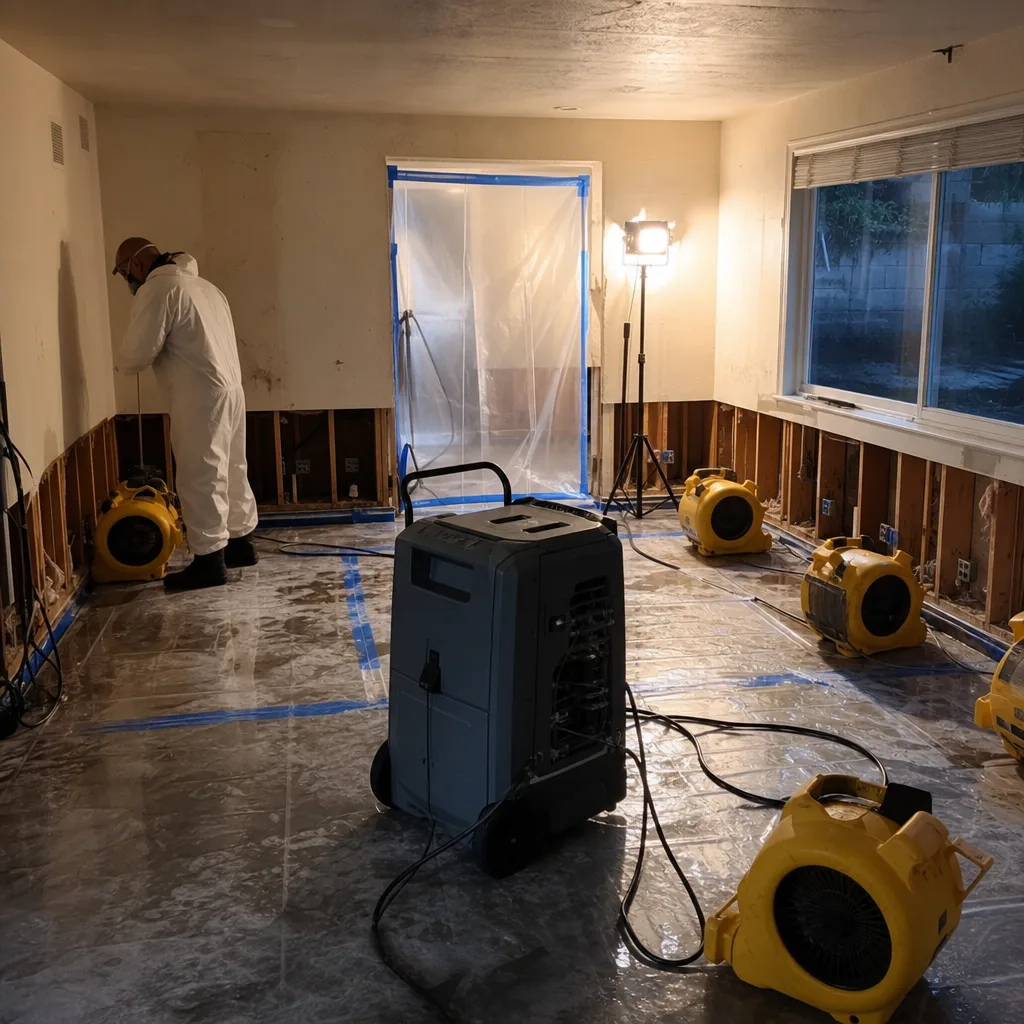
Oceanside’s housing inventory carries era-specific vulnerabilities that produce predictable damage patterns. Understanding your home’s construction decade helps prioritize inspection focus.
By Construction Era
- Pre-1945 (Downtown, Tremont Street area): Raised foundations with unreinforced brick or stone piers, no vapor barrier, original lath-and-plaster. Warning signs: sloping floors (measure with 4-foot level: 1/4 inch or more indicates pier settlement), plaster cracks that reopen after repair, subfloor moisture from failed perimeter drainage. These homes require careful documentation because “pre-existing settlement” is a common coverage denial argument.
- 1945-1975 (Post-war tract, College Boulevard corridor): Slab-on-grade with minimal or no perimeter insulation, single-pane windows, galvanized steel supply lines. Warning signs: slab edge moisture, window condensation patterns, pinhole leaks in supply lines (appearing as “mystery” moisture on slab or in walls). Galvanized pipe failure is progressive; we document remaining pipe condition with borescope inspection when leaks are found.
- 1975-1995 (Rancho Del Oro, Fire Mountain, Arrowood): Stucco over paper-backed lath, tile roofs with mortar-set tiles, early polybutylene supply piping (discontinued 1996). Warning signs: stucco cracks at stress points, tile displacement at hips and ridges, polybutylene fitting failures (typically at crimp connections, often in walls). The rust bleed indicator described earlier is most common in this era.
- 1995-2010 (Newer infill, Ocean Ranch): Synthetic stucco (EIFS) in some developments, engineered wood products, copper supply. Warning signs: EIFS moisture intrusion at terminations and penetrations (requires thermal imaging for detection), delamination of OSB sheathing if moisture reaches it, pinhole corrosion in copper from aggressive water chemistry.
Every era has its signature failure mode. Our assessment protocol includes construction-era identification in the first 10 minutes on site, before we open a meter case. This guides where we look first and what we document most carefully for the written scope.
How to Document Warning Signs for Your Insurance Claim
The documentation you create before calling a contractor becomes evidence in any coverage dispute. “Known pre-existing condition” is the most common basis for partial or total claim denial. Your contemporaneous record defeats it.
The Three-Element Documentation Standard
- Photograph with context. Every photo needs scale and location reference. Include: a measuring tape or known object (ruler, coin) for size reference; a wall corner or fixture to establish which room and which wall; the date stamp enabled or a newspaper date visible. For moisture-related signs, photograph the surrounding area to show the sign is isolated, not widespread. For Oceanside homeowners near the coast, include a window or exterior reference showing marine layer conditions if relevant to the moisture source.
- Record the measurement. If you have a moisture meter (pinless models available at hardware stores for $40-$80), document the reading with the photo. If not, describe the condition in writing: “stain approximately 8 inches diameter, drywall soft to touch, appeared between March 15 and March 22 per weekly closet check.” The written observation with date range is admissible evidence; “there was a stain” is not.
- Preserve the chain of custody. Store photos with automatic cloud backup (timestamped by service). Email yourself a description the same day. If you call a contractor, note the call time and representative name. If you call your insurer, record the claim number and adjuster assignment. Each step creates a contemporaneous record that precludes later dispute about when the damage was discovered and reported.
When DryMark Restoration Oceanside arrives, we continue this documentation with our own photo record, moisture readings, and written scope. The two records, yours and ours, reinforce each other in any coverage discussion. Haven Standard, Clause 1 requires our written price before work begins; Clause 3 requires the photo record on every visit. You receive both as standard deliverables.
Which Signs Trigger Mandatory Contractor Notification Under California Insurance Policies
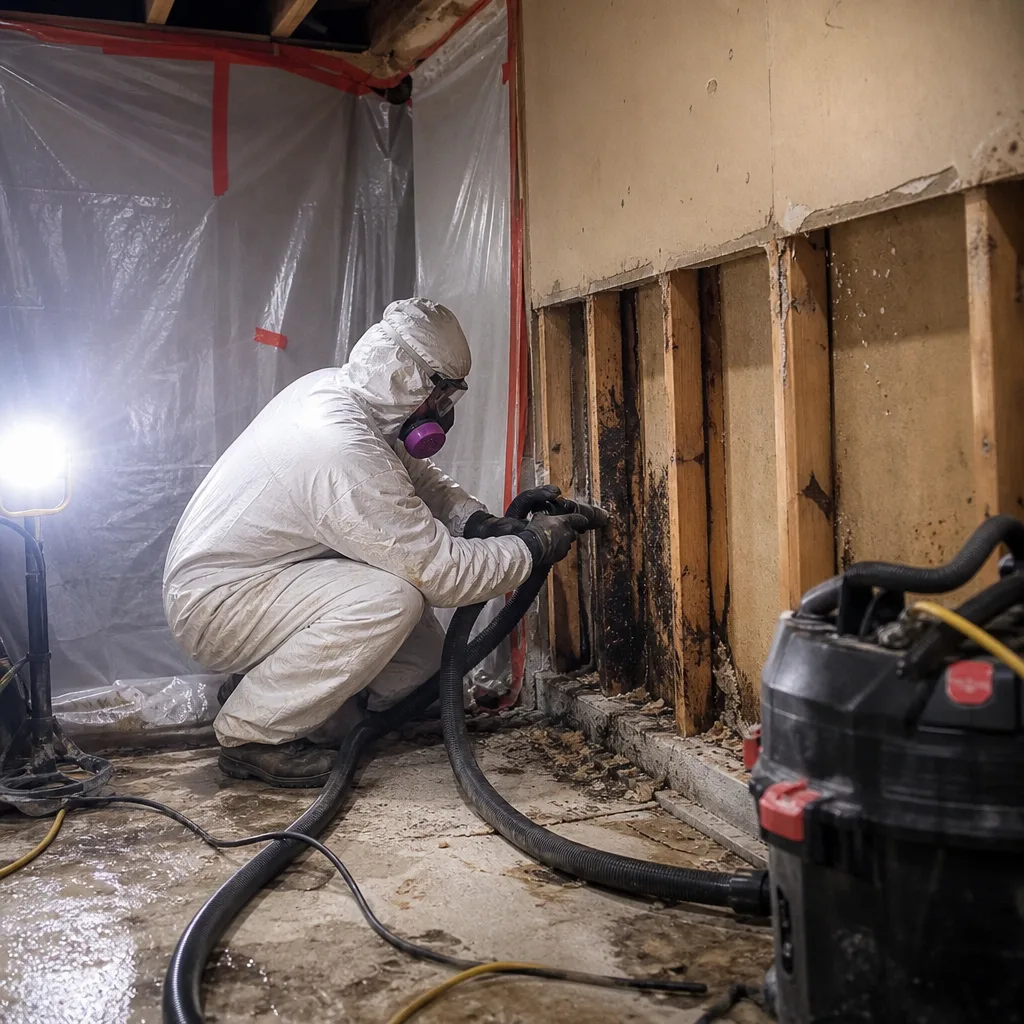
California residential property policies contain standard language that affects your obligations and your coverage position. The following warning signs, if observed, trigger specific notification requirements under most standard forms (HO-3, HO-5, and the California FAIR Plan equivalent).
| Warning Sign Observed | Policy Language Triggered | Required Action |
|---|---|---|
| Water damage affecting >1 room or >100 square feet | “Sudden and accidental” coverage limitation; duty to mitigate further damage | Notify insurer within 72 hours of discovery. Document with photos and measurements. Begin emergency mitigation (extraction, drying) to satisfy duty to mitigate; retain all invoices. Failure to mitigate can reduce recovery by the amount of avoidable additional damage. |
| Mold visible or suspected, any amount | Mold limitation endorsement (typically $10,000 cap unless full remediation endorsement purchased) | Notify insurer immediately, before any remediation begins. Some policies require use of “qualified mold remediator” with specific certification. Obtain insurer acknowledgment of coverage before authorizing work beyond emergency containment. |
| Sewage backup or Category 3 water intrusion | Water backup coverage endorsement (often separate, with sublimit) | Determine coverage applicability before work begins. Some policies exclude sewage backup entirely without endorsement. Document origin: municipal sewer, private lateral, or surface flooding. Each has different coverage implications. |
| Fire damage, any amount | Duty to notify “as soon as practicable”; requirement to preserve damaged property for inspection | Notify insurer and fire department for cause determination. Do not discard damaged items before adjuster inspection unless hazardous. Document inventory with photos before any disposal. |
| Storm damage with roof compromise | Duty to make reasonable temporary repairs to prevent further damage | Tarp or board openings; retain receipts. Do not begin permanent repairs until insurer inspection. Document temporary repair necessity with photos of interior damage progression if repairs are delayed. |
The “mandatory” in this section refers to policy conditions, not state law. Failure to comply gives the insurer a coverage defense. Our documentation protocol at DryMark Restoration Oceanside is designed to satisfy these conditions: dated photos, written scope, moisture logs, and direct adjuster coordination on request.
Common Mistakes to Avoid
- Waiting for the stain to “dry out on its own.” In Oceanside’s climate, a water stain that appears to dry is often still wet at the substrate, with mold amplification continuing in the dark space behind. We measure, not guess.
- Using bleach on moldy drywall. Bleach is 90% water. It feeds the mold colony while bleaching the surface, creating a false sense of resolution. The colony returns, often worse, and the moisture you added accelerates growth in adjacent areas.
- Accepting a verbal estimate for emergency work. Haven Standard, Clause 1 exists because verbal estimates become disputed invoices. A written price before work begins protects you and the contractor. Any restoration company that won’t commit in writing is signaling scope-creep intention.
- Not photographing “before” condition. Insurance adjusters compare post-mitigation photos to pre-damage condition. Without your own documentation, you have no rebuttal to “that crack was pre-existing” or “that floor was already cupped.”
- Ignoring marine layer condensation as “just coastal living.” Sustained condensation on windows, especially single-pane units in original Oceanside homes, indicates humidity levels that support mold growth in wall cavities. It’s a warning sign, not a character trait of coastal homeownership.
- Calling the insurer before documenting the damage. The adjuster’s first visit establishes the baseline record. If your documentation contradicts theirs, you have evidence. If you have none, their record stands unchallenged.
When to Call a Professional
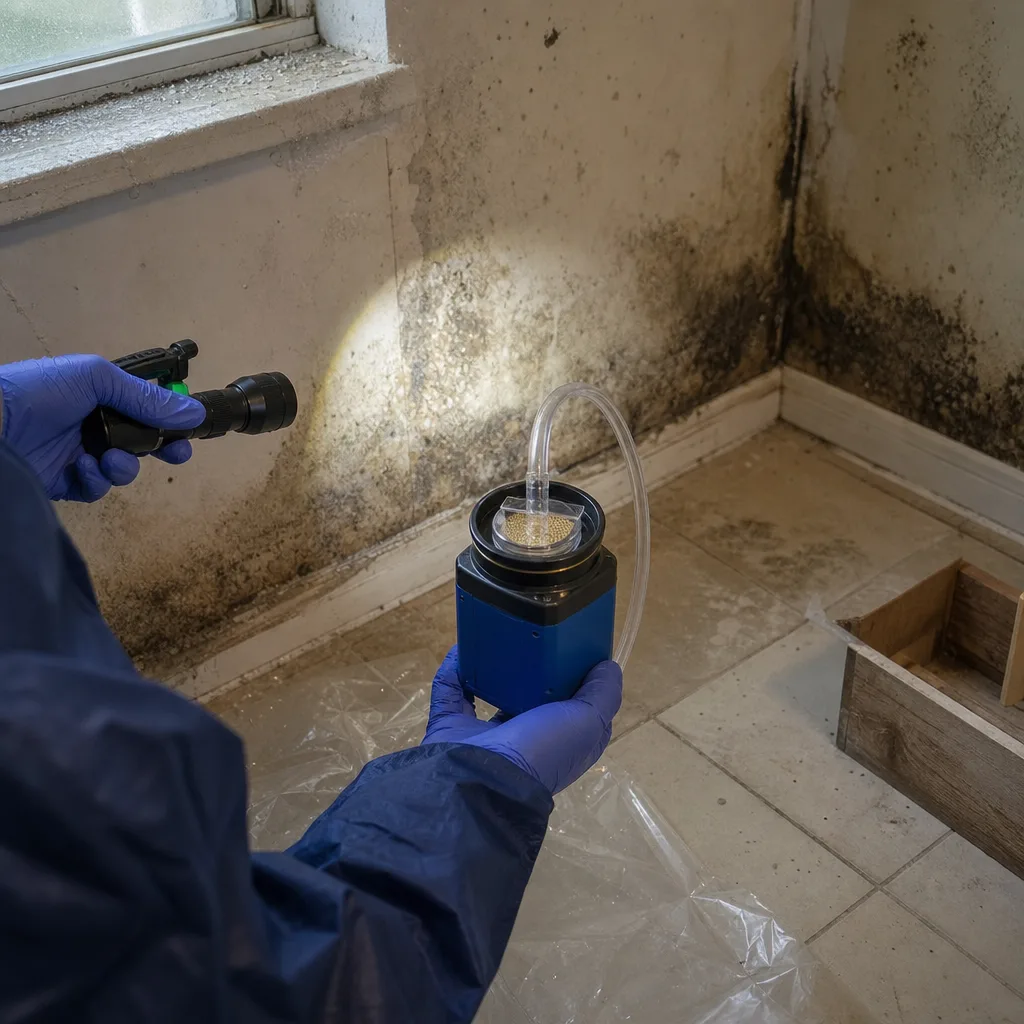
Call when moisture readings exceed the thresholds in this guide, when mold is visible in any amount, when water has affected more than a single small area, or when the damage source is unknown. Call when your insurer has assigned an adjuster and you need documentation that meets policy conditions. Call when you have a competitor’s estimate and want a free second opinion, Haven Standard, Clause 7.
DryMark Restoration Oceanside offers free estimates in Oceanside. A trained technician arrives with calibrated meters, thermal imaging, and the documentation protocol that turns restoration work into payable claims. Call (760) 546-9565. A live person answers, 24 hours a day, 7 days a week. No voicemail on emergency lines.
Frequently Asked Questions
Initial assessment and written estimate from DryMark Restoration Oceanside is free, with no obligation. The assessment includes moisture mapping with documented readings, thermal imaging scan, and a written scope with line-item pricing before any work begins. Call (760) 546-9565 to schedule.
Coverage depends on your policy form and endorsements. Standard California HO-3 policies typically include a $10,000 mold remediation sublimit unless you purchased additional coverage. The key coverage question is whether the mold resulted from a covered peril, sudden pipe burst, storm intrusion, that was promptly reported. Gradual leaks and unreported moisture typically are not covered. We document cause and origin to support your coverage position, and coordinate directly with adjusters when authorized.
Live dispatch answers every call. Emergency water damage response typically deploys within 60-90 minutes in Oceanside proper, from our local presence. Response time varies by current event volume and your specific location; the dispatcher gives an accurate ETA when you call. For non-emergency assessment, we schedule within 24 hours. Call (760) 546-9565 for current availability.
Visible mold growth exceeding 10 square feet, or any growth in HVAC systems, requires professional remediation under California Department of Public Health guidance and IICRC S520 standards. DIY cleaning of smaller areas is possible with proper PPE and containment, but most homeowners lack the equipment to verify complete removal or to distinguish cosmetic staining from active colonization. See our DIY vs Professional Damage Restoration: The Oceanside Homeowner’s Decision Guide to help decide when to call in experts. Our free assessment includes air sampling that answers this question with data, not guesswork.
We coordinate directly with adjusters when you authorize it, providing the documented photo record, moisture logs, and written scope that support claim payment. We do not negotiate coverage decisions, that is between you and your insurer, but we ensure the technical documentation is complete and defensible. Many Oceanside homeowners authorize direct adjuster contact to expedite the process; you retain final approval authority for all work.
Three factors: the marine layer sustains higher baseline humidity, extending drying times and shortening mold colonization windows; the 1970s-1990s building stock uses stucco systems and flashing details with known failure modes; and the sandy, fast-draining soils allow irrigation and storm water to penetrate deeply, creating slab moisture conditions less common in clay-soil regions. Our assessment protocol accounts for each factor.
The Bottom Line
The warning signs that matter most in Oceanside are the ones you measure, not the ones you smell or see. Moisture meter readings above 16% in drywall and 20% in wood subfloor, efflorescence on concrete block, rust bleed on stucco fasteners, and condensation mapping on single-pane windows, these are the early indicators that precede the stains and odors. Document each with dated photos and written measurements. Get a written price before any work begins. And when the damage exceeds your comfort or your tools, call a professional who documents the way your insurer will need to see it.
Written by Alicia Brennan, Owner at DryMark Restoration Oceanside, serving Oceanside since 2011.